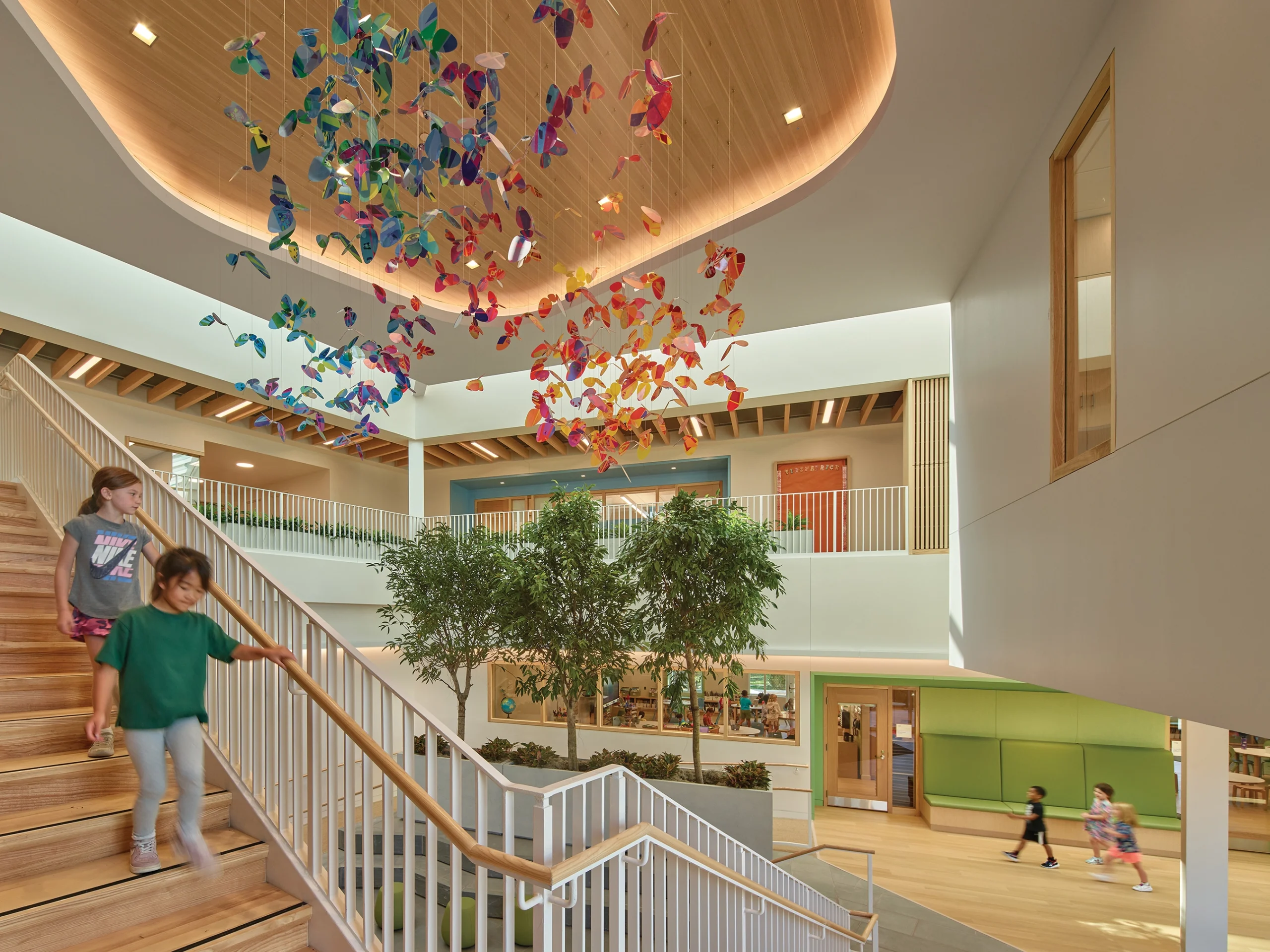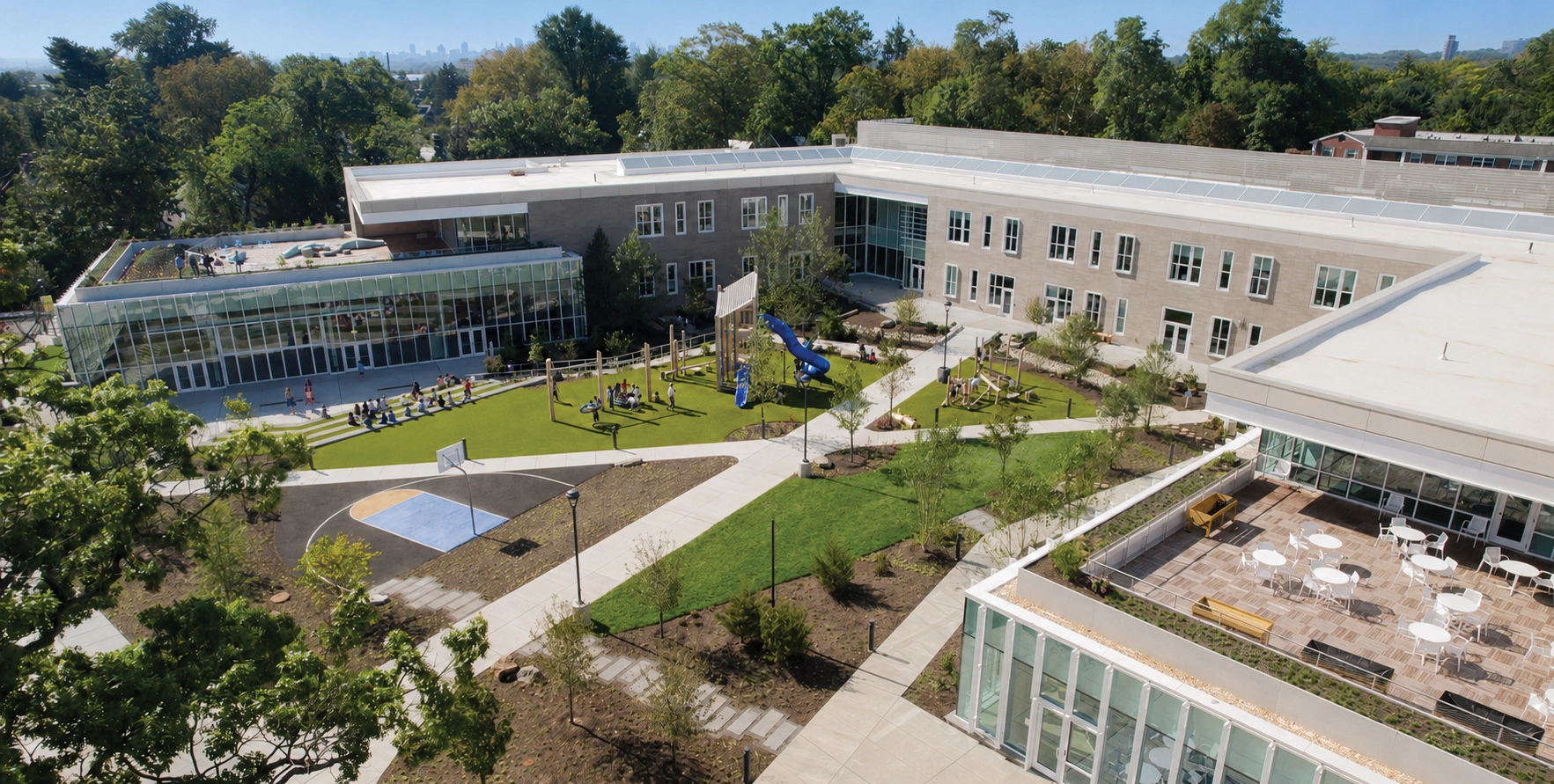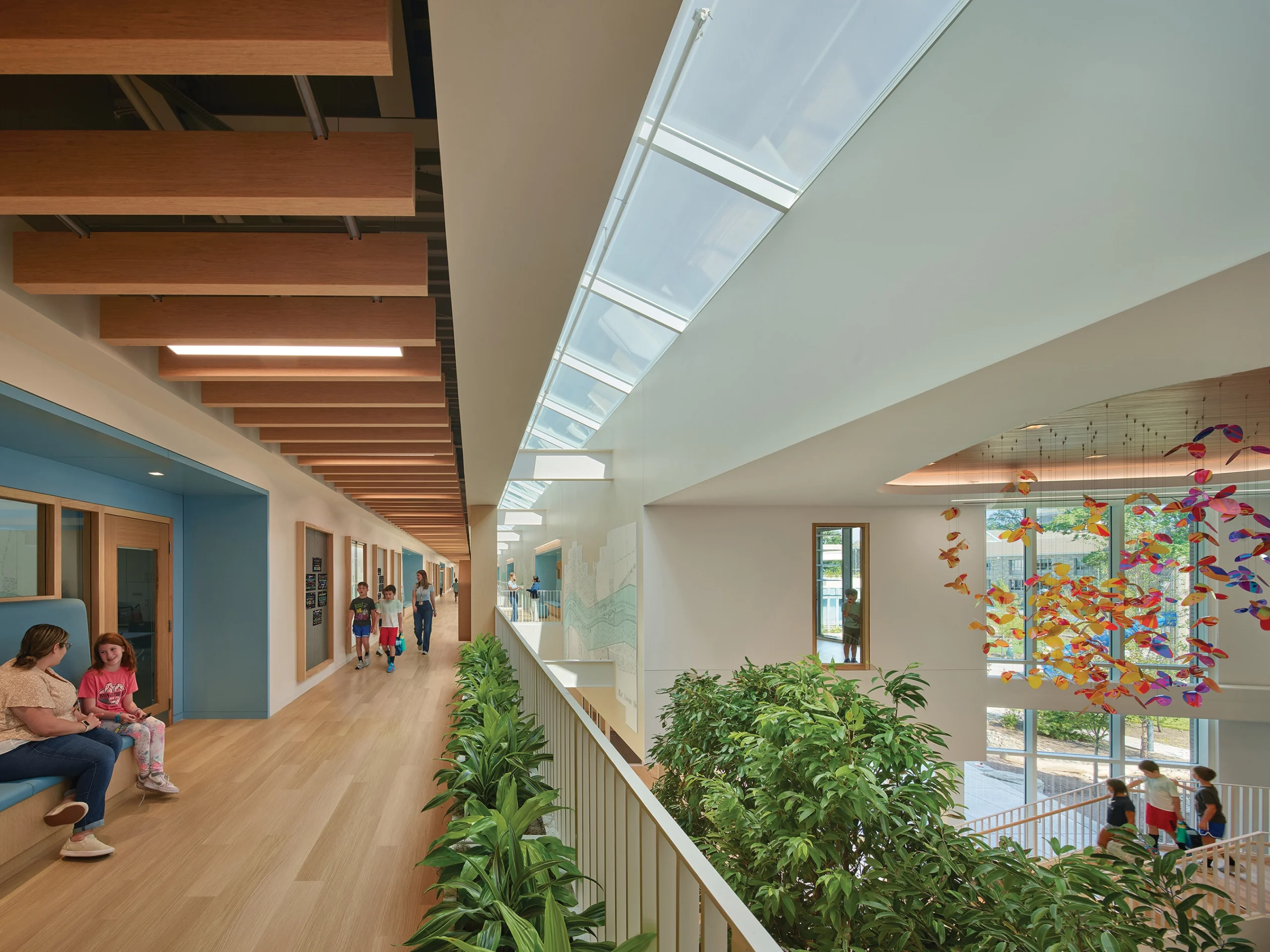

William Penn Charter School, the nation’s oldest Quaker school, envisioned a transformative campus plan to unite its youngest learners under one roof. The Richard A. Balderston OPC ’69 Lower School completes the vision of an academic village by integrating PreK through Grade 5 within a shared home that embodies community, stewardship, equality, and simplicity.
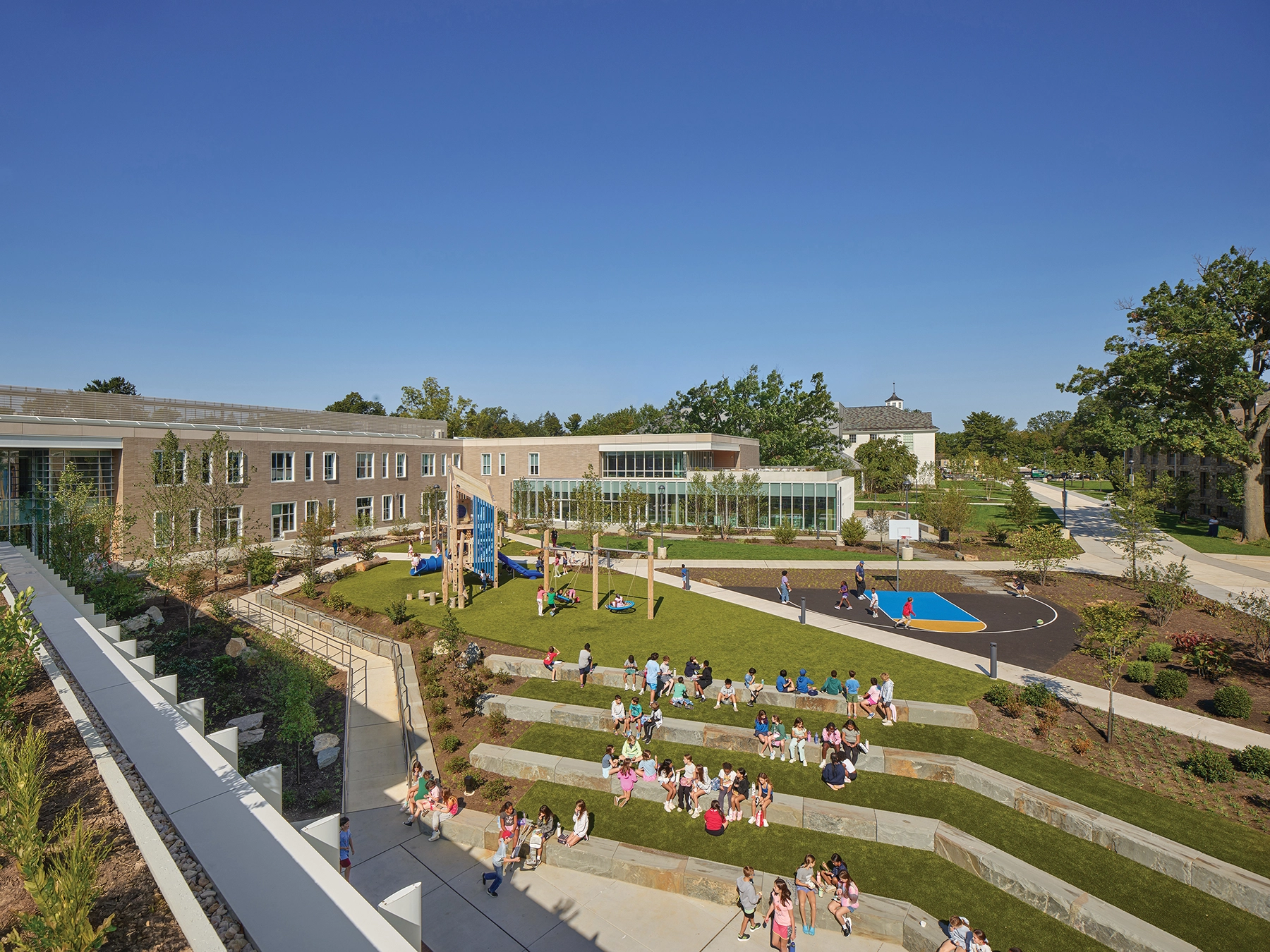
The 78,000 sq. ft. facility now anchors the southwest corner of the campus. The project is the result of collaboration between EwingCole’s design team and administrators, educators, families, alumni, and community members. The design concept creates a protected enclave for the school’s youngest learners, inspired by nature while employing a contextual yet playful and modern architecture and interior design.
Quaker principles guided every aspect of the design, from site placement and building height to materials and light. Keeping the building within two stories fosters connection between age groups and preserves the school’s sense of community.
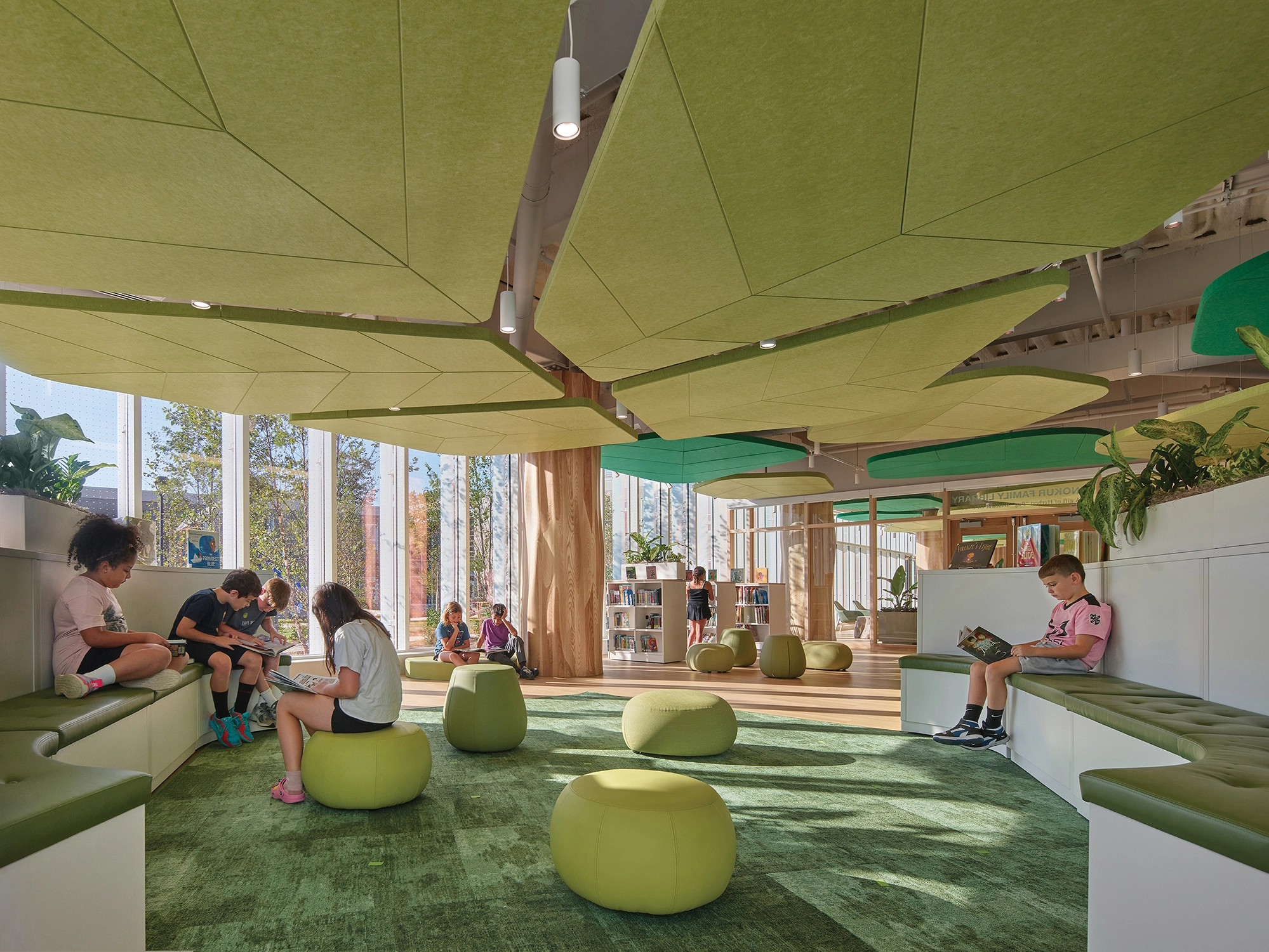
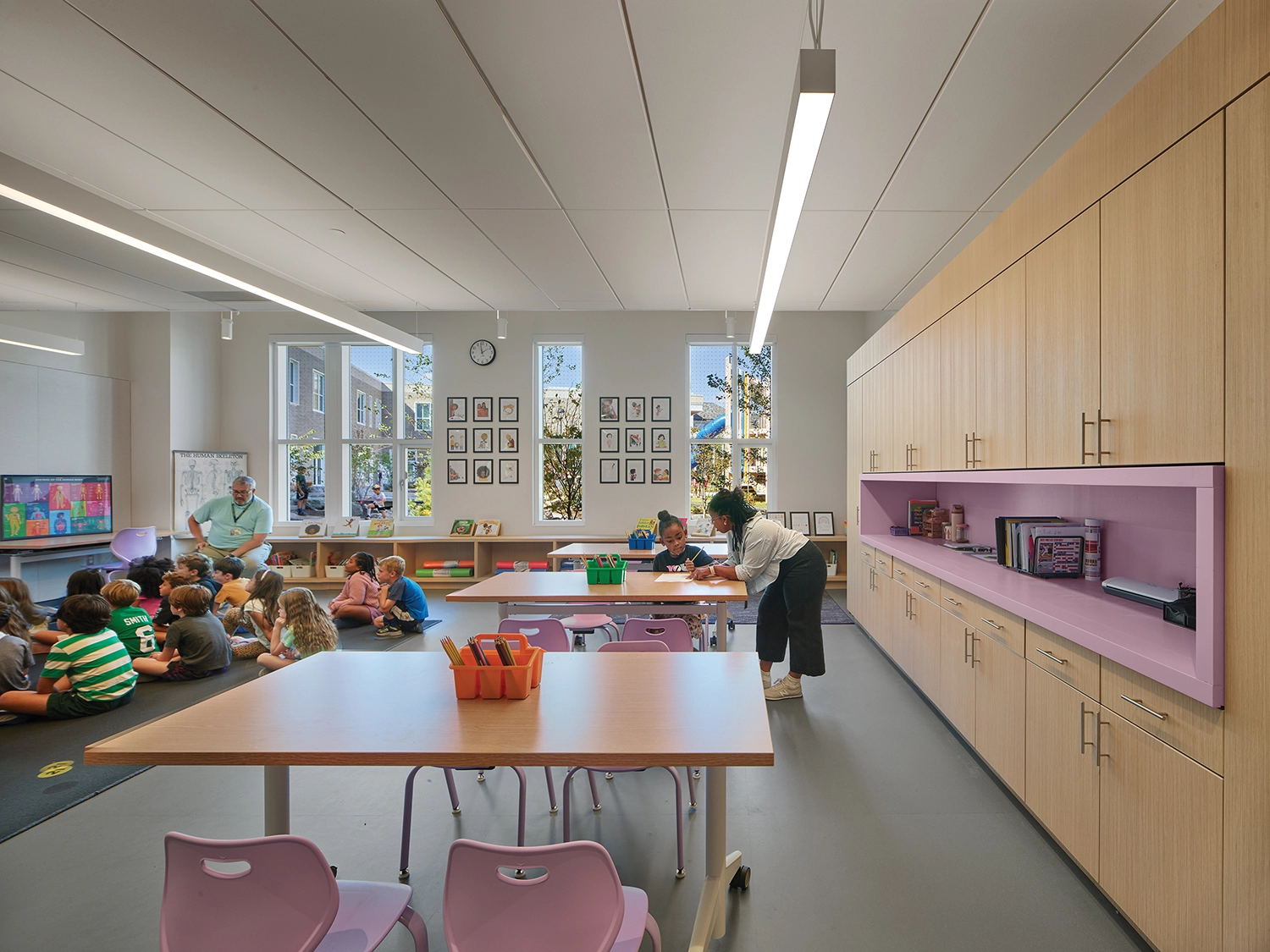
The Reggio Emilia pedagogy further shaped the design of learning environments, emphasizing flexibility, exploration, and engagement.
The Reggio Emilia approach is an educational philosophy that emphasizes self-directed learning through exploration, collaboration, and projects. Key to this approach is an emergent curriculum based on children’s interests and their environment as a “third teacher.”