


How do we design educational spaces that will be relevant throughout their lives (50-75+ years) in a rapidly changing world?
In an era defined by rapid technological advancement, shifting societal norms, and unpredictable global challenges, education delivery is and will continue evolving, and so must the spaces that support it. It’s imperative that educational architects keep pace with pedagogical changes and anticipate future possibilities to create environments that remain relevant. The goal is to craft dynamic ecosystems that nurture holistic well-being, ignite transformative learning, and build thriving communities for generations.
What was your approach to working toward a solution?
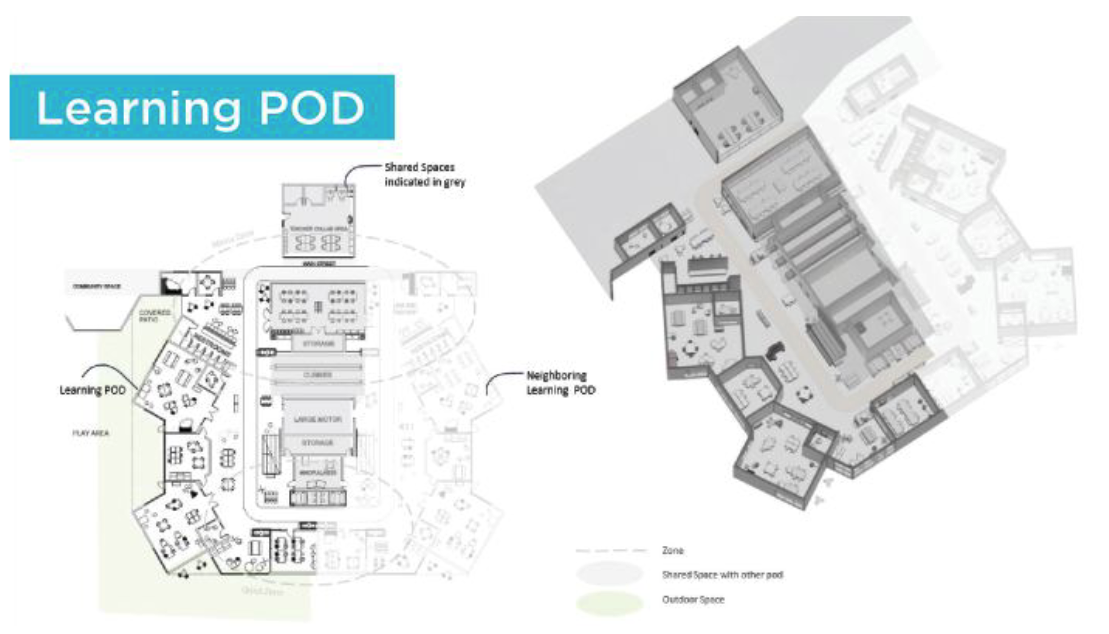
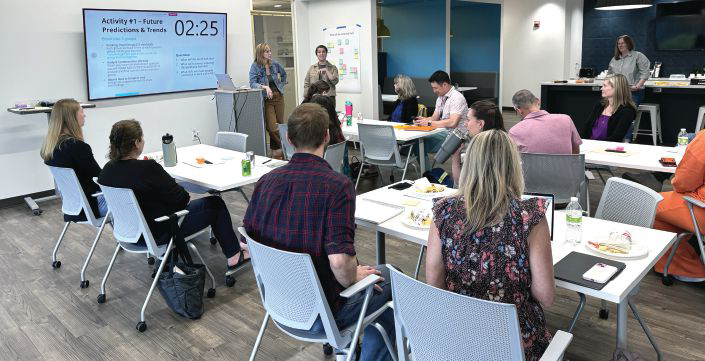
Over the past several months, our firm has been deeply engaged in an internal research initiative exploring what the future holds—particularly how shifts in the world and work will shape education, and how learning environments can best support these evolving needs. Our methodology combined extensive research, forward-thinking insights, and meaningful engagement with a broad range of stakeholders—including students, teachers, parents, and community members. Drawing from this rich foundation of knowledge, our team developed guiding principles and envisioned aspirational learning environments that were reviewed and refined in collaboration with stakeholders.
How were you able to resolve this challenge, and what was the overall impact?
As a result of our research initiative, we identified four guiding themes: experience wonder, prioritize wellness, build community, and empower learning. They offer a framework for moving beyond traditional school models toward spaces that are transformative, adaptable, and responsive to evolving pedagogical needs.
By integrating elements of wonder, we aim to spark curiosity, excitement, and deep engagement in learners. Spaces that Q& A: Issues in Education atsr.com prioritize wellness support physical health, cognitive development, and emotional well-being through movement-friendly layouts, natural light, and developmentally appropriate design. To build community, schools must foster a sense of belonging through inclusive gathering areas, positive messaging, and open invitations to the broader community. Finally, to empower learning, buildings should be flexible, technology-integrated, and designed to support—not dictate—educational practices. Proactively collaborating with stakeholders during the initial visioning phase ensures that educational spaces are designed to be relevant and inspiring for future generations.