


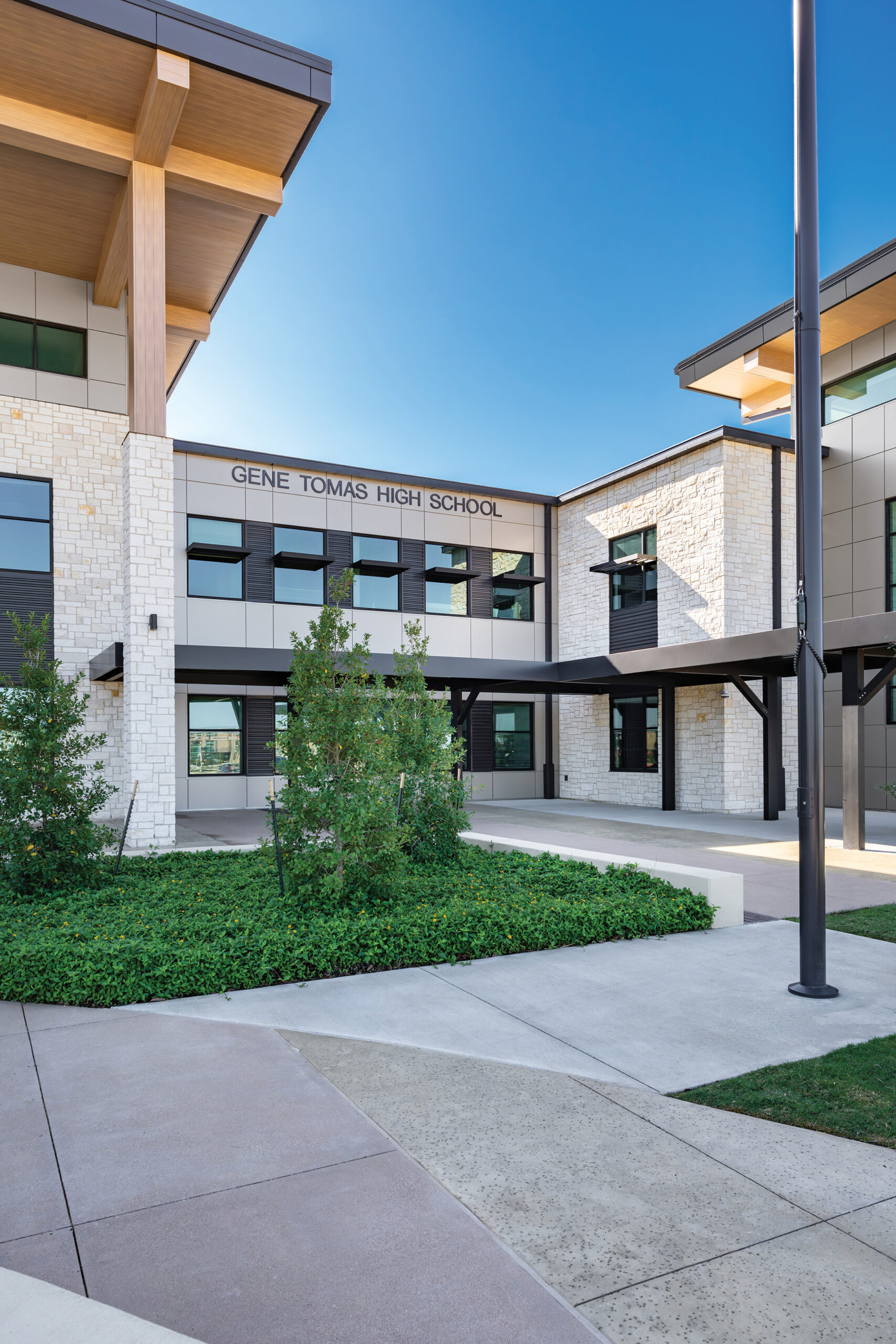
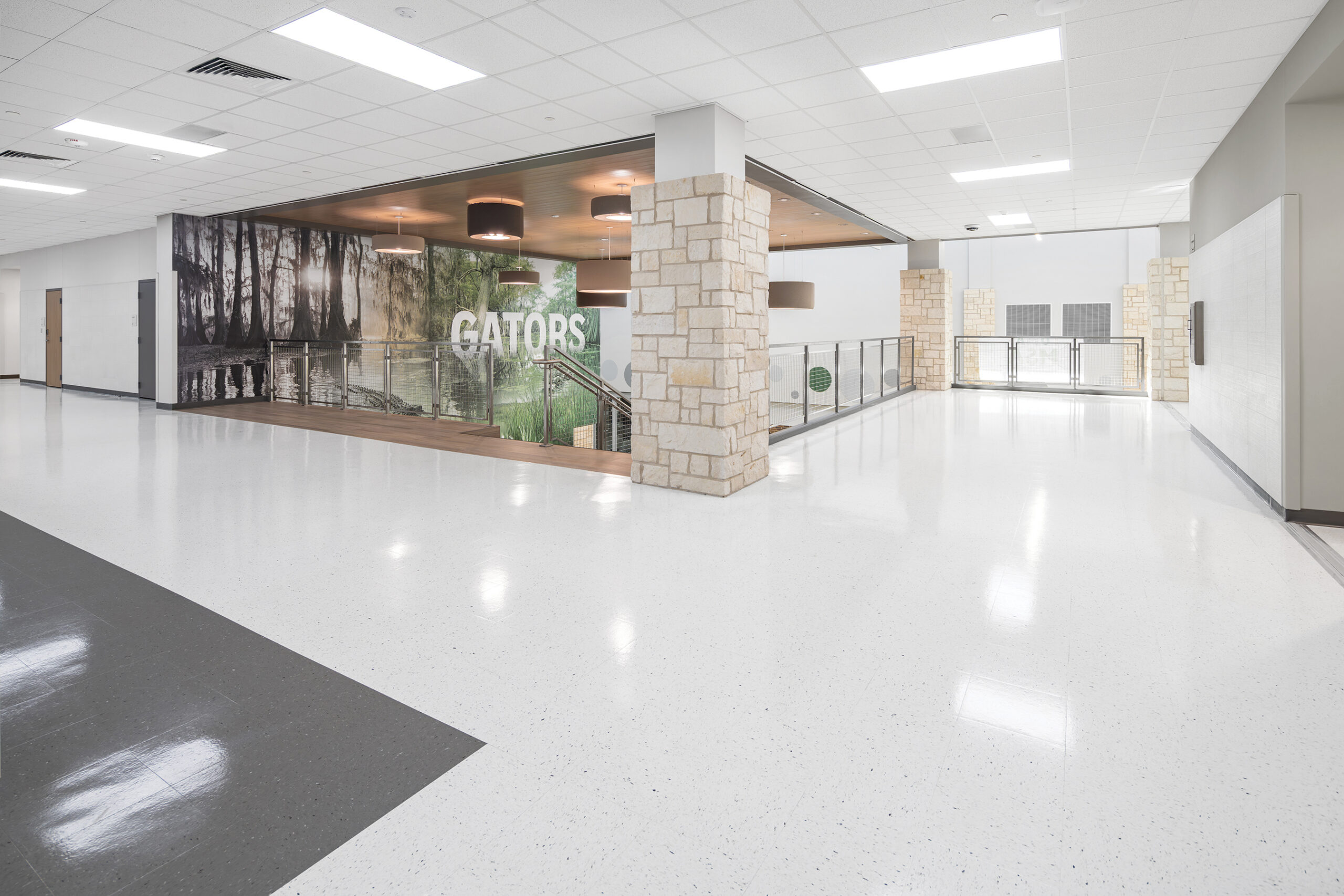
“Throughout the facility, we’ve used a soothing color palette, patterns, and natural light to create spaces that feel energized yet comfortable. Our vision was an educational environment that fosters connection, encourages learning, and instills a sense of pride in the district’s students,” says Onarheim of design objectives. Selecting interior finishes that look great and last a lifetime with minimal maintenance is a must in educational spaces. Year after year, the wear and tear of teenagers is substantial. The surface that sees the most traffic is the floor. “Functionally and experientially, flooring is the largest and most used contact surface in any building, setting the tone for how a space looks, feels, and performs. Done right, the floor doesn’t just sit beneath the design; it reinforces how the space works and how people experience it.The trick is to balance warmth with durability in material selection.”
For the Larmar CISD, and many others, when it comes to flooring for educational spaces, Vinyl Composition Tile, better known as VCT, is hard to beat.
“VCT has a long-proven track record in educational environments because it performs so well under heavy foot traffic,” continues Onarheim. Composed primarily of limestone, the integral color chips AHF Products uses produce top-to-bottom true-thru color patterns in VCT under the Armstrong Flooring® and AHF Contract® brands. As such, it doesn’t wear through, even as the shuffling shoes of teenagers in motion abrase the surface of hallways, classrooms, and gymnasiums. “VCT can withstand decades of wear while being cost-effective to maintain and repair. Scuffs are easily buffed out.”
Luis Mendoza, Bond Program Representative for Lamar CISD’s new Gene Tomas High, agrees.
“As the owner’s representative, my job is to act as a liaison between the contractor and the owner, making decisions in the project’s best interest,” says Mendoza who works for program management representative Rice & Gardner. “The goal at Rice & Gardner was to help Lamar CISD build a school that outlives its projected 50-year lifespan. Southeast Texas has a subtropical climate. We’ve got long, hot, and humid summers, and significant rain in the spring and fall. Iliad™ VCT from AHF Contract was chosen because it’s a long-lasting material that only needs a wet mop and a coat of polish at the start of every semester to look brand new for the next 50 years or more.”
Longevity isn’t VCT’s only positive. Designers like Onarheim at PBK turn to this product because of its wide range of colors to support wayfinding, branding, and visual organization, helping students navigate intuitively.
Iliad’s inventive palette is both timeless and timely. The new collection draws inspiration from the cultural treasures of ancient Greece. Iliad’s fresh colors – with names like Dynastic White, Noble Blue, Glowing Light, and Valor Green – echo the hand-crafted imperfections and subtle hues of ancient stones. Its sun-bleached colors are reminiscent of archaeological finds.

© Andy Phan | Photography
“VCT remains a tried-and-true solution that delivers durability, flexibility, and long-term value for large educational facilities,” finishes Onarheim. “While trends and evolving aesthetics influence the variety of flooring materials on the market, VCT is a proven solution that aligns well with capital funding strategies and operational realities.”