

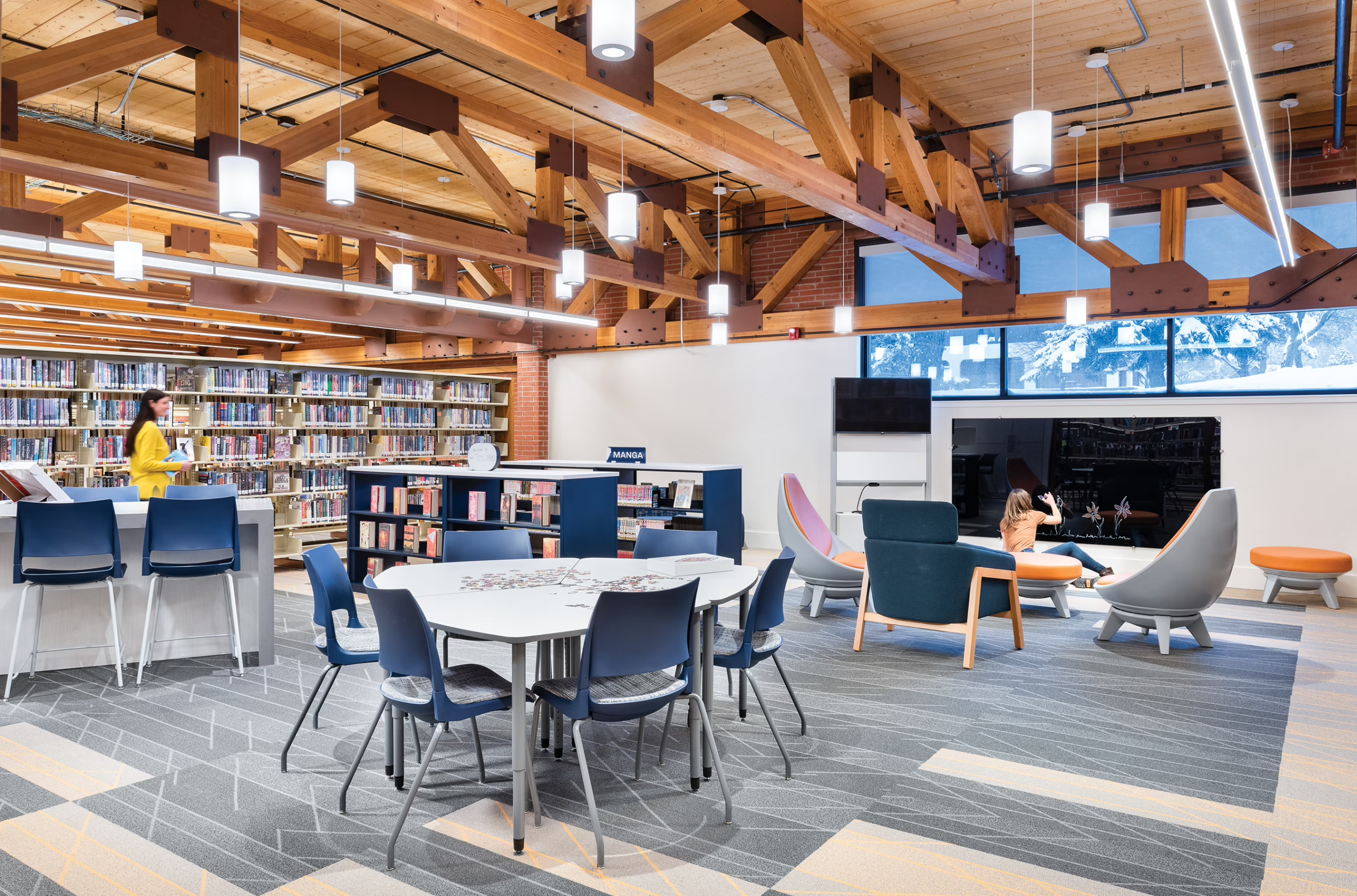
As technologies, space utilization, and institutional identities evolve at a rapid pace, libraries are undergoing a fundamental transformation and redefining their roles as temples of knowledge and community hubs. KI partnered with StudioFYNN on an extensive national research program to understand the evolving purpose of educational institutions and their library spaces and how to better center user needs and experiences.
Defining The Library Of Today
The printed book and manuscript are traditional icons of knowledge, and their physical nature has been a preeminent driver of how library spaces were constructed. Libraries have historically been a place for silence and individual time, a place for concentration and serious study.
More recently, group collaborative spaces and community forums are redefining the library not as solely a ‘me’ space but transforming them into ‘we’ spaces. Higher education institutions are transforming and presenting themselves not only as institutions performing academic functions, but as the embodiment of opportunity, progress, and culture.
“The future of libraries is to evolve according to the needs of modern-day users. Being agile and adapting to user needs.”
—University Librarian
Eight Shifts In Higher Education Libraries
#1. Architectural Statement
Library spaces are primarily defined by the architectural envelope that encloses them. Therefore, ‘new builds’ can accommodate the need for digital and print resources as well as a balance between individual and collaborative spaces more effectively. While this is the ideal scenario, the reality is that most institutions are faced with repurposing existing space, even if additional offsite or adjacent facilities are built and utilized.
#2. Post-Build, Furniture, Interiors
Most institutions are seeking ways to adapt and repurpose existing spaces to accommodate new user needs. The parameters of postbuild, by nature, determine that new solutions are achieved through human-centered design, aligning culture, function, and institutional brand projection within an existing spatial envelope. We also see a rise in the potential and opportunity for custom-built solutions to address the diverse and dynamic needs of space utilization and new user experience.
#3. Core Spaces: The Classroom and the Library
The primary function of higher education is learning, and it has long been assumed that the core space must therefore be the classroom. While this remains a predominant hypothesis, we see the library fulfilling a new role as a parallel core space. Active learning plays an important role in this change as collaboration and sharing become more important. We observe that library spaces are well suited to this emerging dynamic as the library is an essential counterbalance to the often rigid space planning and protocols of the classroom.
“Our Library is rapidly evolving. There are fewer books and more study tables, and we’re seeing a lot more collaboration going on in the library. We transferred most of our books to an off-campus warehouse storage space.”
—Director of Learning Innovation
#4. Signature Space & Brand
Educational institutions increasingly see themselves as ‘brands’ and a direct pipeline to the professional world. Interiors, furniture, and signature spaces are a huge part of how universities can project their unique value and purpose for students, parents, and alumni. By this we mean there are spaces such as the library, cafe, vestibules, and communal areas that are often of higher prestige potential than the basic classroom. We call these ‘signature spaces’ – places that feel collegiate and hold a sense of reverence on campus – often reflected in the investment and design of the space. We see a need for institutional branding through signature spaces as well as less formal and messier places for learning and personal development.
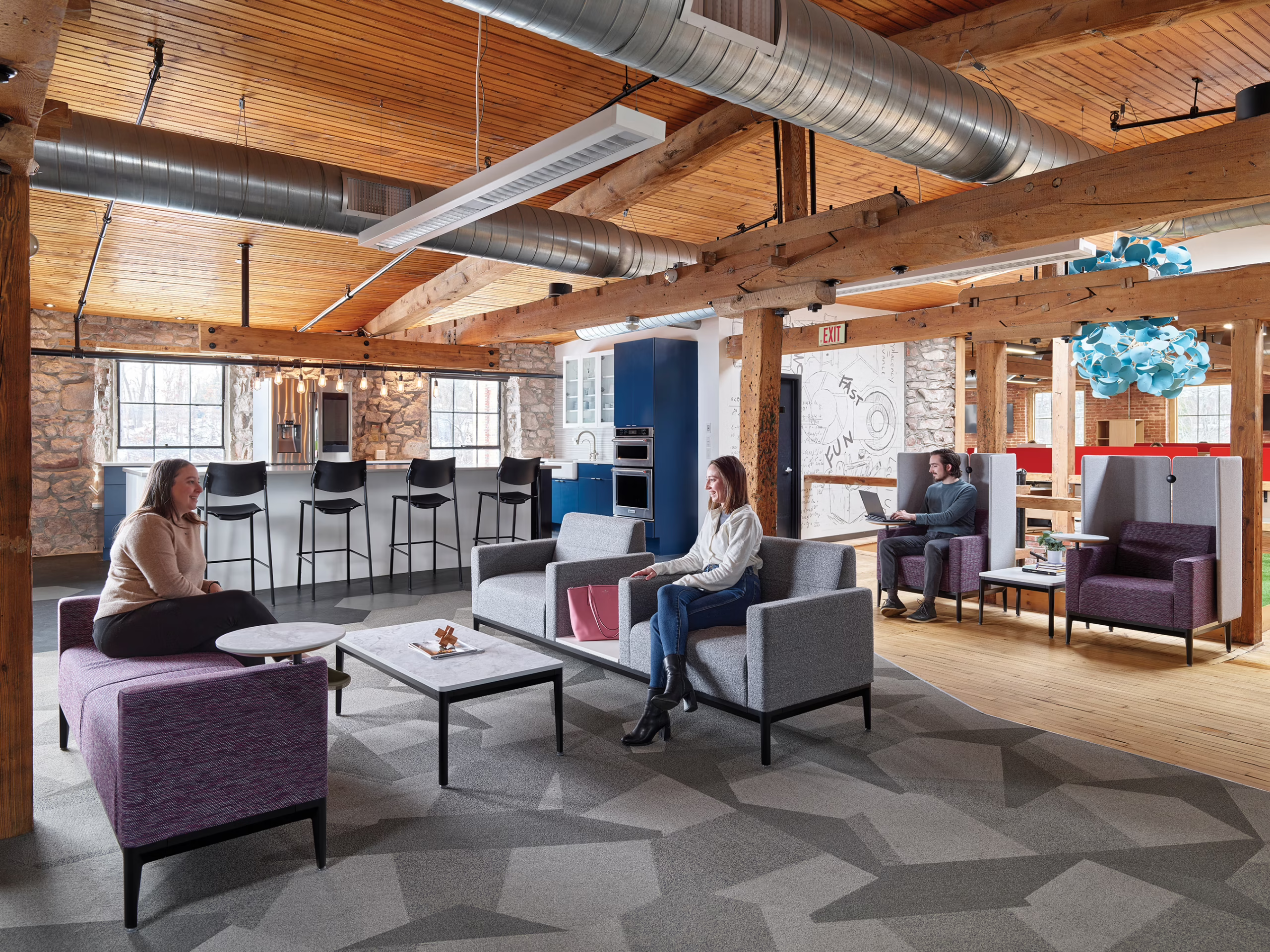
#5. ‘Me’ And ‘We’ Spaces
The emergence of collaborative and community functions in library spaces determines that space must be thought about as both individual and collective. Defining space as ‘me’ and ‘we’ helps describe not just the physical parameters of space but also the mindsets and feelings we wish to promote through design. Outlining space in this way also provides a platform for the experiences we wish to support. It alleviates conflicts that are often unintentionally created in space and furniture design when these two scenarios are not clearly understood or delineated.
#6. The Value of Tradition
Age often connotes wisdom, and in the context of the library, this is often expressed in the specification of traditional or historical furnishings in alignment with the décor and period of the library. Tradition promotes many valuable associations for users and brand messaging, and many institutions seek to balance this tradition with contemporary statements. We observe many institutions working to find an ever-changing balance that honors their past while also looking toward their future.
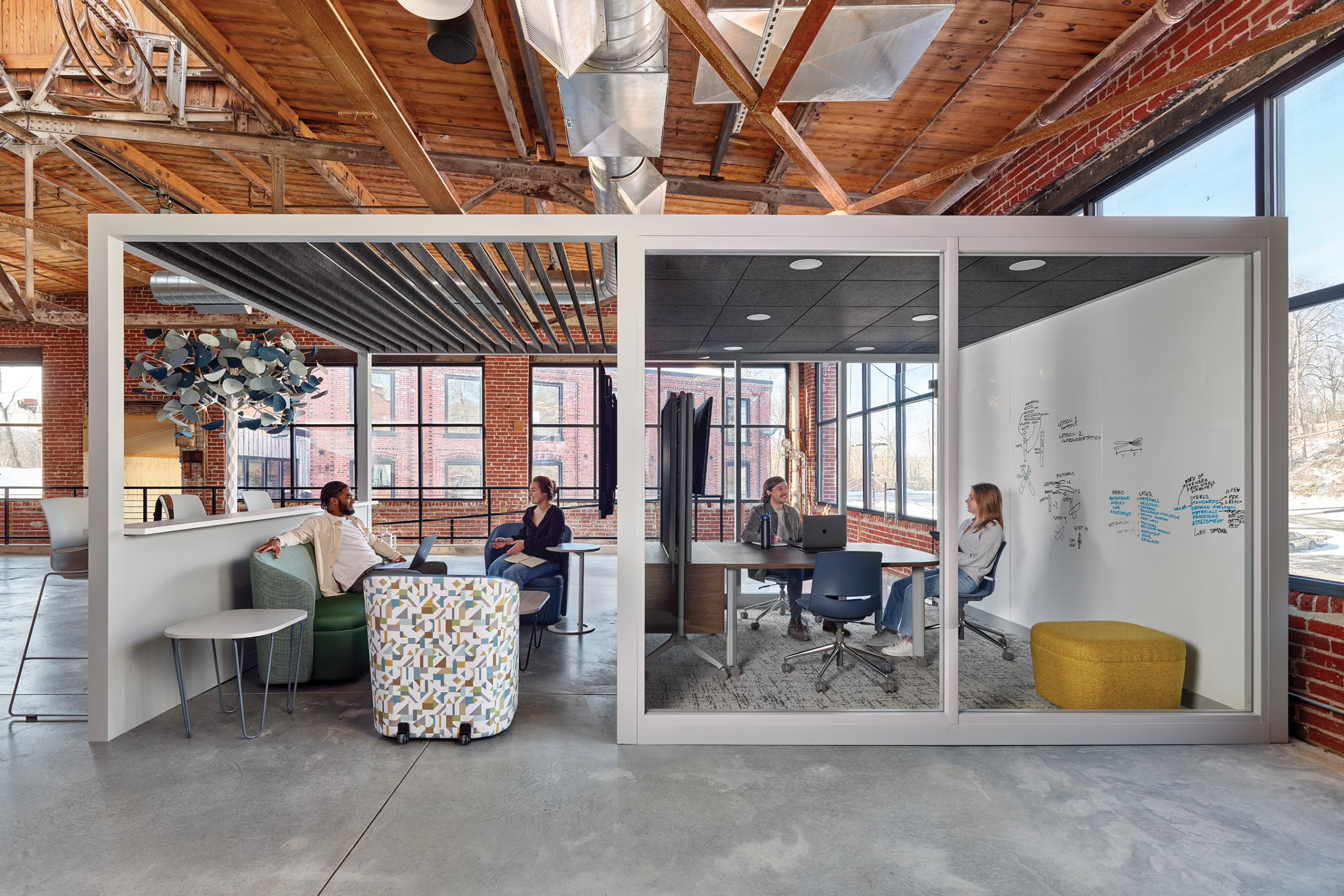
#7. Community & Service Models
As the role of libraries shifts and expands, the importance of community continues to be central. Understanding these new dynamics is a key driver in service offerings, space planning, and furniture applications. A central theme in the evolution of the library is the advent of digital services and connectivity. This facilitates community reach far beyond its physical boundary and the expansion of programs that can be offered. Librarians and the services they provide must not be overlooked as they are the epitome of lifelong learners who aim to support the learning of everyone who walks through their doors – literally or digitally.
#8. Dedicated Versus Transitional
Time is a critical design driver and should be considered to ensure transitional experiences are well catered for in addition to long-term dedicated space. Students, community members, and faculty might need a simple touch-down space, or they might require a more lengthy and comfortable space to study and research for hours. We recommend space utilization as a significant component of planning and design to understand the various work and social modalities that will occur within a singular space over time to find the right balance between these dedicated and transitional modalities.
“Our main goal is to make the library available, make people aware we are here, and have a space where people feel comfortable meeting with their community.”
—College Librarian
Conclusion
Libraries are undergoing rapid change requiring the most innovative solutions where more diverse experiences can be housed within architectural and spatial plans increasingly defined by automation and space repurposing. There is considerable need and opportunity to advance the definition and concept of these signature spaces while preserving the reverence for knowledge in the new era of the library.
We believe that libraries will always be in transition, and we must be engaged and dedicated to supporting their shifting baseline of needs, services, and design.
This article provides an abbreviated overview of our findings. For comprehensive access to our full white paper and supplemental information, please scan the QR code below.


KI and Furnishing Knowledge are registered trademarks of Krueger International, Inc.
Contributors
We wish to thank the following institutions for their participation in this research:
- University of Pennsylvania, Philadelphia.
- Integrated Product Design Program:
- Sarah Rottenberg, Mikael Avery, Terence Lin, Chris Chong,
- Daryn Golub, Jacqueline Aquino, and Akshay Panyam
- California College of the Arts, San Francisco, CA
- Clemson University, South Carolina
- City University of New York, Baruch College
- Dartmouth College, Hanover, New Hampshire
- The New School, Parsons School of Design, New York
- University of California Berkeley, CA
KI and Furnishing Knowledge are registered trademarks of Krueger International, Inc.