


2020-2025 was an extraordinary 5-year span. We experienced a global pandemic while witnessing technology, AI, and social media make unimaginable leaps, impacting daily life more than we could have imagined.
Gen Z came of age in this environment, significantly altering their expectations and the value they put on a traditional education. The student body is evolving faster than schools can adapt—from digital learning to shifting social dynamics—and there are no signs of it slowing down. Gen Alpha is right on their heels and is even more digitally submerged.
As today’s students navigate a world of constant change, their learning environments must do more than accommodate—they must empower. Experts in e-learning, Dr. Anu Kohli and Sonam Arora explain in their paper, An Unconventional Education Landscape for Unconventional Generation Alpha, “the current conventional educational atmosphere is not sufficient to fulfill the needs of this tech-savvy generation. There needs to be a revolutionary shift to a more thought-provoking ecosystem.”1
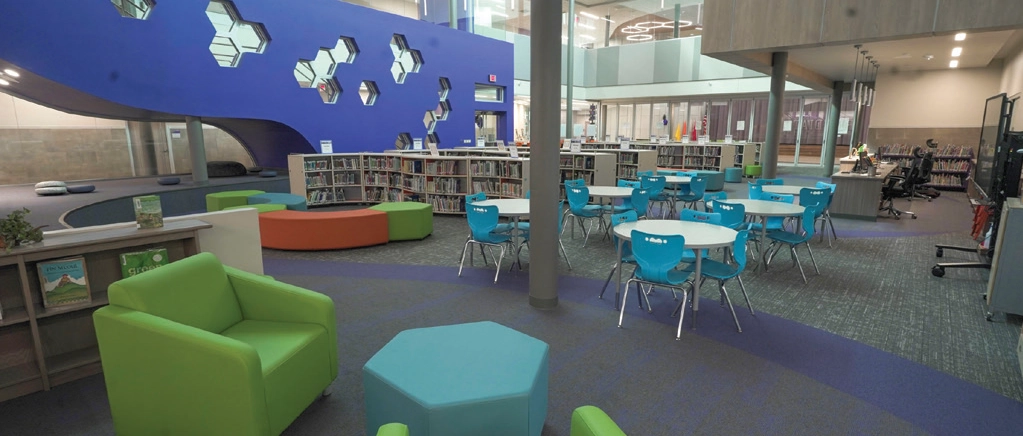
Students believe real learning happens outside of school, as classroom structures are outdated and fail to engage their curiosity, creativity, and potential. To bridge this gap, schools must rethink their role—not just as places of instruction but as hubs of inspiration and innovation by understanding what is happening in the student’s world. Schools must challenge and move beyond the 21st-century approach to design and adopt an approach that explores intentional design with a lightning-fast response rate.
When done correctly, intentional, research-driven design can meet students where they are, challenge their potential, and create learning environments that empower, engage, motivate, and prepare them for the rapidly evolving world we live in. By future-proofing educational spaces, we can ensure that students are not just accommodated but understood.
One approach is to rethink the way technology is used in the classroom. Technology is no longer just the subject in 21st-century classrooms. For Gen Z and Gen Alpha, technology is a fundamental learning tool. A group of secondary biology students in Melbourne used augmented reality (AR) to explore respiratory systems. Compared to students taught with traditional methods, the group performed 30% better in exams. “The immersive 3D experience brought abstract textbook diagrams to life.”2
“A future-ready classroom embraces technology to refine and enhance education. It is an inclusive, digitally powered environment where tools like artificial intelligence, virtual reality, and collaborative platforms make an impact. This shift doesn’t just give students access to information; it empowers them to become active creators of their learning experiences.”3
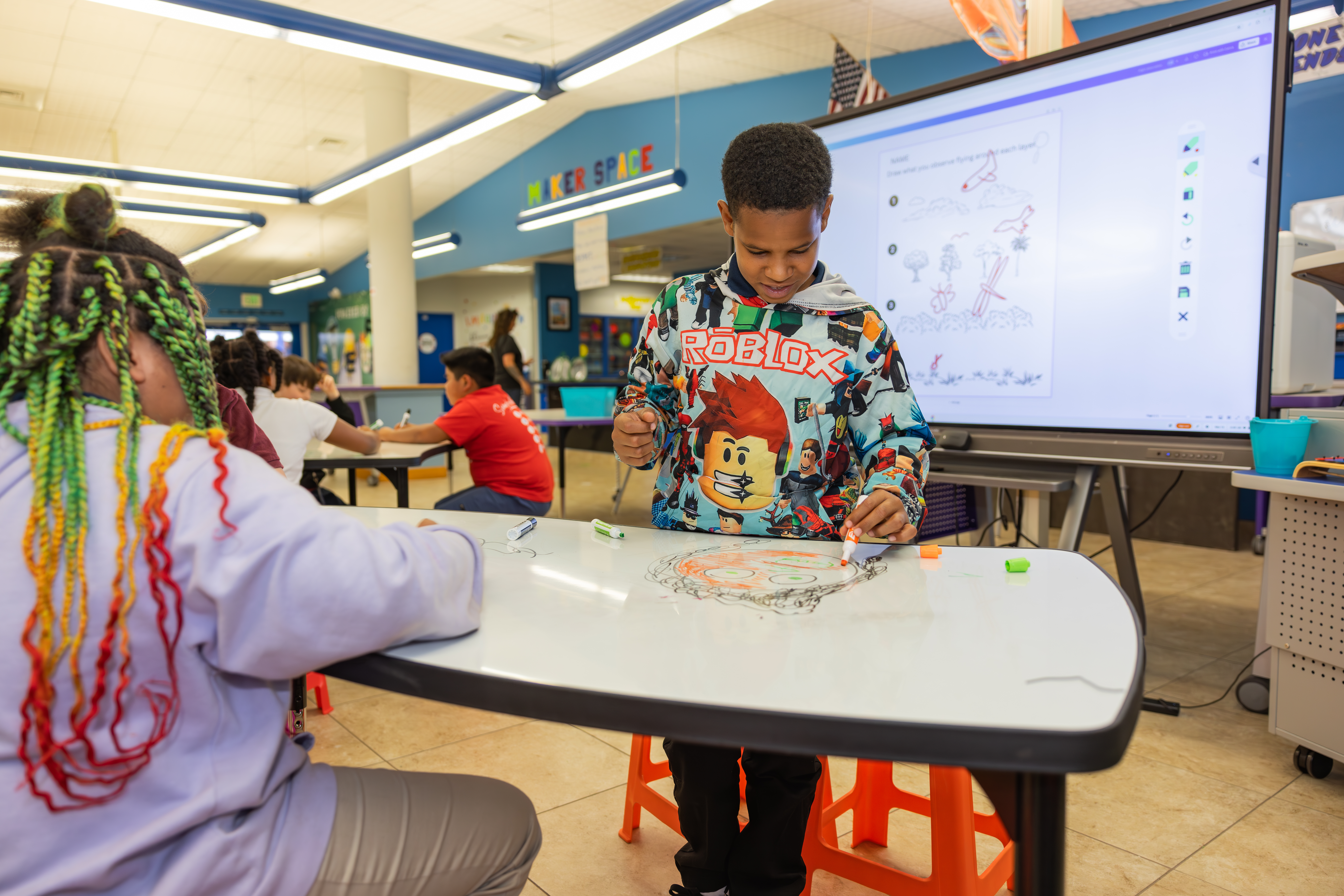
Dodgertown Elementary School in Vero Beach, FL unveiled their solution to dwindling enrollment numbers by leaning into their focus on science, technology, engineering, the arts, and mathematics (STEAM) curriculum. To accommodate their vision of an interdisciplinary, multi-grade-level space, STEAM Park was created in the underutilized library.
STEAM Park has six distinctive areas from a coding and engineering space to a 3D printing and robotics lab. At full capacity daily, classes stream into the space to apply STEAM principles to topics they are learning in their classrooms. Engagement, interaction, and cooperation are off the charts as students collaborate across disciplines and age levels to explore, experiment, and find solutions to problems.
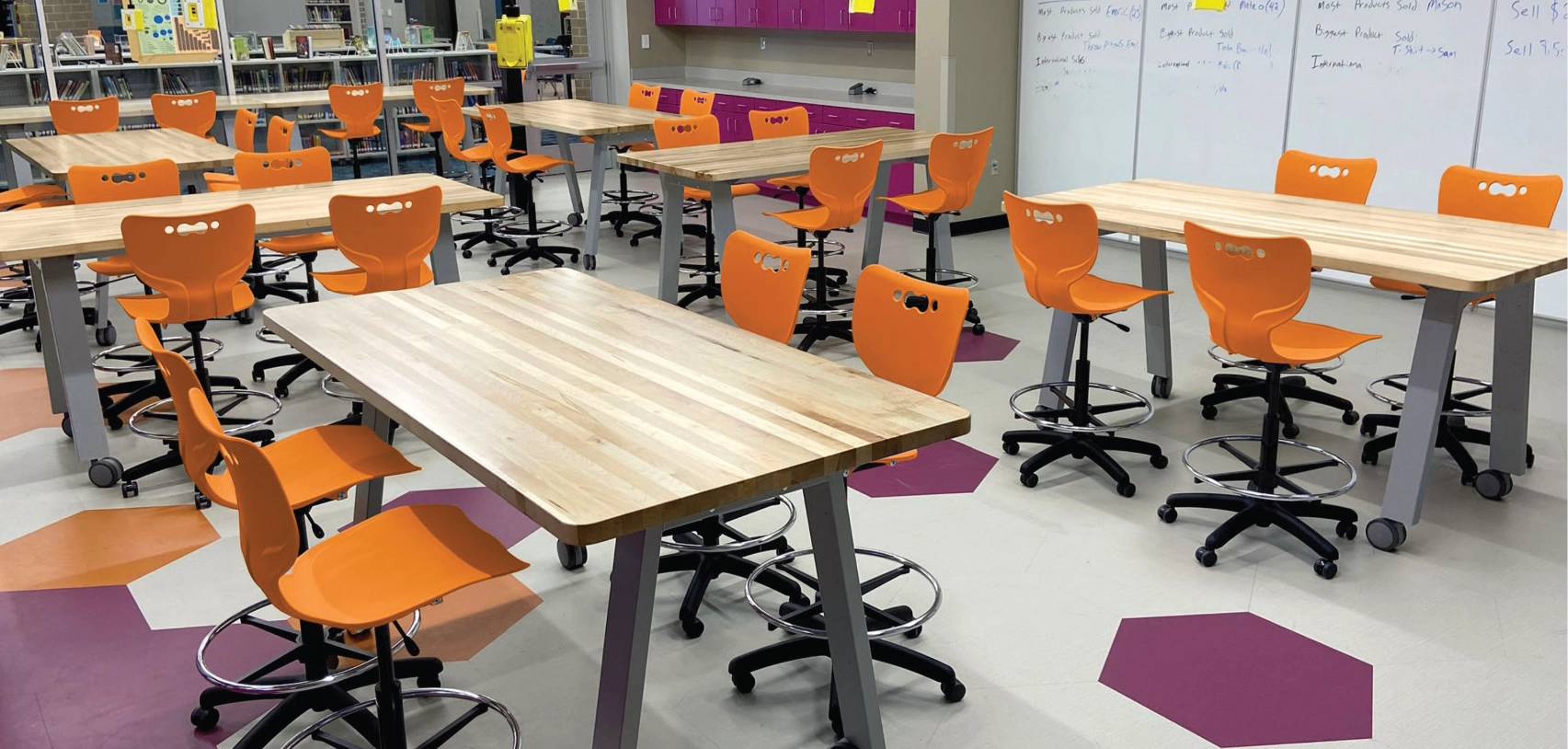
STEAM Park is outfitted with porcelain steel tables and desks, standing height tables with Hierarchy stools, comfortable soft seating steps, and individual ottomans as well as maker space tables and storage cabinets. The flexible furniture allows the STEAM Park administrator and students freedom to curate the space to their needs and activities. “The students love the element of choice. They love being able to come in and try something different, get out of their heads if they are frustrated. They can pick a spot and regulate themselves until they are ready to move on to a different activity,” says Erika Fischer, Digital Innovation Specialist.
The space is a huge improvement to Dodgertown Elementary and a win for the students and teachers. What makes this space standout is the added peer-to-peer engagement and interactive learning. This advantage could be the missing piece to motivate this generation of students.
A world-wide study analyzing student performance during covid found that when students were grouped for social distancing based on their comprehension of a subject rather than by their age were more incentivized to improve their performance.4
This explains the success that Dodgertown has witnessed less than a year since STEAM Park was unveiled. With a quarter of the 21st-century behind us, what have we learned from 21st-century classrooms’ Learning environments with flexible, choice-based furnishings are making monumental strides for the intellectual, physical, and mental health of students but that’s only one piece of the puzzle.
When students have the world’s knowledge accessible at their fingertips, it’s the relationships forged in these spaces that could make the biggest impact on motivation. When we start to think of the environment as more than the physical space, and consider tailoring not just furniture but also peer groups and teaching tools, “the focus [of education] will shift from a transfer of knowledge to the co-creation of knowledge.”5
References
- https://www.ijfmr.com/papers/2024/5/28938.pdf, International Journal for Multidisciplinary Research (IJFMR)
- https://medium.com/@colin-cooper/future-ready-classroomstransforming- education-with-technology-d8a98b6bff3a
- https://medium.com/@colin-cooper/future-ready-classroomstransforming- education-with-technology-d8a98b6bff3a
- https://www.sciencedirect.com/science/article/abs/pii/ S0313592620304677?via%3Dihub
- https://www.ijfmr.com/papers/2024/5/28938.pdf