


The American Institute of Architects (AIA) Education Facility Award recognizes and celebrates leading-edge projects across the full continuum of learning environments—ranging from K–12 schools and community or technical colleges to institutions of higher education, training centers, and non-traditional learning settings. Each year, a jury convened by the AIA selects projects that exemplify design excellence in educational facilities.
Over the past three years, members of the AIA Committee on Architecture for Education’s (CAE) Leadership Group have reviewed these award recipients to identify shared themes, trends, and best practices. These insights have been presented at the AIA Conference on Architecture and Design, and are intended to inform both designers and educational clients as they pursue high-quality, impactful learning environments.
This article is the first in a two-part series. Here, we focus on themes centered on place and community. In the second installment, we will explore how sustainability-driven strategies in both renovation and new construction further elevate educational design.
Thoughtful Response to Place
When a design thoughtfully responds to its unique location, communities more readily perceive the building as an authentic part of their collective identity. Recent award recipients span 19 states.While many projects are located in major metropolitan areas—such as New York, Boston, Chicago, and Washington, DC—an equally compelling number are situated in small- to mid-sized towns and rural settings, including Beatrice, Nebraska, and Bentonville, Arkansas. Together, they demonstrate that exemplary educational facilities can be realized in any context.
Across these projects, a consistent theme is the strength of their physical relationship to surroundings, shaped by each community’s sense of place. In some cases, this is expressed through deliberate engagement with topography or landscape, creating moments of drama, procession, or discovery. In others, projects respond directly to climate, reinforcing regional identity—ranging from heavily insulated envelopes with warm, luminous interiors in colder regions to open breezeways and outdoor learning spaces in warmer climates.
Familiar local materials, selected to resonate with nearby buildings, are often used in inventive ways that provide visual delight and creative expression. Collectively, these strategies deepen a sense of belonging and connection, benefiting daily users as well as the broader community.
Community Engagement
When school and community stakeholders are invited to actively participate in imagining possibilities, design outcomes benefit from shared insight and foster a sense of shared ownership. Stakeholders often take pride in identifying elements of a project that reflect their contributions.
For example, at the American School Foundation of Guadalajara, outdoor classrooms and rooftop terraces—developed through multiple rounds of community engagement—create a dynamic relationship between students and residents. The most effective engagement goes beyond one-way communication and becomes a collaborative decision-making process.
At Bard High School Early College, the renovation of a 1960s building taller than surrounding homes involved neighbors in reviewing design strategies to brighten and open exterior façades. The selected approach increased window openings and introduced materials and detailing that reduced the building’s perceived scale. When community engagement meaningfully informs design, projects tend to exhibit greater richness, vitality, and long-term relevance.

Expression of Heritage and Culture
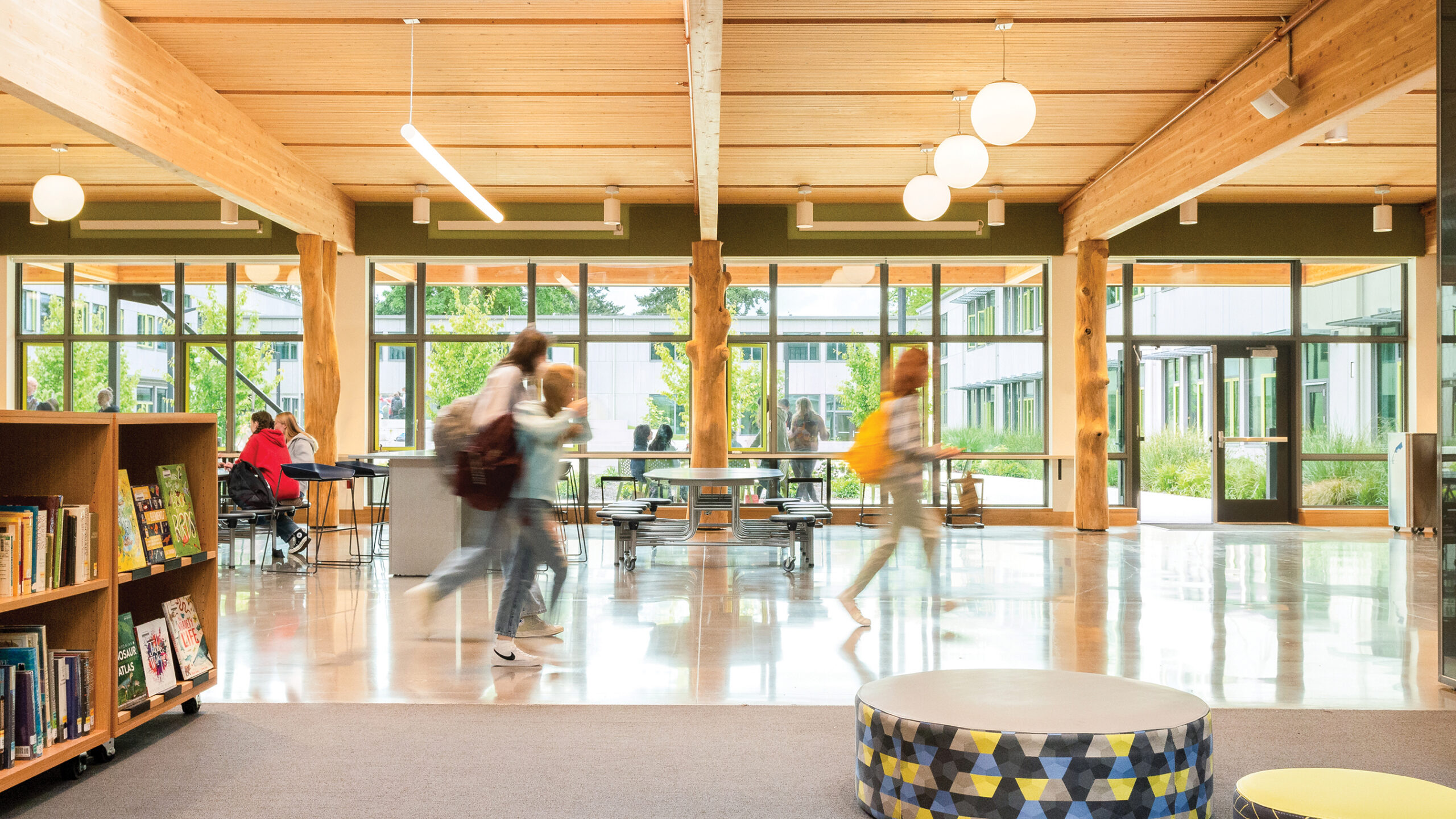
At a time when contemporary architecture is sometimes perceived as impersonal, projects that physically express local cultural identity often feel more engaging, inventive, and meaningful. At Lakeridge Middle School in Oregon, white oak trees removed from the site were harvested and transformed into structural columns throughout the school, offering an inventive reinterpretation of the forests of the Pacific Northwest.
In a more urban example, the new home of Collage Dance in Memphis, Tennessee, creates a literal backdrop for outdoor ballet performances in a plaza facing the neighborhood, turning architecture into an invitation for shared celebration of art and culture.
Across award-winning projects, expressions of identity appear in both exterior and interior design—from welcoming entries and generous glazing to building-scale graphic elements and interior murals developed with local artists. When design processes and outcomes authentically reflect a community’s heritage, needs, and aspirations, the resulting spaces feel more personal, distinctive, and enduring.
Collaborations and Partnerships
Another emerging trend among award-winning projects is collaboration between educational institutions and external partners, intentionally blurring the boundary between learning environments and professional practice. Through these partnerships, students gain access to spaces, equipment, and expertise typically reserved for working professionals.
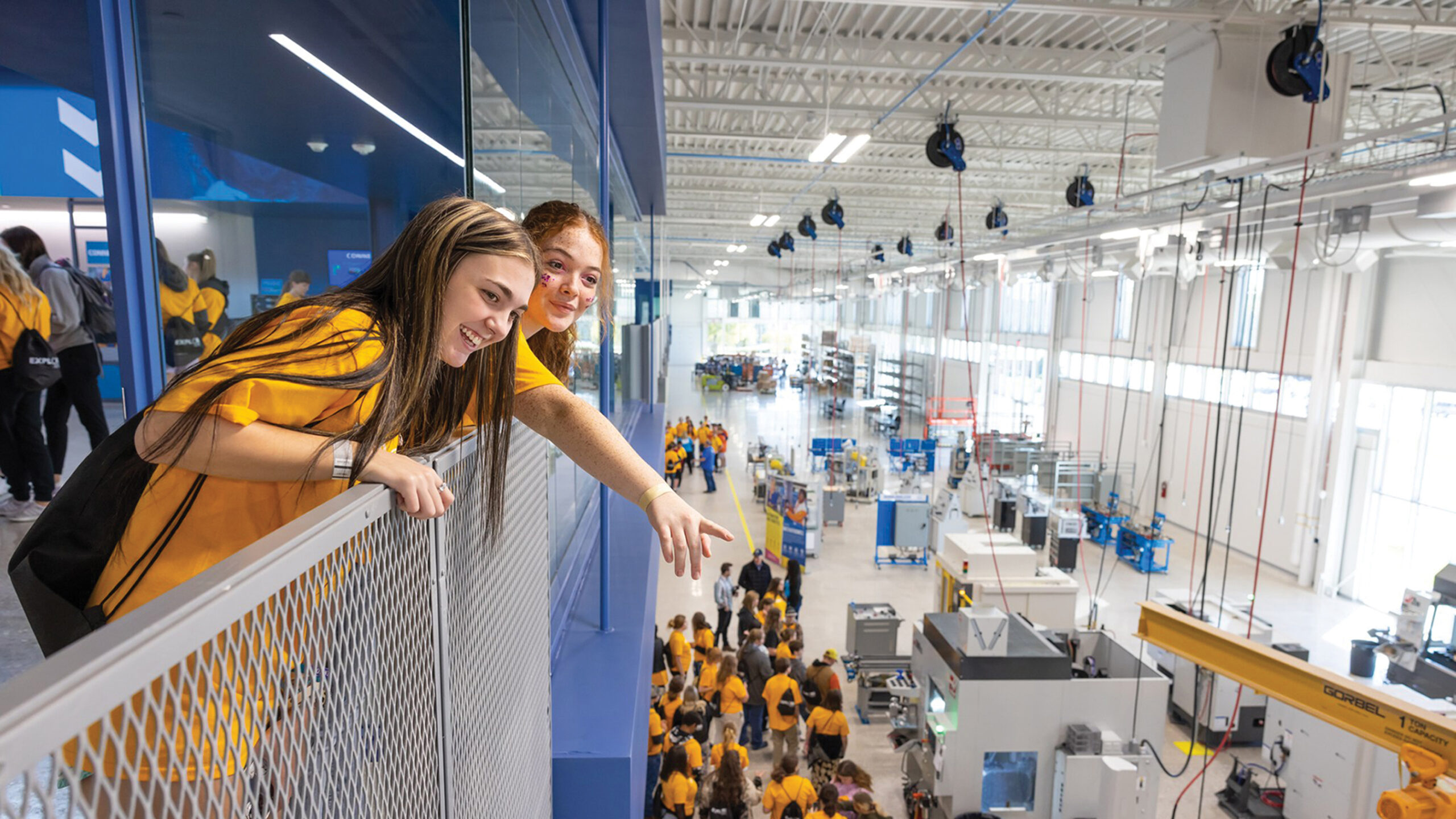
Fields such as healthcare, aviation, manufacturing, and the arts increasingly integrate industry-grade environments into educational facilities. The Robert W. Plaster Manufacturing Center in Springfield, Missouri, exemplifies this approach, while the Boston Arts Academy integrates performance venues with instructional spaces, elevating both learning and aspiration by welcoming real audiences into the building. These partnerships extend even to younger learners. Ehrman Crest Elementary and Middle School, designed in collaboration with a children’s museum, demonstrates how curiosity, play, and informal learning can coexist to reinforce active engagement and experiential learning.
Informal, Playful, and Active Learning
As passive learning models continue to fade, educational facilities are increasingly designed to support hands-on, active, and experiential learning. These approaches emphasize exploration, play, and learning by doing.
Across many award-winning projects, this philosophy is evident in bright, welcoming environments that incorporate engaging materials and flexible furnishings. Spaces themselves remain active, adapting easily as teaching methods evolve. Student work and creative processes are often intentionally placed on display, reinforcing pride, agency, and collaboration.
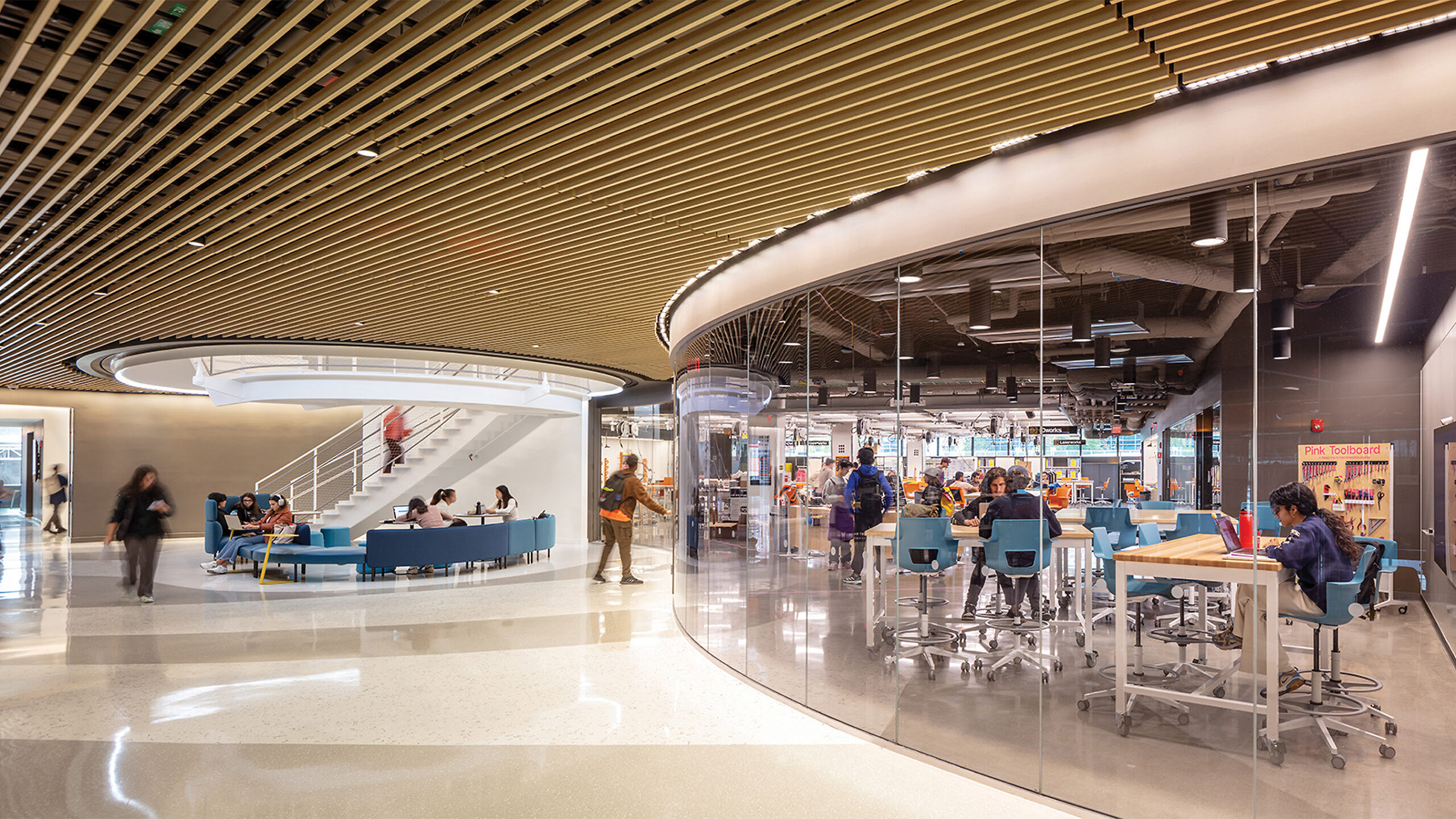
Facilities such as Northeastern University’s ISEC and EXP illustrate how maker spaces and student-centered environments encourage experimentation, collaboration, and self-directed learning— positioning architecture itself as an active participant in education.
Reflection
Reflecting on this recent group of AIA Education Facility Award recipients reveals projects deeply rooted in place and community. Across all examples, thoughtful decisions related to form, material, space planning, and detailing consistently enhance learning while fostering a strong sense of local pride.
These projects reinforce the idea that design is more than problem-solving—it is a medium for playful exploration, imaginative expression, and meaningful connection. Investing the time to authentically reflect both people and place enriches design outcomes and strengthens the lasting relationships users form with their environments.
In part two of this series (June 2026), we will explore how sustainability- driven strategies continue to elevate educational design across the full continuum of learning.