

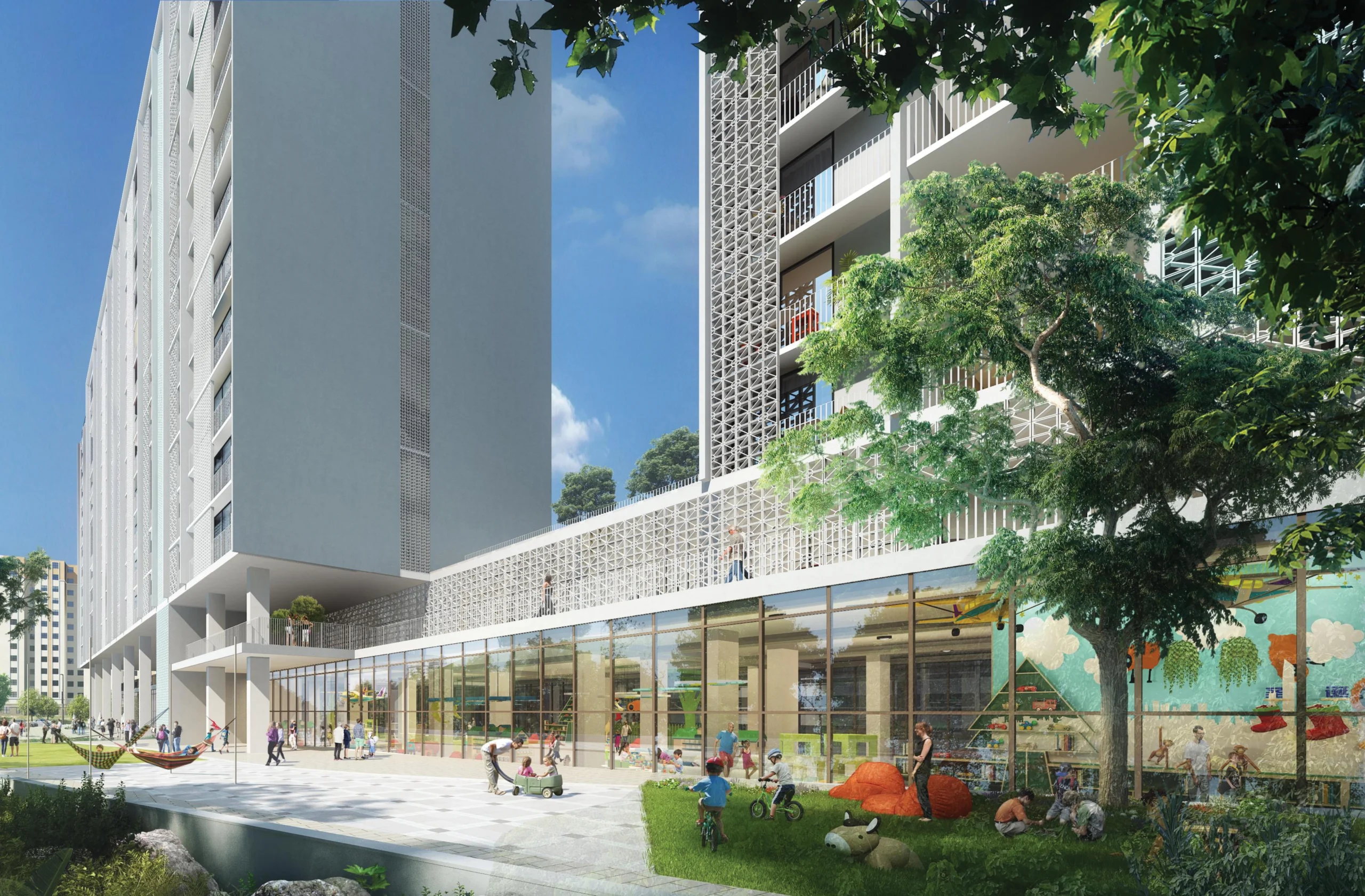
On-campus Early Learning Centers (ELC) can have a symbiotic relationship with postsecondary institutions, driving success for students, faculty, and staff with young children while also functioning as “lab schools” for the education and training of future early learning professionals and helping drive research on child development and education. The impact of a new center can be transformative—providing resiliency for campuses and neighboring communities alike.
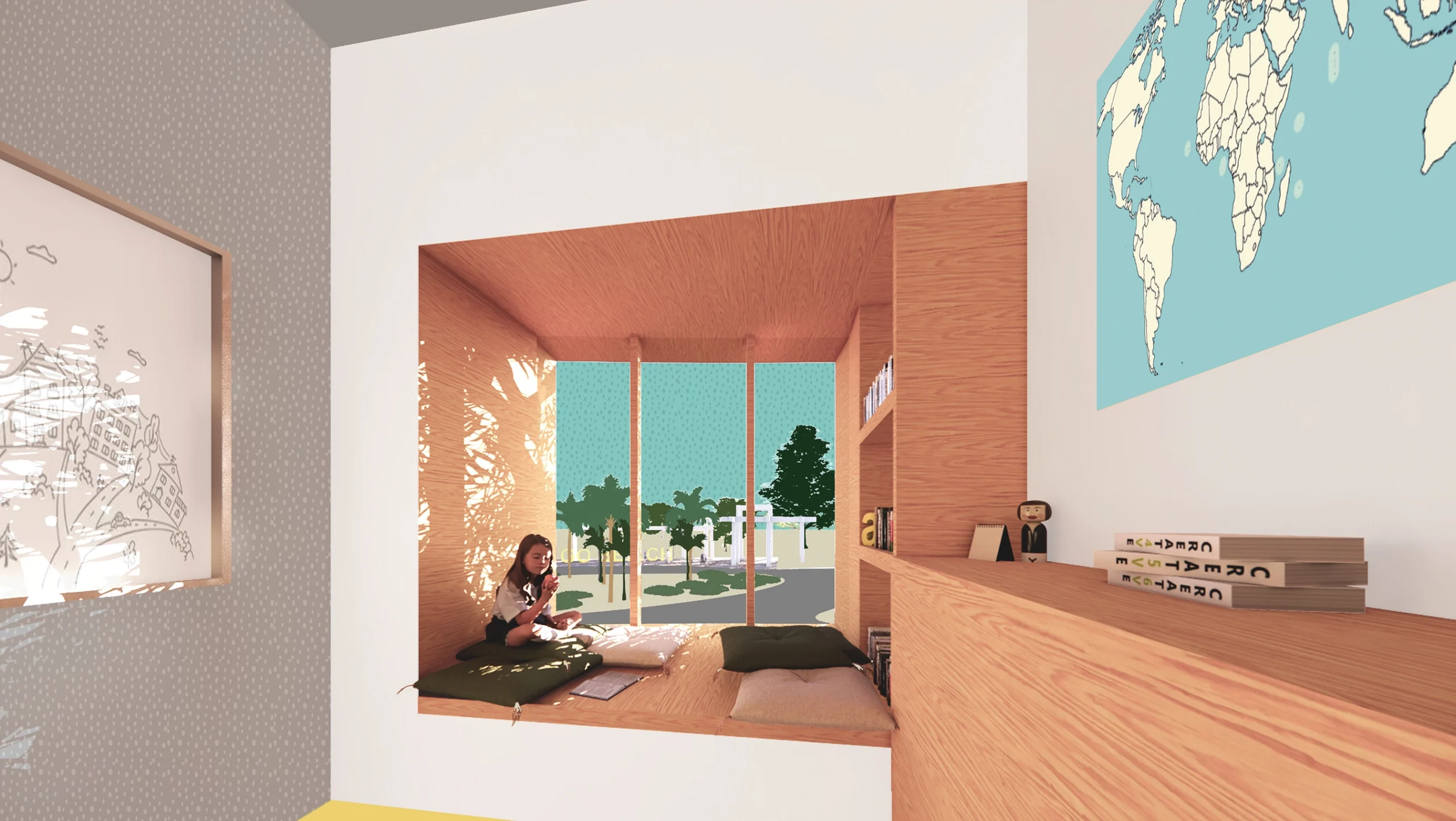
The Federal Government targeted this issue in the America Rescue Plan, ratified in April of 2021 with $39 billion allocated towards restoring stability to the childcare system. U.S. Secretary of Education Miguel Cardona noted “I am a big believer in campus childcare programs because I’ve seen how they break down barriers to upskilling and attaining postsecondary education for parents with young children—bringing the American Dream within reach for families across America.”1 In October 2023, $13 million in grants were awarded specifically to 34 institutions of higher education across the nation. Whether or not these centers are federally funded by future administrations, there is reason to believe that we will continue to see more of these facilities as colleges continue to recognize the benefits for faculty, staff, and students.
ON-CAMPUS CHILDCARE IS AN IMPORTANT DRIVER OF EDUCATIONAL ACCESS— ALLOWING A LARGER, MORE DIVERSE POPULATION OF STUDENTS TO PURSUE AND SUCCEED IN HIGHER LEARNING.
The Many Benefits of On-Campus ELCs
Data taken from the 2020 National Postsecondary Student Aid Study (NPSAS) shows that nearly 1 in 5 students balance caregiving with their academic responsibilities2, and nationally, student parents are less than half as likely to graduate as their non-parenting peers (33% vs. 68%)3. On-campus childcare is an important driver of educational access—allowing a larger, more diverse population of students to pursue and succeed in higher learning.
These service-oriented and educational programs benefit faculty, administration, and staff, as well. Studies have linked quality onsite childcare programs to reduced employee absenteeism, increased productivity, and retention.4 Parents can concentrate on their work when they have access to high-quality care for their children. There is also evidence that many employees, even those without children, develop a greater commitment and loyalty to their place of employment when on-site childcare is offered.
The main beneficiaries of quality childcare are the young learners themselves. Access to high-quality childcare plays a pivotal role in a child’s cognitive and social-emotional development. Research indicates that children who receive high-quality early care and education during their formative years, exhibit enhanced learning and developmental outcomes that extend through adolescence and beyond.5
Dual Purpose: Childcare and Educational Training
When paired with an institution’s Early Childhood Studies program, model early learning centers or “lab schools” provide college students the opportunity to gain hands-on training working with young children under the tutelage of faculty and childcare staff, allowing them to apply developmental theories in real-world settings. Research suggests that this experiential professional development significantly enhances teacher effectiveness.6 Such approaches enable educators to actively engage with new teaching methods, fostering deeper understanding and more effective classroom implementation. Linking academics to practice in these environments also contributes to the field by generating and disseminating new knowledge on child development and early childhood education.
Finally, lab schools play a vital role in expanding the pipeline of childcare professionals into our communities—a much-needed economic driver.
Planning for an On-Campus Early Learning Center
As planners and architects work with institutions to design these unique spaces, they must be aware of critical issues that differentiate on-campus sites from standalone centers, while also setting them apart from traditional higher education work.
Step 1: Assessing Needs and Feasibility
Conducting a Feasibility Study
A comprehensive feasibility study will equip the university with essential data to inform future decisions. The study should evaluate costs, benefits, and risks involved, including a thorough assessment of compliance with licensing and regulatory requirements to ensure adherence to health, safety, and operational standards. Additionally, the analysis should consider enrollment data and demographic trends to determine capacity needs, ensuring that resources are aligned to maintain high-quality care.
Programming for Community Needs
Each university or college will have its own unique community both on and off campus. Assessing the needs for childcare should begin with surveys and focus groups to understand the needs of parenting students, faculty, and staff. Campus centers often serve diverse populations; the outreach and programming process should also allow for a variety of modes of participation. While establishing the programmatic framework for the Early Childhood Care and Education Center at California State University Channel Islands (CSUCI), project partners noted that the new Center should support the needs of student parents, the community, and local farmworker families, while also contributing to the training, academic research, and professional development of early childhood educators in the region. In addition to monthly updates with the Early Childhood Studies faculty, the various users provided valuable input on the design needs for higher education spaces like classrooms and observation areas. The design team also held meetings to establish the size, shape, and adjacencies of the childcare rooms. Meetings were scheduled with the university’s Maintenance and Operations Department, Campus Police, Fire Marshal, and Landscape Division, among others. These meetings emphasized that a new group of young learners, with different safety and need requirements from traditional college-age students, would be joining the campus.
WHEN DESIGNING A CHILDCARE SPACE ON A HIGHER EDUCATION CAMPUS THAT ALLOWS FOR BOTH OBSERVATION AND TEACHING, A BALANCE MUST BE MET BETWEEN CREATING A SAFE, NURTURING ENVIRONMENT FOR CHILDREN AND FACILITATING EDUCATIONAL OPPORTUNITIES FOR STUDENTS.
Partnering with Early Learning Department Faculty
When designing a childcare space on a higher education campus that allows for both observation and teaching, a balance must be met between creating a safe, nurturing environment for children and facilitating educational opportunities for students. Often classrooms have adjacent observation rooms with windows that allow students to observe children in the caregiving environment without disrupting their activities. These spaces should allow unobstructed views of the children (through one-way glass or similar) and be acoustically isolated from the higher education spaces. Technology (such as tablets, computers, or interactive whiteboards) can also be incorporated for teaching and observation purposes. If acceptable by campus standards and parents, designers can also integrate tools like cameras or audio recorders for documenting children’s activities. This can help students review real-life scenarios for further analysis and reflection. However, children’s privacy and confidentiality must be respected, and areas where children’s personal information is stored should be secure and separate from public areas. Private spaces should be designed for discussing confidential matters between faculty, students, and parents, ensuring that sensitive issues are handled discreetly.
Step 2: Funding Strategies
Public Funding and Grants
Institutions can explore federal, state, and local funding opportunities for childcare and education infrastructure, such as the Child Care and Development Block Grant (CCDBG) and Child Care Access Means Parents In School (CCAMPIS), as well as community funding partnerships.
Role of University Budgets, Endowments, and Private Donor Partnerships
Universities can review allocation of funds for childcare and early education infrastructure, and leverage endowments for sustainable funding. Highlighting the long-term benefits of centers for staff and students can help align donor goals with university priorities.
Step 3: Site Selection and Design
Location Considerations
A space utilization study can identify potential locations for the childcare center, which should include accessibility, proximity to parking, and safety for children and parents. Information gathered on the needs and capacity requirements can help to assess options for new construction versus renovating existing space.
Most licensing jurisdictions require childcare classrooms to provide at least 35 square feet of indoor activity space per child. Only net square footage is considered for licensing purposes, which excludes areas such as storage, adult workspaces, corridors, restrooms, and similar spaces. When determining the total outside playground space, centers are required to allocate 75 square feet per child, necessitating a considerable portion of at-grade space. If these facilities have a second floor, they are often occupied with lecture spaces for the college students, faculty office space, or parent meeting rooms.
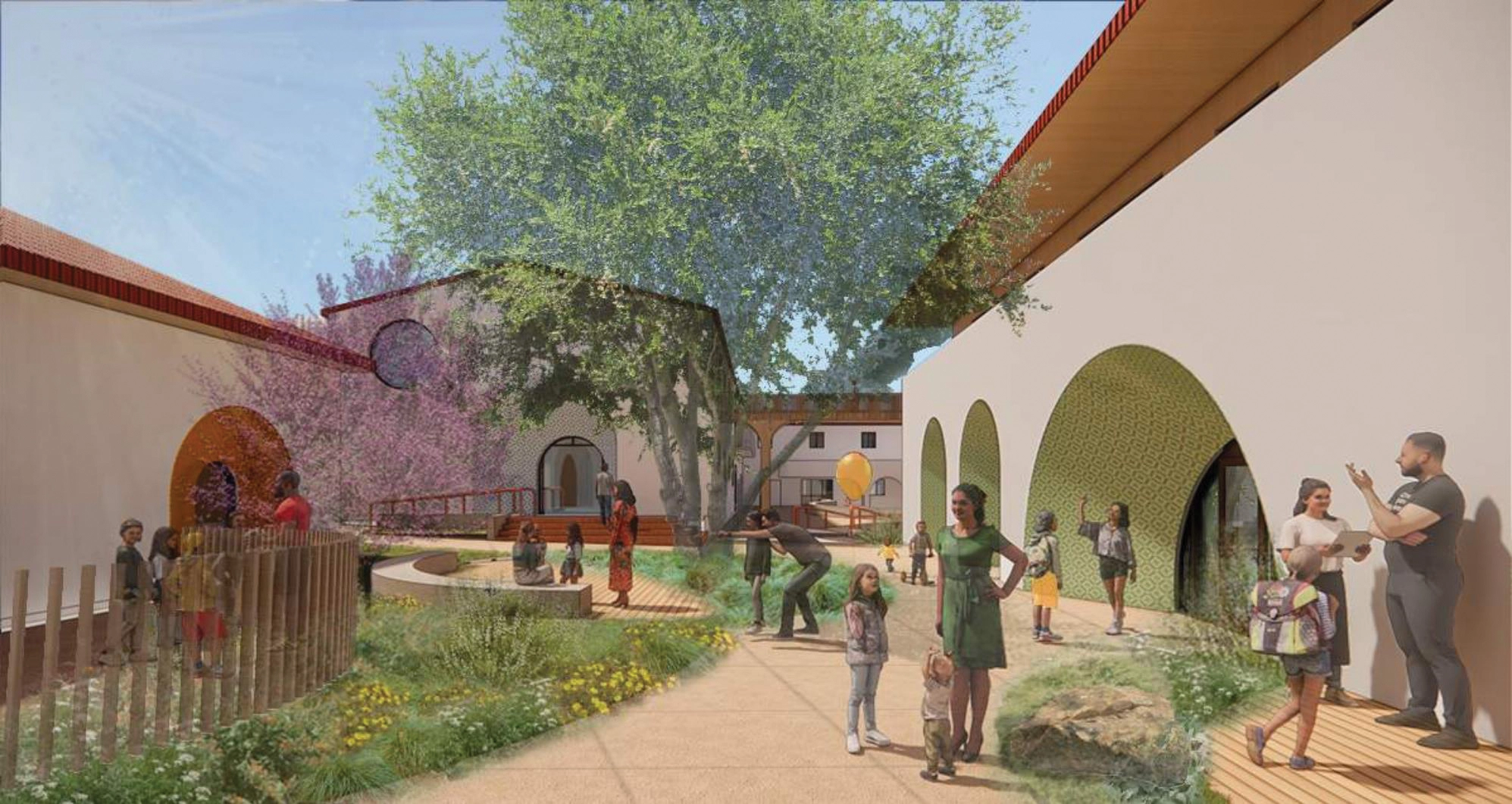
Another key factor in site location is access. Generally having a center where drop-off can be accessed easily by car on the outskirts of campus is preferred. Some parents might be from the outside community and leave for work off-campus after dropping their child off, while parenting students or faculty might be dropping children off before class. Regardless, drop-off can be a pain point for users if not located closely and designed properly as parents are often pushing a stroller and lugging bags to check-in.
At a project for the University of Hawaii, Manoa, the childcare center was designed on the ground floor of a new residence hall and specifically caters to parenting students who have easy access to their children, before, after, and between classes. One of the greatest benefits of having a center on the same campus where parents might be studying, teaching, or working is that it allows for dropins, visits, and even regular feeding.
Designing for Children on Campus
Designing an early learning center on a higher education campus requires balancing the more serious, elevated character of the campus with a playful, engaging, and developmentally appropriate environment for young learners. At Long Beach State University, the design team opted for a subdued facade that harmonizes with the surrounding mid-century campus, concealing a bold, graphic-filled interior play yard. Graphics play a key role in child-centric design as our young users are not yet at reading age.
Safety and Security
The flip side of having an easily accessible center is that it makes designing for safety and security more challenging. Since campuses are, by nature, active and open areas, great care should be taken to have a clear separation between the center and campus. Center design should focus on having one secure point of entry, when possible, with ample visibility from a reception desk. Alarm systems often connect directly with campus police and the incorporation of security cameras should be discussed. Different institutions will have specific policies around this, and our design team has worked on certain campuses that did not allow surveillance of any kind.
Child-Centered Materials
Campus material standards are not generally written with children in mind, requiring review with campus design and maintenance teams to replace unsafe or unsuitable options. Childcare centers must prioritize safety, durability, hygiene, and comfort to ensure a safe and nurturing environment. For example, flooring should accommodate sitting and crawling, hardware will need to be childproof yet ADA-compliant, and lighting should be softer and more diffuse. Outdoor spaces should take care to specify non-toxic plants and accessible paving.
A Path Forward
Designing childcare centers on higher education campuses is a vital step toward fostering a supportive and inclusive academic environment. These centers not only provide a safe and nurturing space for young children to thrive but also alleviate the significant challenges faced by student-parents, faculty, and staff in balancing education, work, and family responsibilities. By prioritizing thoughtful design that caters to the developmental needs of children and the logistical demands of campus life, these facilities enhance educational outcomes for both children and students through an efficient feedback loop that sends more, much-needed childcare professionals out into our communities. These centers serve as a testament to the institution’s commitment to equity, well-being, and success, creating a more engaged and resilient academic community. Investing in on-campus childcare is not just a vehicle for attracting and retaining faculty, administration and staff—it is an impactful path to invest in our youngest learners, empowering future generations, and fostering academic excellence.
References
- U.S. Department of Education. “Biden-Harris Administration Awards More Than $13 Million to Improve Access to Child Care for Student Parents” https://www.ed.gov/about/news/pressrelease/biden-harris-administration-awards-more-13-millionimprove-access-child. 12 October 2023
- Anderson, Theresa Afet Dundar, Sheron Gittens, Renee Ryberg, Rebecca Schreiber, Laney Taylor, Jessica Warren, and Kate Westaby. 2024. Who Are Undergraduates with Dependent Children? An Updated Overview of Student-Parent Characteristics Using 2020 Data. n.p.: Student-Parent Action through Research Knowledge (SPARK) Collaborative.
- Gault, B., & Reichlin Cruse, L. Access to Child Care Can Improve Student Parent Graduation Rates. Institute for Women’s Policy Research. https://iwpr.org/access-to-child-care-can-improvestudent-parent-graduation-rates/?
- “Workplace Child Care: Supporting Employee Success”, US Chamber of Commerce Foundation
- T., & Bredeson, M. (2023). Children’s learning and development benefits from high-quality early care and education: A summary of the evidence. OPRE Report #2023-226. Office of Planning, Research, and Evaluation, Administration for Children and Families, U.S. Department of Health and Human Services.
- Darling-Hammond, L., Hyler, M. E., Gardner, M. (2017). Effective Teacher Professional Development. Palo Alto, CA: Learning Policy Institute.
Resources
- The Growing Demand for Early Childhood Education: https://www.nac-lab.com/content/the-growing-demand-for-early-childhoodeducationGSA
- National Association for the Education of Young Children: https://www.naeyc.org/
- Early Learning at the U.S. Department of Education and Beyond: https://www.ed.gov/birth-to-grade-12-education/early-childhoodeducation/early-learning-home-page
- Early Learning Nation: https://earlylearningnation.com/
- Case for Childcare, Nationswell: https://www.caseforchildcare.nationswell.com/
- Tools for Student Parent Success: Varieties of Campus Child Care: https://iwpr.org/tools-for-student-parent-success-varieties-ofcampus-child-care/