

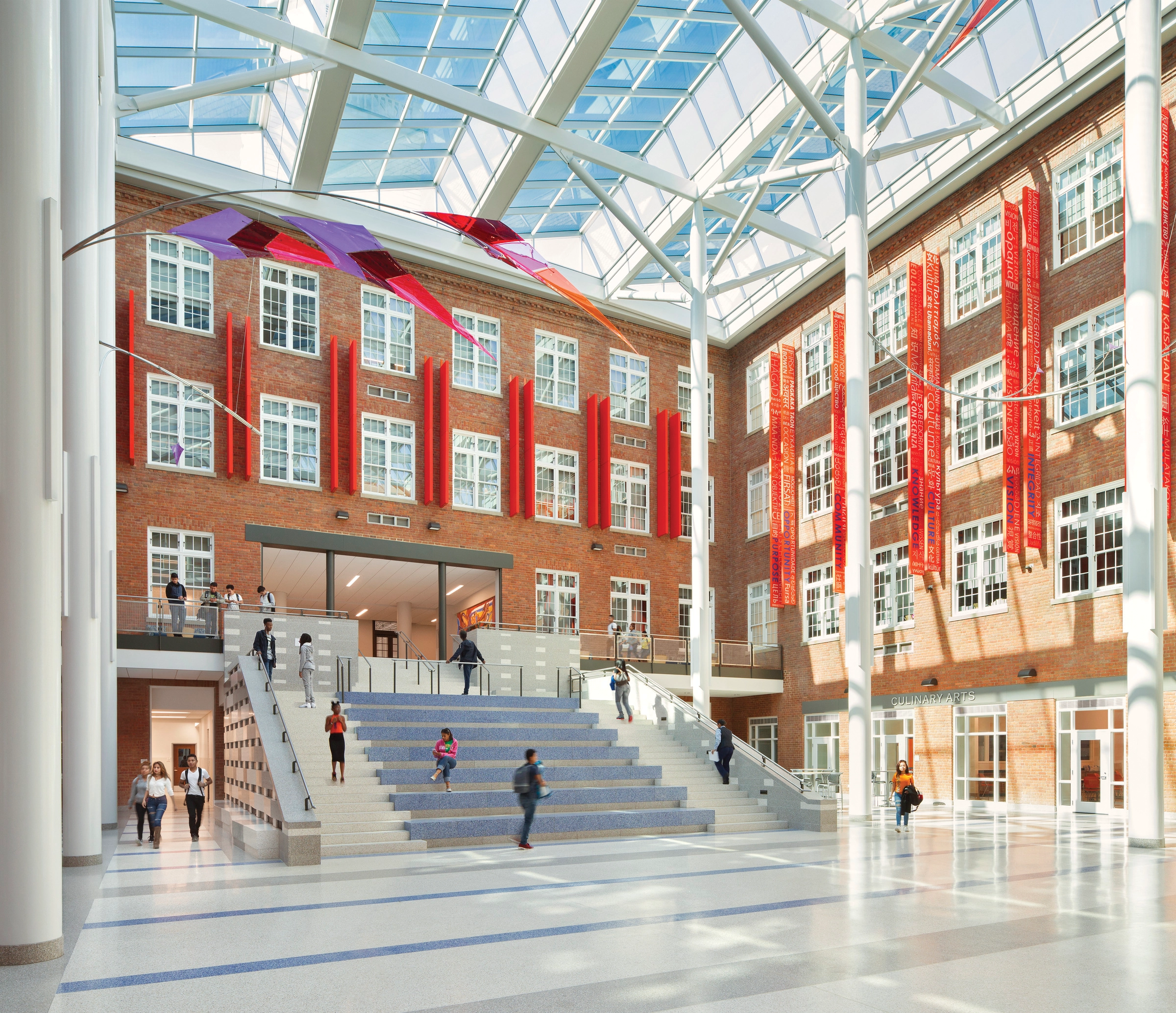
The state of America’s public-school infrastructure is alarming. According to the American Society of Civil Engineers, public school buildings in the United States received a grade of D+ in their 2021 infrastructure report card,1 a reflection of decades of neglect. Nearly half of these buildings are over 50 years old, according to the National Center for Education Statistics.2 Often plagued by outdated HVAC systems, leaking roofs, poor ventilation, hazardous materials, and outmoded instructional and support space, schools suffering from such disrepair pose severe risks not just to the structural integrity of their buildings but to the health, safety, and academic performance of millions of students every day. Beyond these considerations, disrepair impacts the working conditions of our education workforce (and our ability to attract and retain teaching and other staff) and negatively affects the sustainability of the communities in which these schools are located.
With a specific focus on students, this crisis is not simply cosmetic or about inconvenience—it’s a fundamental issue of equity and opportunity. Our research has provided evidence that the quality of school facilities directly and profoundly impacts student outcomes. The 2019 Latrobe Prize study conducted collaboratively by Drexel University’s School of Education and Perkins Eastman Architects, for which we were co-principal investigators, provides groundbreaking insights into the benefits of school modernization. In modernized school environments, for example, we found that students achieved higher test scores and graduation rates, and school enrollment increased. Yet, despite these findings, there remains an $85 billion annual funding gap for public school facilities, according to the 2021 “State of Our Schools” report by the 21st Century School Fund, the National Council on School Facilities, the International Well Building Institute, and the Center for Green Schools.3 This gap disproportionately impacts high-poverty districts, exacerbating educational inequities and denying many students the chance to thrive.
It is time for a renewed commitment to America’s future; to honestly fund the widely held notion that our youth are our most precious resource. Policymakers at all levels of government must prioritize the modernization of public schools through increased, equitable, and dedicated funding. This requires not only closing the $85 billion annual funding gap but also ensuring that resources are allocated where they are needed most. Our study was intended to provide concrete support for this effort.
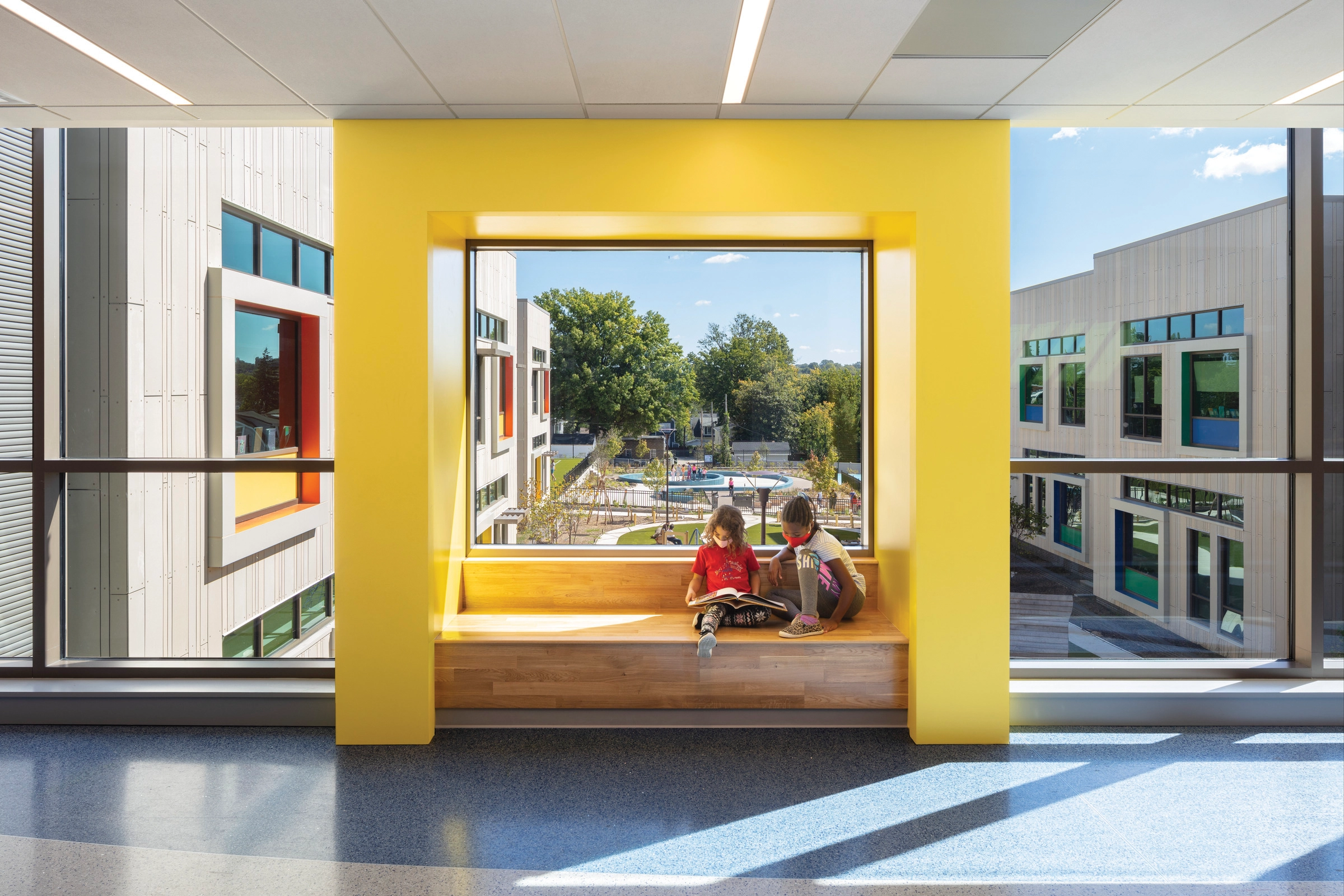
The Findings of the Latrobe Prize Study
By assessing the impact of modernized versus non-modernized schools on well-being, satisfaction, and performance in two urban school districts, our study identified three critical areas where investment in school infrastructure can yield significant returns: Indoor Environmental Quality (IEQ), Educational Adequacy (EA), and Community Connectivity (CC).
Indoor Environmental Quality (IEQ)
Our study’s findings reveal that the quality of the indoor environment significantly affects both students and teachers. Modernized schools consistently outperform non-modernized ones in key IEQ factors, including thermal comfort, air quality, acoustics, and lighting. Research has demonstrated that improvements in these building factors can enhance student and teacher health, satisfaction, and performance. We also found that non-modernized schools often squander limited operational funds as the non-modernized schools in our study generally overheated their indoor environments during the winter, creating uncomfortable conditions and wasting both energy and money. Similarly, non-modernized schools also relied more on electric lighting than daylight for function and comfort, likely contributing to higher energy demands and operating costs.
Modernization projects that prioritize IEQ—for instance, by emphasizing glare-free natural light, enhanced thermal comfort, and ventilation—directly contribute to healthier, more productive places to learn and can reduce a district’s operational expenditures.
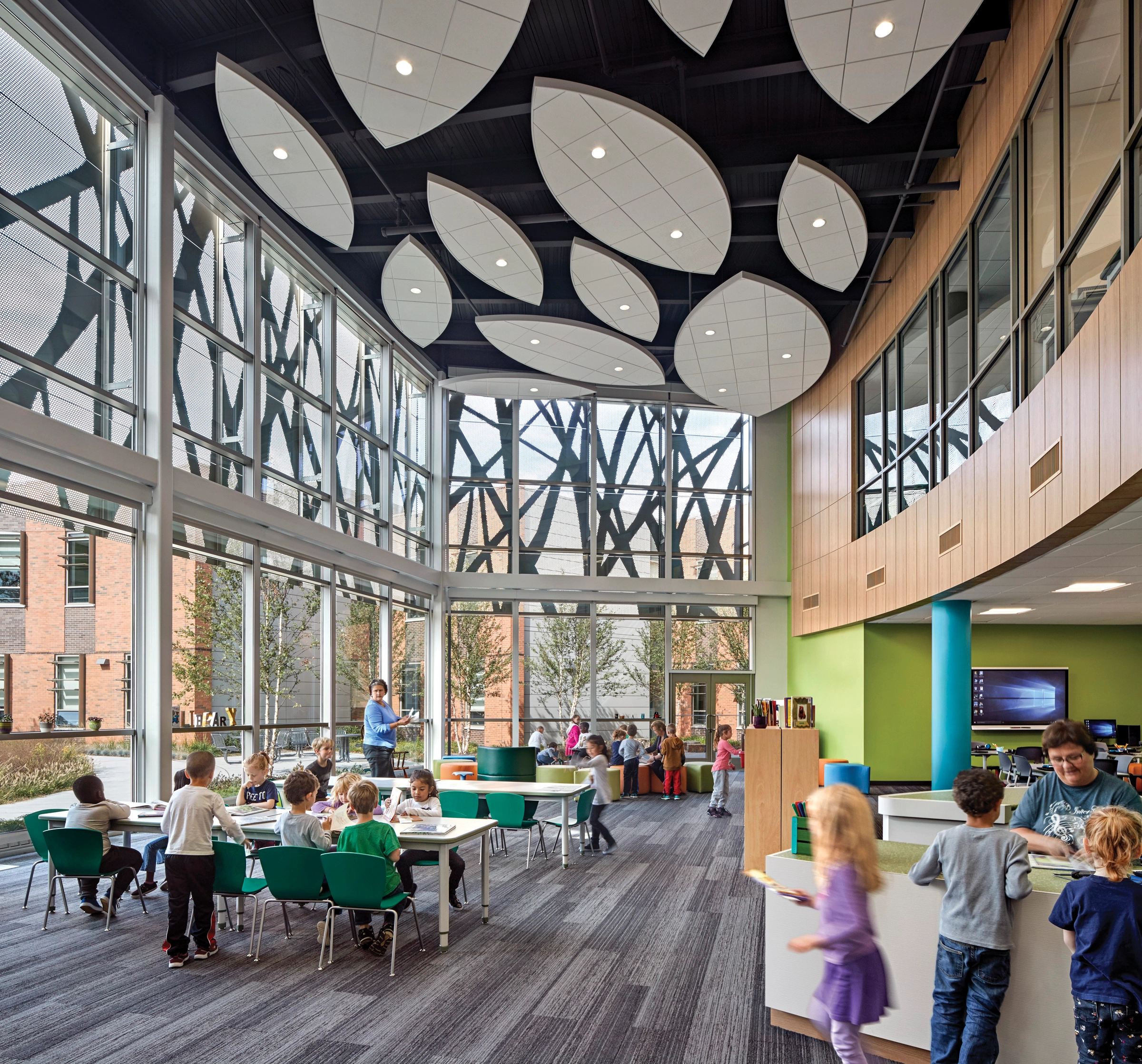
Educational Adequacy (EA)
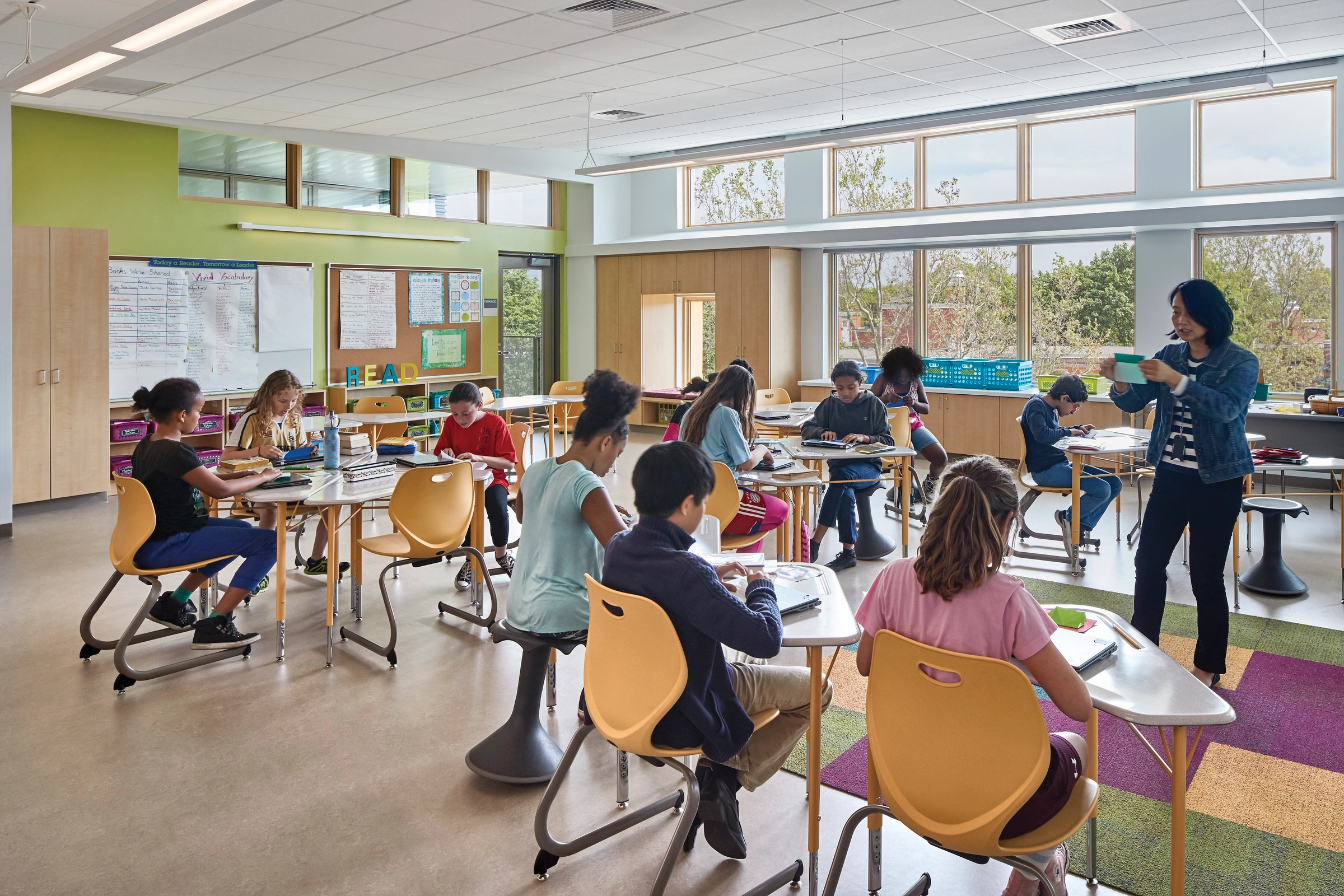
Educational Adequacy is a measure of a school building’s ability to support contemporary teaching and learning practices and programming. This encompasses, among other things, the suitability of instructional spaces, safety features, the organization of the building, and the availability of specialized facilities such as science labs and art studios. Modernized schools score significantly higher in these categories, offering students the tools and spaces they need to succeed in an increasingly competitive and technology-driven world.
For example, classrooms equipped with flexible furniture and appropriate educational technology enable dynamic teaching methods that cater to various learning styles. Safety upgrades, such as easily identifiable front doors, carefully controlled but welcoming arrival spaces, and distributed administrators, provide peace of mind for students, staff, and families. Moreover, through what we have deemed “learning ambiance,” modernized schools send a powerful message: our society values the people who are learning and working within our schools and that we understand that our future depends upon their success.
Community Connectivity (CC)
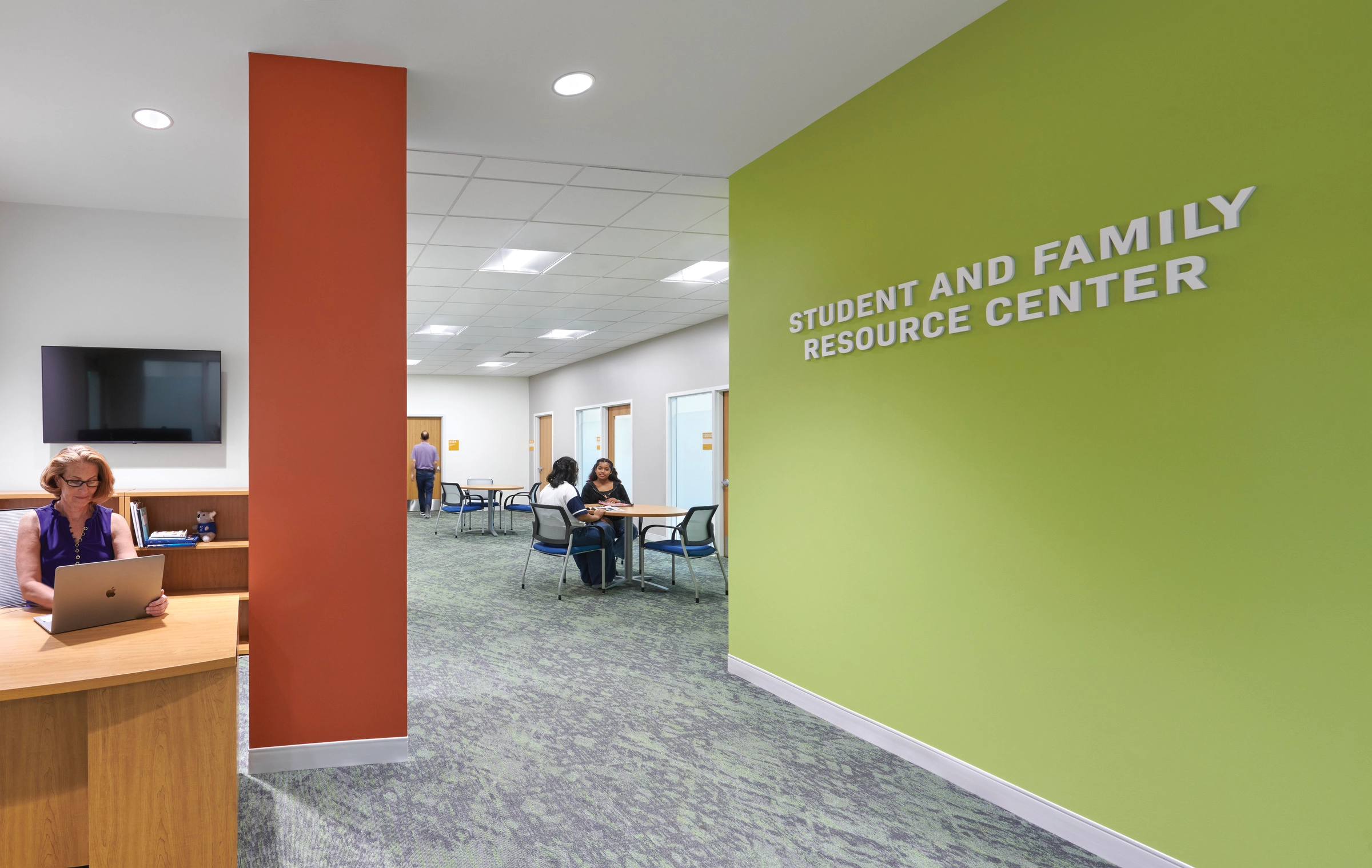
Modernized schools are more than just educational facilities; they serve as vital community hubs. Our Latrobe Prize Study highlights how investment in school infrastructure enhances “Community Connectivity” by creating spaces that bring people together. Schools with well-designed auditoriums, gymnasiums and outdoor areas can host events, provide recreational opportunities, and foster powerful partnerships with local organizations.
This connectivity strengthens bonds and fosters a sense of pride and ownership among members of the community. It also creates opportunities for lifelong learning and engagement, turning schools into centers of civic life rather than isolated institutions. In communities where resources are limited, modernized schools can become transformative anchors of hope and development.
Tap into a Comprehensive Set of Tools and Methodologies
Funded by the American Institute of Architects’ College of Fellows and J+J Flooring, the 2019 Latrobe Prize study—“Addressing a Multi-Billion Dollar Challenge: Advancing Knowledge of How High-Quality School Environments Can Positively Affect Educational Outcomes”—pursued several key objectives. Its primary goal was to provide evidence that investing in school modernization enhances educational outcomes. Another aim was to equip the design industry with insights for better allocating construction budgets. The study also aimed to enable replication and expansion of its research.
The study’s appendices include the “Visual Assessment Tool,” indoor environmental quality measurement tools and protocols, stakeholder interview questions, and survey instruments. By making these tools available at https://e.issuu.com/embed.html?d=latrobe_billiondollarchallenge_appendicesa-h&u=perkinseastmancomms, the report empowers school districts, design professionals, and researchers to evaluate their facilities.
These efforts foster ongoing inquiry and build evidence of the impact of high-quality educational environments on student outcomes. Our hope is to inspire greater investment in school modernization, benefiting students, educators, and communities.
The Broader Benefits of Modernization
The benefits of school modernization extend beyond the classroom. For instance, investing in school infrastructure creates jobs, bolsters local economies, and as noted above, reduces long-term operational costs through energy-efficient designs. Modern schools are more sustainable, consuming less water and energy and generating lower utility bills—savings that can be redirected into educational programs and resources. Furthermore, healthier school environments lead to more resilient communities – students and teachers who spend their days in inspiring, clean, safe, and well-ventilated buildings are likely to be healthier.
When modernizing our schools, we would argue that adopting a community schools approach, which provides integrated student supports and enhances both community health and resilience, should be a model more widely available across the country. These schools take a whole-child approach and recognize the need to address larger societal issues that directly impact learning, including food insecurity, mental and physical health, access to before and after care, and support for families. Modernizing existing schools so they can best implement this model would have the salutary effect of delivering a better education for individual students and thereby broadly strengthening our communities physically, economically, and socially.
The Funding Crisis
Despite these clear advantages, funding for school modernization remains woefully inadequate. The federal government’s contribution to school facilities historically has accounted for “slightly more than 1%” of the total investment, according to the 2021 State of Our Schools report, leaving states and local districts to shoulder the burden. This approach has proven insufficient, particularly in underfunded areas where the need is greatest.
High-poverty districts often lack the tax base required to support large-scale modernization projects. As a result, students in these communities are forced to learn in inadequate conditions that may perpetuate cycles of poverty and inequality. This is a moral failing and a missed opportunity to unlock the potential of millions of young Americans.
Innovative financing mechanisms—such as the Inflation Reduction Act, that incentivize more sustainable school projects—should be retained and bolstered to help stretch limited resources as communities strive to provide healthy, high-performance places to learn. Public-private partnerships can also play a vital role, leveraging private investment to supplement public funds.
To achieve these goals, community advocacy and engagement will be essential. Parents, educators, and students must collectively demand action from our elected officials. The evidence is clear: modernized schools are safer, healthier, and more effective learning environments – benefiting not just individuals but society at large. Investing in our schools is not a luxury; it is a vital national imperative.
Conclusion
America’s public schools are more than just buildings; they are the foundation of our nation’s future. Yet, for too long, we have neglected this vital infrastructure, leaving millions of students to learn in conditions that adversely impact their potential. The findings of our Latrobe Prize study and similar research make a compelling case for change. By prioritizing modernization, we can create learning environments that promote equity, foster community, and prepare the next generation for success.
The choice is clear: we can continue to ignore the buildings that are falling apart around our children, or we can invest in them to create a better future for our children and our society.
References:
- American Society of Civil Engineers, 2021 Infrastructure Report Card – https://infrastructurereportcard.org/wp-content/uploads/2020/12/Schools-2021.pdf
- National Center for Education Statistics – https://www.k12dive.com/news/public-school-infrastructure-age-nces/707580/
- State of Our Schools Report – https://www.wellcertified.com/state-of-our-schools