


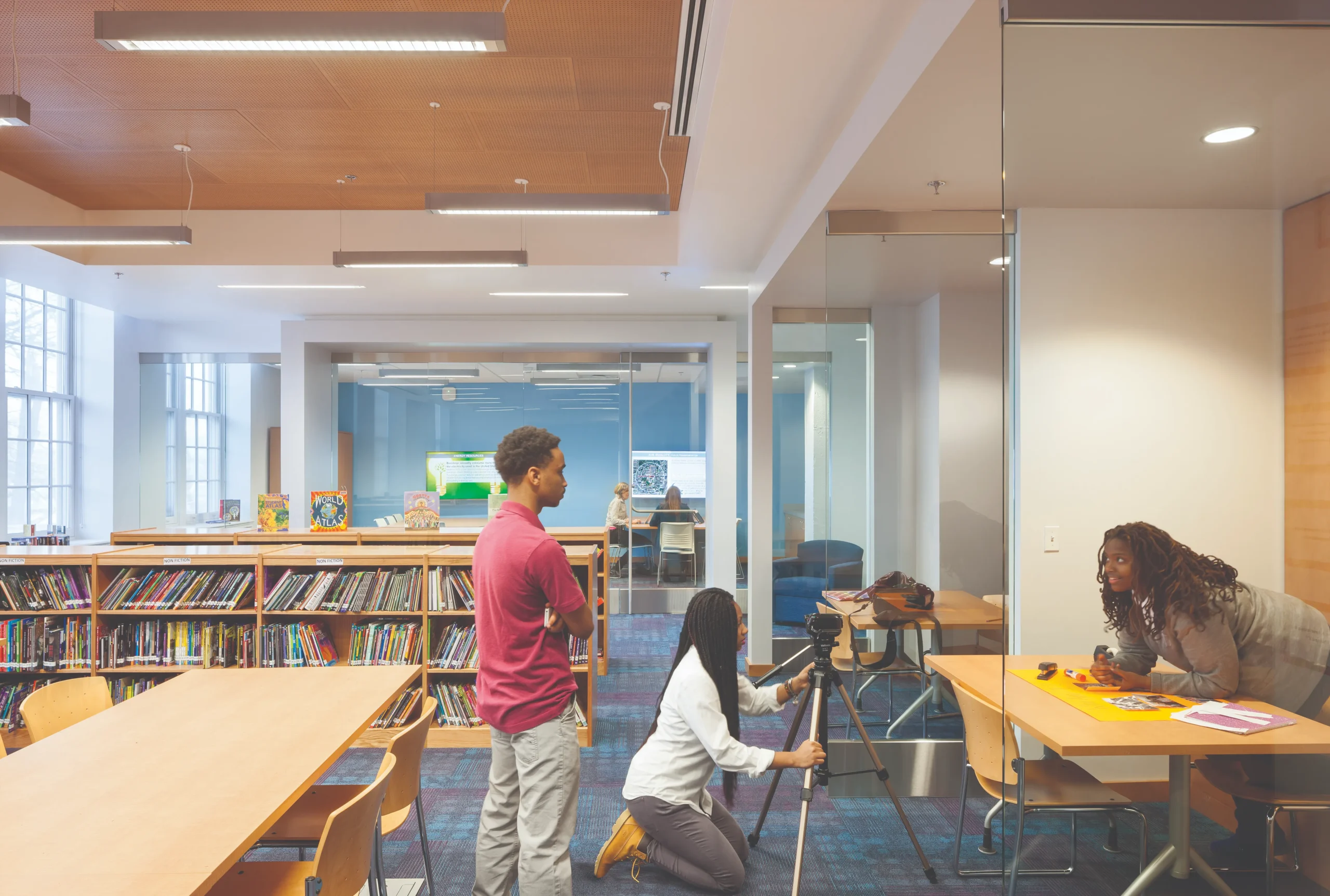
Loneliness is a pressing public health issue, and adolescents are feeling acutely disconnected—in a recent survey, only 55% of high schoolers reported feeling close to people at school. Research has shown that the built environment influences feelings of social connectedness and belonging. Because teens spend so much time at school, it stands to reason that school design would impact their sense of belonging. However, architects have lacked guidance for how to design schools that support it.
Until now. An interdisciplinary team composed of medical researchers and architectural practitioners from the University of Michigan and Quinn Evans designed a study to learn directly from students about the relationship between their school’s built environment and their feelings of belonging. The resulting paper, published in the journal Children, Youth and Environments, offers new insights that can inform both school design and policy efforts aimed at improving youth belonging.
Background
Many people think of belonging as being only about social connections. However, research points to a broader definition that suggests an important role for architecture. In their influential review, Dr. Kelly-Ann Allen and colleagues define belonging as “a subjective feeling that one is an integral part of their surrounding systems, including family, friends, school, work environments, communities, cultural groups, and physical places.” Notably, this definition includes not just relationships to individuals, but a sense of connection with places—aligning with research showing that places contribute to our identities and environmental cues can communicate that a space is or is not for certain people.
Since young people spend a significant portion of their day-to-day lives in schools, it’s important to understand how these places promote or hinder feelings of social connectedness and belonging. The issue is made even more pressing because our nation’s school building stock is aging; according to the U.S. Government Accountability Office, more than half of schools are due for major renovation or replacement. At a moment when we’re poised to make a generational investment in school facilities, many school design guidelines lack clear recommendations for how to create environments that foster social connection. This research begins to fill the gap.
Methodology
Using the MyVoice National Poll of Youth, an SMS (text message)-based survey platform developed by the University of Michigan, the team asked current and recent high school students the following open-ended questions:
- What do you LIKE about the building and outdoor spaces at your high school? Why?
- What do you NOT like about the buildings and outdoor spaces at your high school? Why?
- Describe the indoor/outdoor spaces in your high school where you feel most comfortable, like to hang out, or feel a sense of belonging. Tell us about the space and why it makes you feel that way.
- Describe the indoor/outdoor space in your high school where you feel most Uncomfortable, avoid spending time, or feel like you don’t belong. Tell us about the space and why it makes you feel that way.
- If you were designing a high school to help all students feel like they belong in their school community, what would you include? (Examples: layout, outdoor spaces, places to do certain activities, decorations, furniture, etc.)
More than 500 people responded, including students from urban, suburban, and rural schools across the country. The team analyzed their responses, taking note of which areas of their school they discussed, what design elements were present, and what emotions they felt. From there, areas of the school were ranked by how often they were mentioned as a place of belonging or not belonging; associated design factors, types of social interaction, and respondent feelings were identified.
Findings
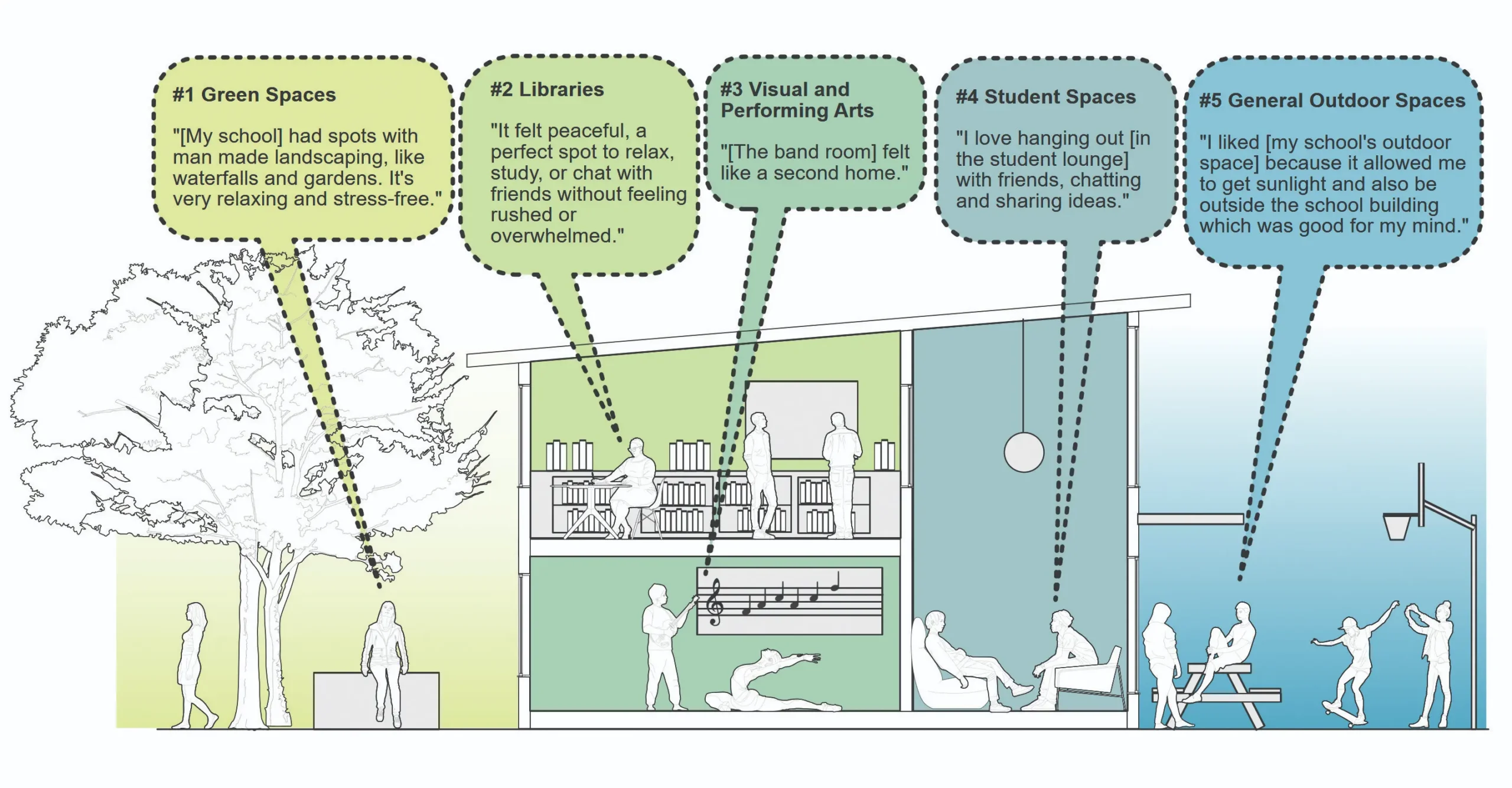
Students had a lot to say! In general, they gave high-quality feedback that suggests actionable design strategies. For example:
“The student lounge is my favorite spot at school. It has a relaxed vibe with comfy couches and games, making it a great place to unwind between classes. … The atmosphere is friendly and inclusive, which really makes me feel like I belong and can be myself.”
“I feel the most comfortable in the school’s large courtyard, it is an open space surrounded by greenery and benches.”
“My favorite spot in high school was the school library… It was spacious, well-lit, and cozy, with comfortable seating areas and plenty of natural light.”
Many of the places students identified as unwelcoming or uncomfortable were spaces that induced a feeling of stress or overwhelm, often associated with a confluence of overcrowding, too much noise, lack of privacy, and poor environmental quality (including temperature control and ventilation). The cafeteria, with its noise, smells, and social pressures, was frequently reported as a site of discomfort.
Several design features are shared by spaces where students felt they belonged:
- Access to nature. Respondents valued natural light as well as views and access to green spaces as a respite from the hectic school environment.
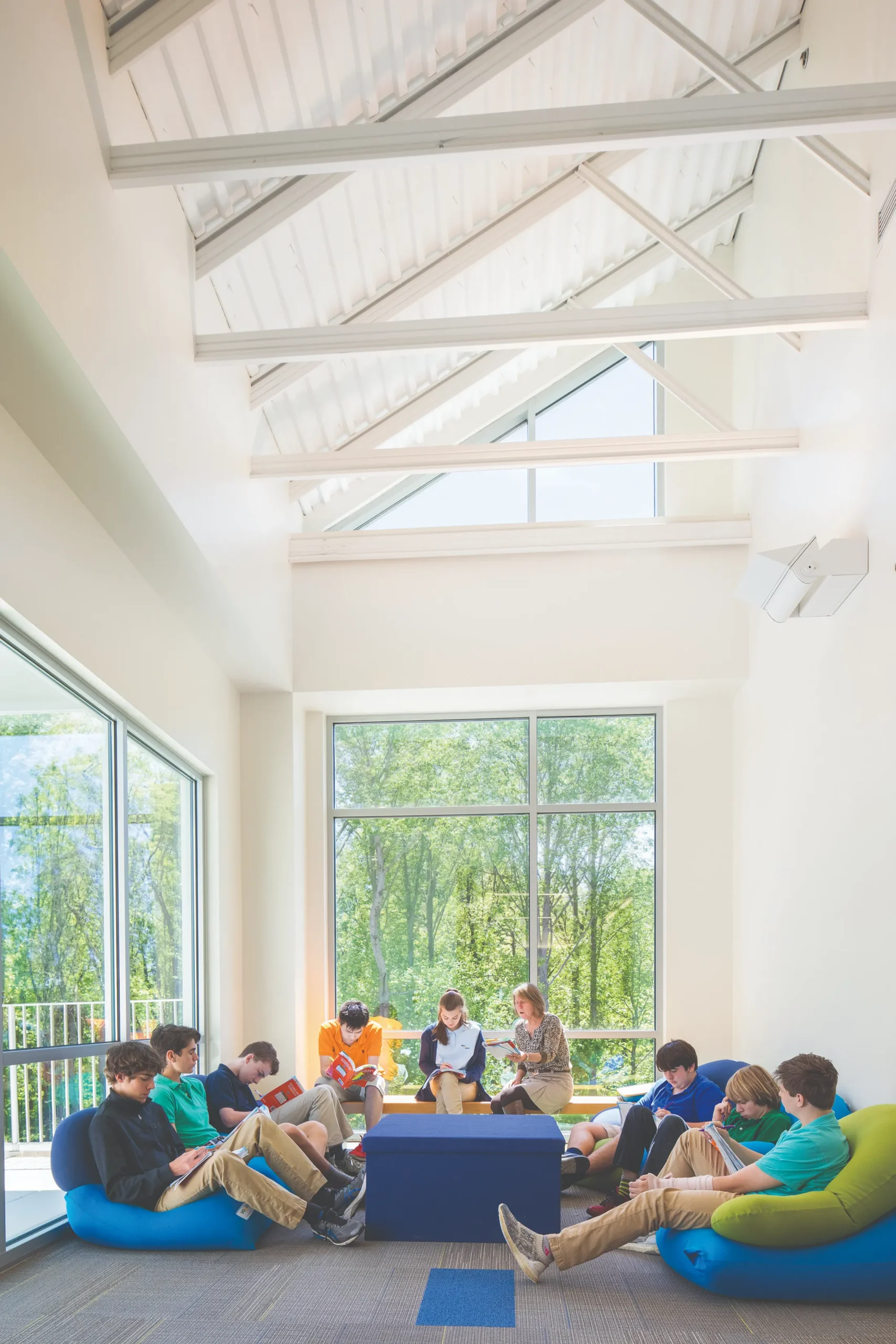
- Quiet spaces. In a similar vein, students liked calm and quiet spaces where they can unwind; these included the library, classroom reading nooks, and outdoor spaces.
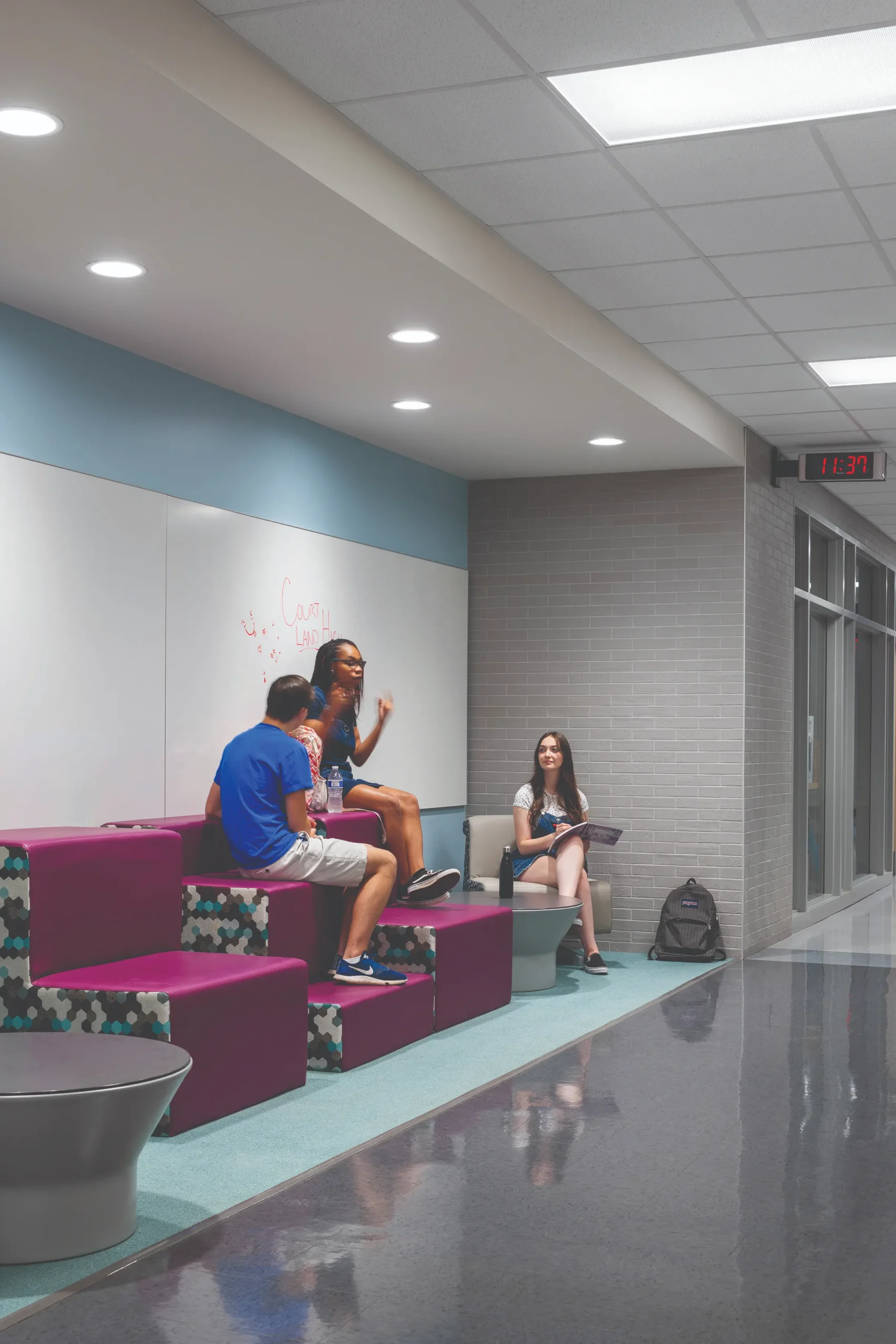
- Soft seating. Many students expressed a desire for comfortable, lounge-like seating, particularly in areas where they spend unstructured time.
- • Color and decoration. While students disagreed on an ideal color palette, they preferred a non-institutional aesthetic with color and decoration.
Next Steps
The team has made the study available for free so it may be used to inform future school designs and design guidelines. Forthcoming work from organizations such as the Coalition for the Advanced Understanding of School Environments (CAUSE), which aims to provide standardized post-occupancy evaluation tools for schools, has the potential to provide further guidance.
The team also hopes schools will use the actionable ideas from the study to start making inexpensive improvements now; many of the features students suggested don’t require a capital project, just a different way of thinking. A great first step is to engage with students directly to ask how their school building affects them and how it can be improved.
To learn more about the spaces and elements students identified as enhancing belonging, refer to the full study at https://muse.jhu.edu/pub/579/article/977252 or a summary from Quinn Evans at https://www.quinnevans.com/news/five-things-schools-can-do-right-now-to-support-belonging. LBD
References
- Office of the U.S. Surgeon General, Our Epidemic of Loneliness and Isolation: The U.S. Surgeon General’s Advisory on the Healing Effects of Social Connection and Community (2023), https://www.hhs.gov/sites/default/files/surgeon-general-social-connection-advisory.pdf.
- Center for Disease Control and Prevention, Youth Risk Behavior Survey Data Summary & Trends Report: 2013-2023 (2024), 71, https://www.cdc.gov/yrbs/dstr/index.html.
- Kuzuoglu, Sina, Troy D. Glover, Luke Moyer, and Joe Todd, “How Built Environment Characteristics Influence Social Interactions During Neighbourhood Walks Among Urban Inhabitants,” International Journal of Environmental Research and Public Health 21, no. 11 (2024), 1519, https://pmc.ncbi.nlm.nih.gov/articles/PMC11593799/.
- Allen, Kelly-Ann, Margaret L. Kern, Christopher S. Rozek, Dennis M. McInerney, and George M. Slavich, “Belonging: a review of conceptual issues, an integrative framework, and directions for future research,” Australian Journal of Psychology 73, no. 1 (2021), https://www.tandfonline.com/doi/full/10.1080/00049530.2021.1883409,
- Droseltis, Orestis, and Vivian L. Vignoles, “Towards an integrative model of place identification: Dimensionality and predictors of intrapersonal-level place preferences,” Journal of Environmental Psychology 30, no. 1 (2010), 23-34, https://www.sciencedirect.com/science/article/abs/pii/S0272494409000474
- Cheryan, S., V.C. Plaut, P. G. Davies, and C.M. Steele, “Ambient belonging: How stereotypical cues impact gender participation in computer science,” Journal of Personality and Social Psychology 97 no. 6, 1045-1060, https://psycnet.apa.org/doiLanding?doi=10.1037%2Fa0016239
- U.S. Government Accountability Office, School Districts Frequently Identified Multiple Building Systems Needing Updates or Replacement (2020), 2, https://apps.dtic.mil/sti/trecms/pdf/AD1156428.pdf.