

In the realization of educational architecture, the relationship between client and architect is foundational to the potential of the project. At the Los Angeles Unified School District (LAUSD), Julia Hawkinson provokes innovation within a structure of standards, ensuring a measure of efficiency in managing and maintaining over 600 school campuses. Michael Pinto is Design Director at NAC Architecture, which is one of many architectural firms working for the large organization. Together they reflect on the interest and ability to achieve innovation and progress in a relationship structured around the myriad constraints that LAUSD maintains.
Why have standards?
In a large public school district that serves many diverse communities it is essential to develop standards for learning environments to provide a consistency of approach. Facilities standards must be flexible and adaptable to each school’s educational visions and needs while providing an equitable approach and representing a responsible expenditure of public funds.
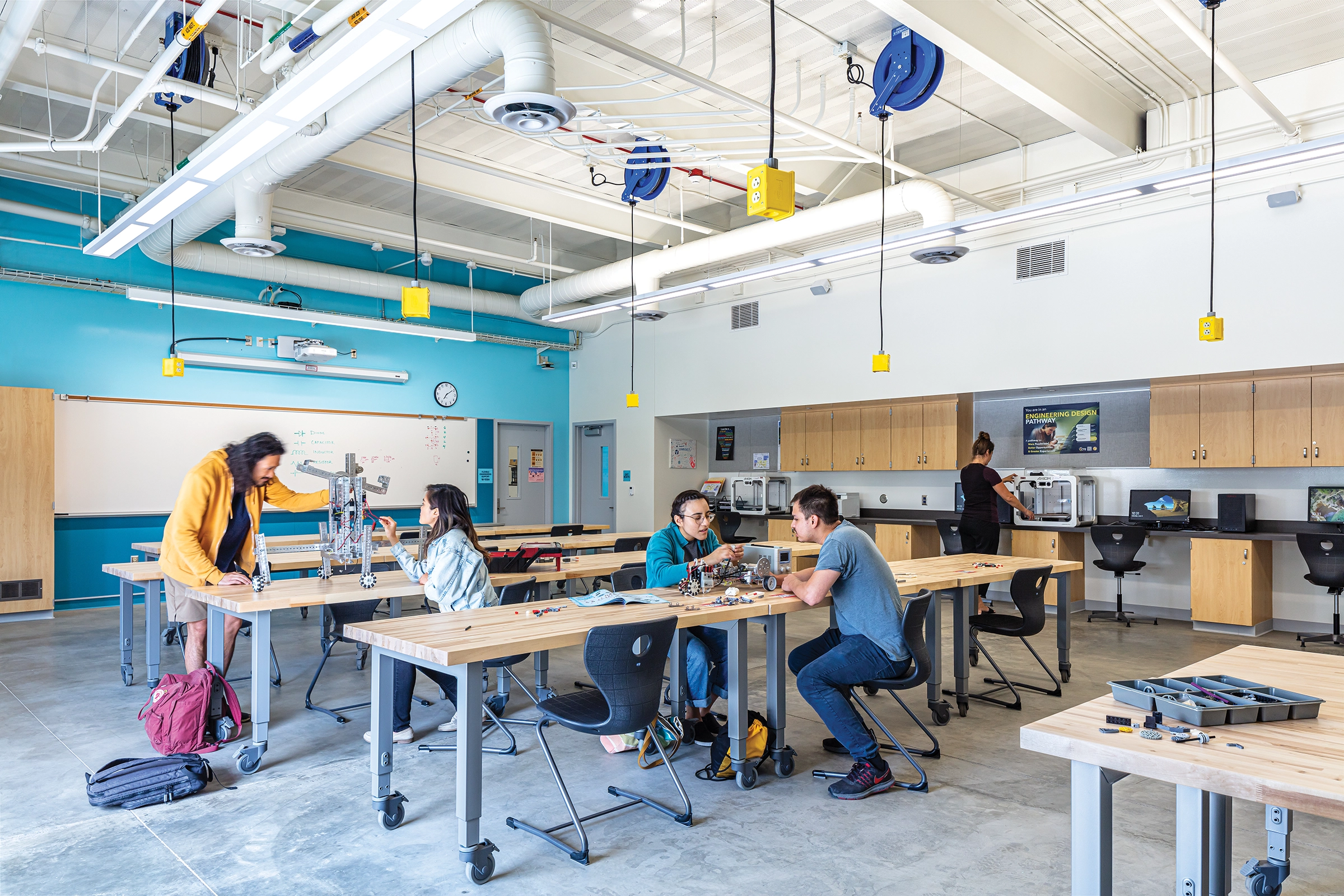
As educational programs and pedagogy change and evolve, learning environments must adapt to meet those needs. K–12 public schools have experienced changes to programs including: the role of the library, career technical education, increased preschool and pre-kindergarten programs, instructional technology, and outdoor learning. As schools become more essential as community centers, they may include health clinics, expanded meal programs, community gathering spaces, and adult education.
Looking at standards as an opportunity and not as a problem helps us to see the value of a consistent set of guidelines that provide a platform to support the path towards equity, act as a vehicle to affect change within a large organization and are in many ways an economic necessity.
Often in the planning dialogue around learning environments, there is an emphasis on listening to the community. However, the voices of communities may differ significantly. One community may feel heard and empowered to speak knowing they will be heard. Another community may have not been heard in the past and are not sure they will be heard today. And yet another community may speak their needs but may need guidance on what to ask for. All the students of these communities have the right to excellent learning environments that support their educational experience. The district’s standards, including educational specifications; programming, planning, and design guidelines; and material equipment specifications provide a high-quality baseline that ensures all communities receive a high standard of learning environments that are aligned with district educational vision, safety guidelines, and best practices.
Utilizing standards in this way provides a level of equality (everyone gets the same) that we can see as a step along the way to equity (everyone gets what they need to succeed). Equity is clearly more complicated and requires personalization and adaptation of standards to meet each community’s needs.
Case Study: Meeting a Community’s Needs
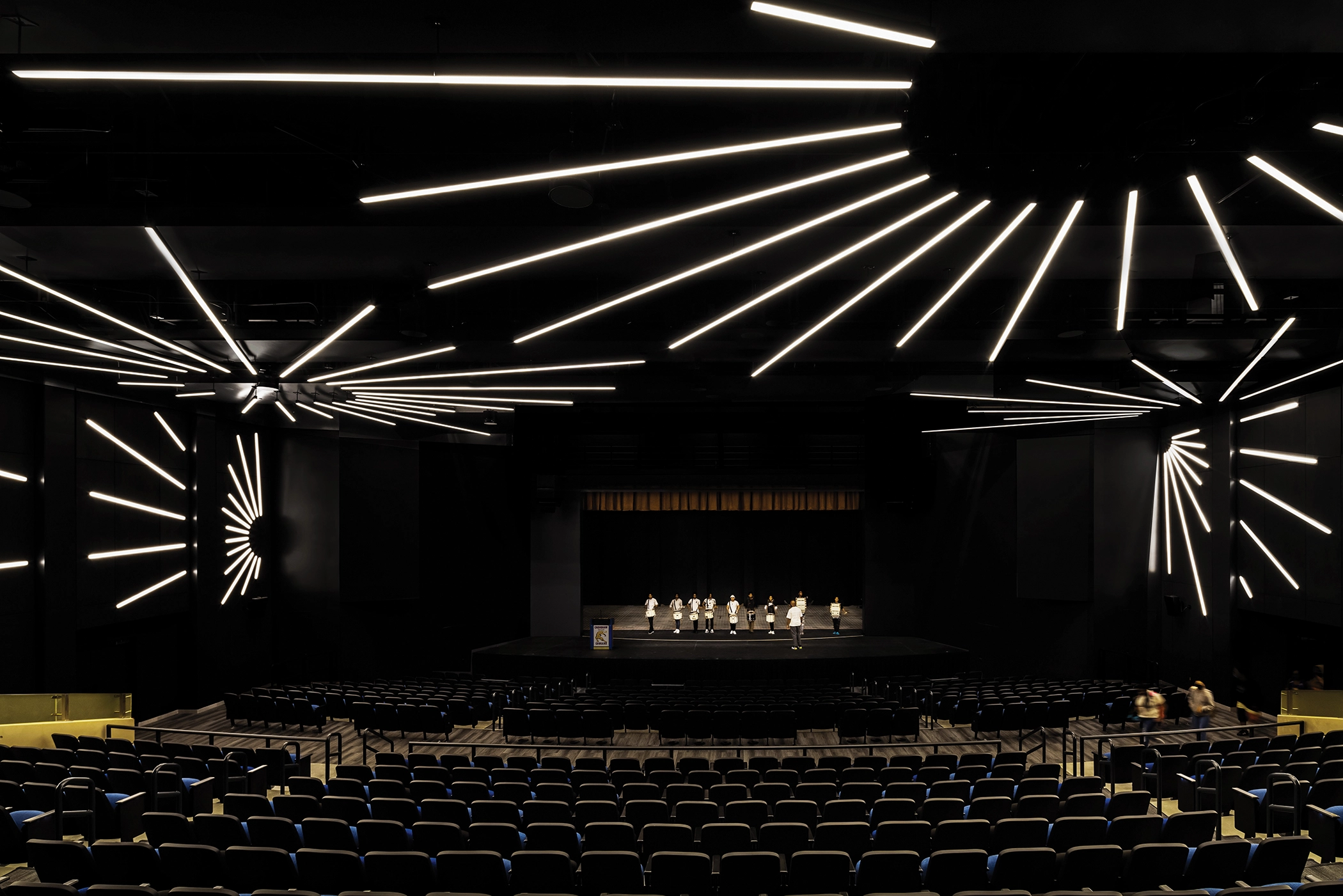
At Crenshaw High School, NAC was tasked with designing a performing arts center for a campus that regularly produced amazing artists; the choir was singing at the White House every year. Celebrating the amazing and special program at the school was important to the community and to the students. In strategizing ways to create energy for the program, the design team presented an idea to embed LED lighting strips in the walls. The starburst lighting arrangements created a figural fireworks display in the auditorium interior. This lighting, however, was not standard. The district questioned how the lighting would be installed, how they would be changed, how susceptible to damage they were, just to name a few concerns. The design team created mock-ups to demonstrate how they would work and negotiated with various interested parties at LAUSD. In the end, though, the vision stayed strong. Everyone agreed with the idea to create a space that created something special for the students who were, themselves, creating something special.
Standards also provide a method for a large institution to implement vision. Examples of visions requiring a district-wide implementation include instructional technology, career technical education, sustainability, outdoor learning, special education inclusion, student-centered learning, safe and secure facilities, and positive school culture. Facilities programs and efforts have a key role supporting and enhancing implementation of all these district-level visions and goals. District-level standards also bring best practices and successes from individual efforts across the district to effect change.
Case Study: Implementing a Vision
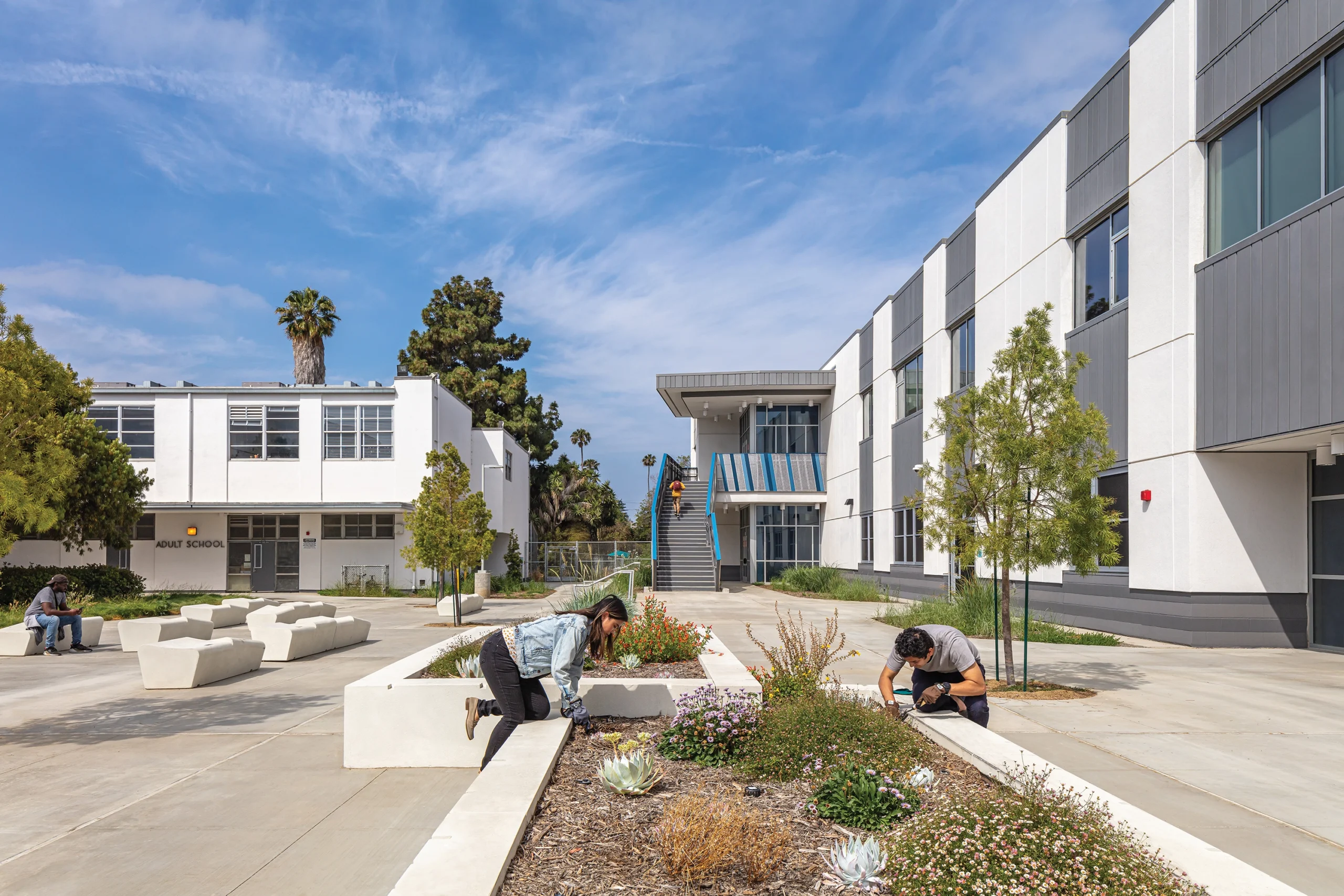
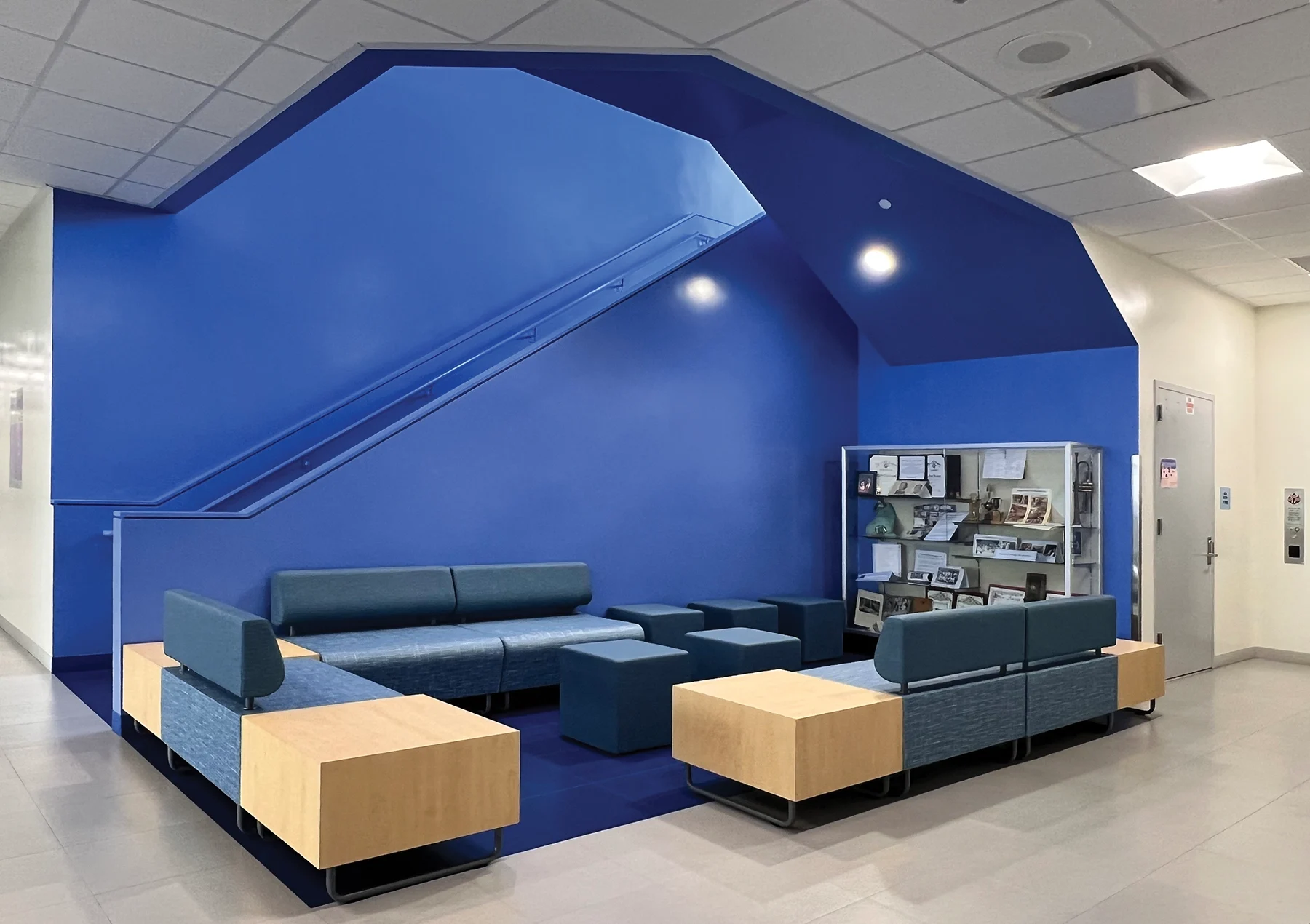
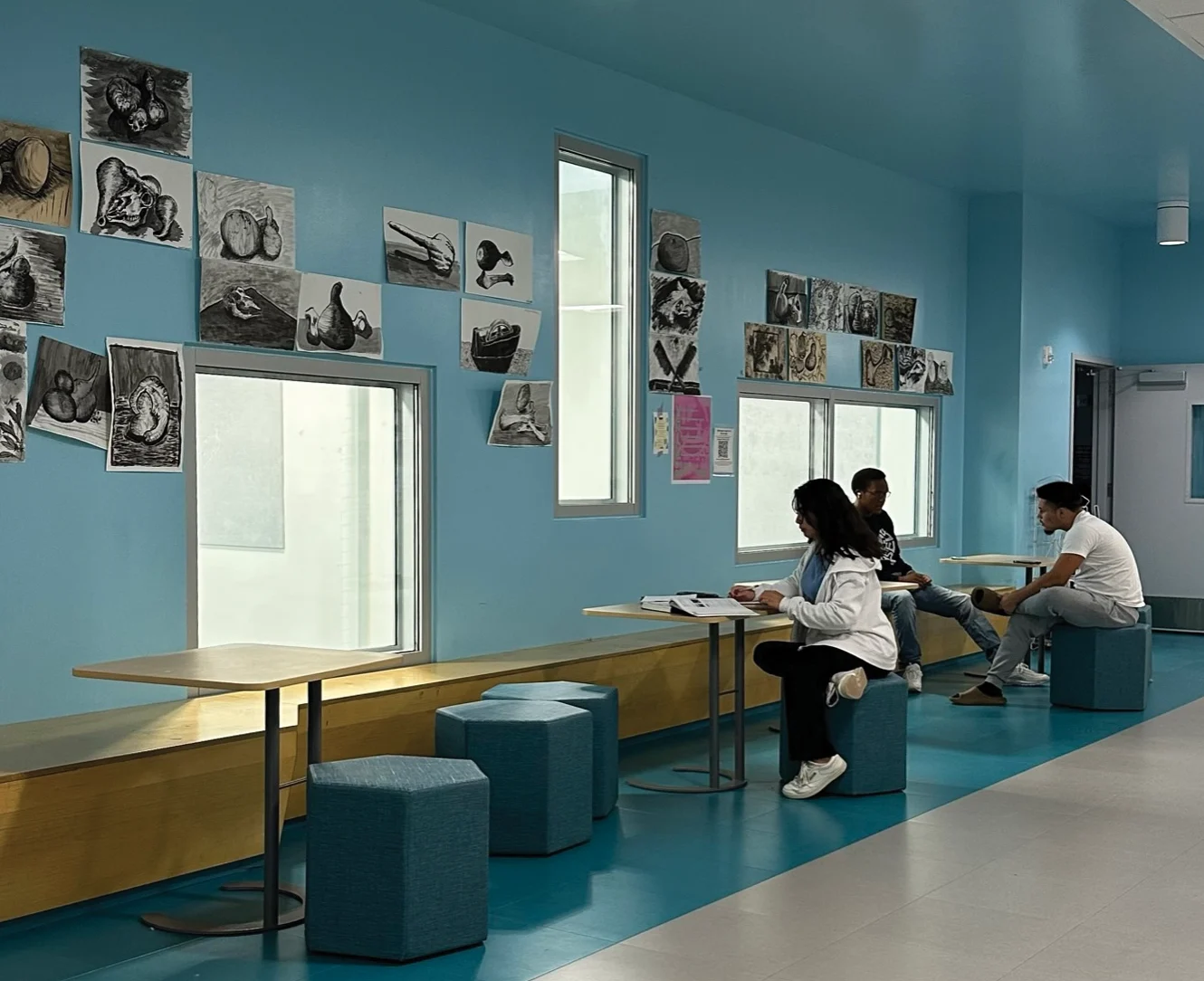
At Venice High School, the NAC incorporated collaboration areas into the circulation areas. The district aspired to have the learning environments spill outside the classroom, but people needed convincing. The successful application at Venice High School, as well as a few other projects, provided pilot projects that led to incorporating the spaces into the standard space programs. Collaboration spaces became accepted and expected as an equitable application of innovative new ideas across the district.
The most obvious benefit of establishing district standards is economic, in both initial costs and long-term maintenance and operational efficiency. These are the standards that are most criticized and reviled by school designers and planners. However, they pose opportunities for innovation, not only by design teams, but also by manufacturers and suppliers.
Pushing on Standards
The design team needs to assess when the constraints of standards are having an outsized impact on the design process. Educational projects are complex. The work requires an ability to solve these complex problems. It requires innovation. However, with all the uncertainty in the projects, constraints and standards can be the only clear mandate, especially in the early goings.
In those early moments it is critical to center projects on a sense of purpose. “We’re a complex organization but we all believe in what we’re doing; making great learning spaces for kids.” Together the architect and school district begin projects centering on common goals to support diverse students educationally, socially, and emotionally while considering safety, durability, and maintainability.
In an environment of constraints, how does change happen?
An early indicator that change is necessary may come from careful listening to the users of the learning environment. Students, teachers, administrators, maintenance staff, families, and community members are excellent sources of ideas and concerns that may lead to a reevaluation of standard practices and procedures.
Explaining the reason that a standard exists helps set the stage for innovation to occur. For example, a standard for direct/indirect lighting and white ceilings may be established to provide even lighting and reduce glare to the working services in the learning environment. Proposals to change the standard would still need to address this goal to support learning and well-being of those students.
Conflicting goals are often a catalyst for change. For example, energy efficiency or green schoolyard goals may conflict with ease of maintenance. In the same way that vision can be implemented district-wide, change can also be implemented to support a greater goal.

Case Study: Supporting a Greater Goal
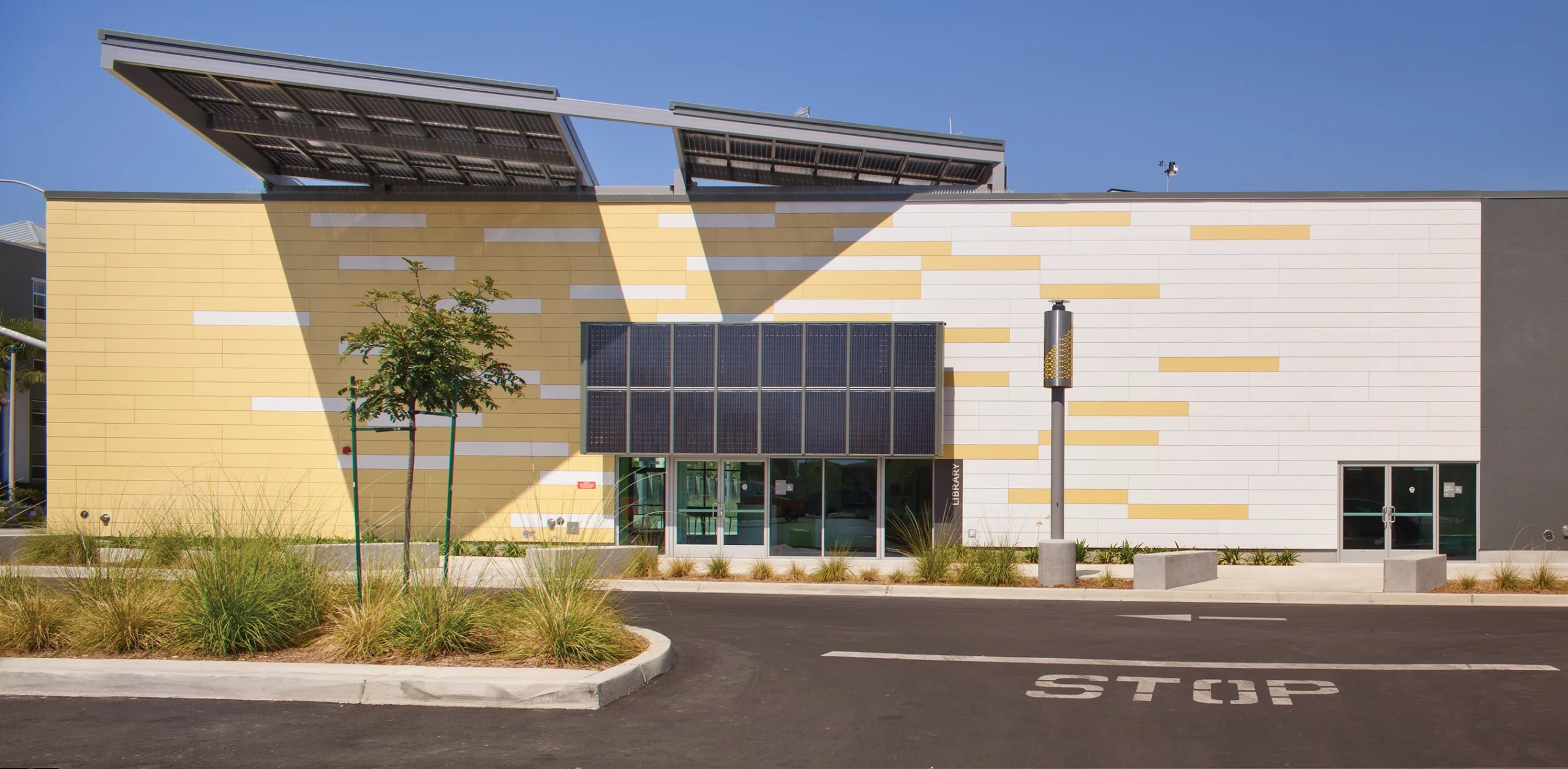
At Playa Vista Elementary School, LAUSD challenged the design team at NAC to deliver their first LEED-certified project at the gold level (the project achieved platinum). The district needed a demonstration project where the sustainability features were on display. One deviation from the standards (among many) on this project was the use of bifacial photovoltaic panels. These solar panels served as canopies, created shaded outdoor space, and generated power from overhead and bounced light from below. It was a visible reminder of the sustainability goals.
It was a new application for the district. The district brought in the engineering team, the maintenance team, and project managers to scrutinize the proposal. Was it watertight, how would they change a broken panel, how would it be cleaned, was it walkable as a roof, etc. The satisfaction with the answers to their questions were not always absolute. The discussion was a negotiation. The team evaluated the project goals against the cost of doing something new and different; against the cost of change. As a result of the successful implementation, bifacial photovoltaic panels were incorporated into the district standard specifications for photovoltaic systems.
The owner/school district needs to be open to the pushing of limits of the standards by the design team. Keeping in mind the goals and reason why and the needs expressed by the school users, the school district has an opportunity to evaluate the innovation for the benefit learning environment.
Institutional change may be difficult but recognizing that change can benefit the learning environment for our students is a powerful motivator. On the instructional side, school districts are comfortable with assessment and striving for continuous improvement, and facilities departments would also benefit from adapting a similar culture.

At Times, Rules Can Be Broken
Even though LAUSD is a large organization, it is still valuable for the design team to question the rules and assumptions. By putting purpose ahead of procedure and giving room to the idea of the project, the district is able to identify if the standards are helping or hurting their ability to reach their goals.
In the end, the voices matter. One person doesn’t invent the standards. They emerge from the needs of the communities that use the schools. The standards create a means to ensure consistency that is valuable for equity and for economy of scale. The vision is important. Sometimes that vision can create an exception to the rules. Sometimes the standards create new rules, or new ideas that can be replicated for greater benefit.
Summary
These examples are not as rare as one might think. However, if change is going to happen, design teams need to understand when to push and how to effectively advocate. School districts need to set clear goals and let a thorough process lead to the best results which bring those goals to fruition.