


Daylighting, the strategic use of natural daylight in building design, has emerged as a critical factor in creating effective and sustainable educational environments. With students spending approximately 23,000 hours in school from kindergarten through a four-year college degree, the quality of their learning environment plays a crucial role in their academic performance, cognitive function, and overall well-being.
This article aims to provide architects, designers and facility planners with insights, strategies, and real-world examples of effective daylighting in schools. From scientific benefits to practical implementation, we will explore how natural daylight can transform educational spaces, fostering healthier, more engaging environments for students and educators alike.
The Science of Daylighting and Its Impact on Learning
Daylight is a fundamental component of healthy indoor environments, particularly in schools, where prolonged exposure to static, electric lighting can negatively affect concentration, sleep patterns and overall well-being.
Research1 from the Lighting Research Center (LRC) and other academic institutions demonstrates that daylight exposure in schools leads to increased cognitive function, improved memory retention, and reduced symptoms of stress and fatigue. A study2 by the Heschong Mahone Group found that students in classrooms with abundant natural daylight advanced 20% faster in math and 26% faster in reading compared to those in spaces with limited daylight access. The physiological effects of exposure to the natural daily dark to light to dark temporal patterns and the natural daily exposure to meaningful, temporal changes in the spectral content provided natural daylight—which informs the human body’s daily cycle of producing serotonin and melatonin—have been linked to enhanced mood regulation, attention span and overall student engagement in the learning process.
Further solidifying the connection between daylight exposure and human health, the discovery of intrinsically photosensitive retinal ganglion cells (ipRGCs)3 and their role in circadian rhythm regulation has paved the way for evidence-based daylighting strategies. These findings align with modern architectural and engineering principles, helping optimize educational environments by integrating natural light solutions.
Beyond its cognitive and psychological benefits, well-designed daylighting systems also improve visual comfort and spatial perception by minimizing glare, reducing visual fatigue, and maintaining consistent lighting levels throughout the school day. This balance between daylight penetration and controlled shading is critical to preventing excessive brightness while ensuring uniform, meaningful illumination in learning spaces.
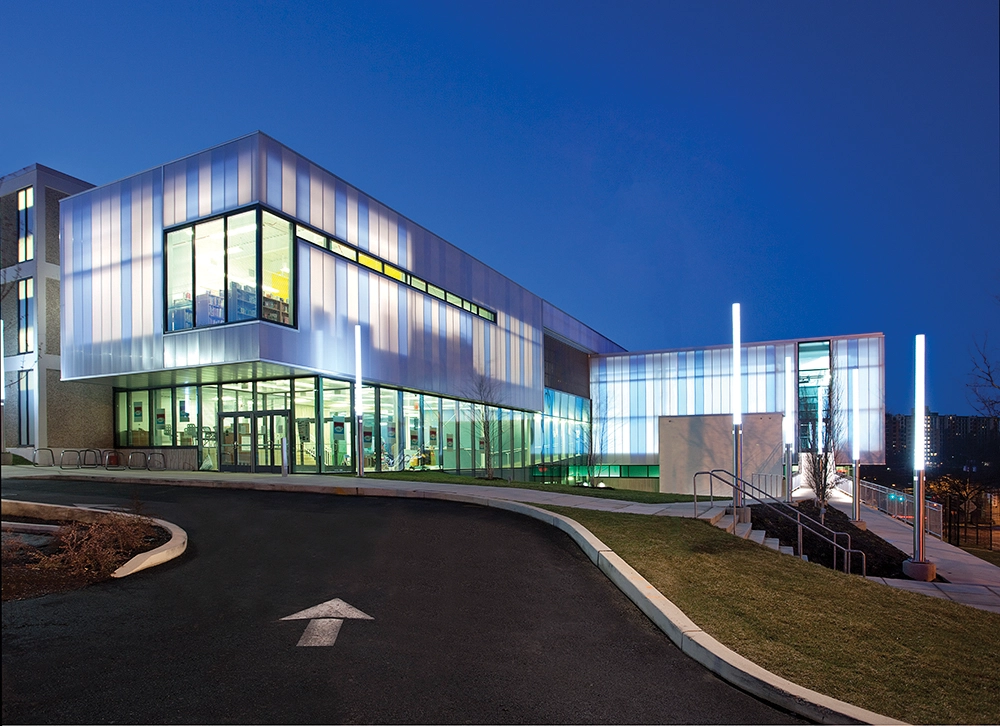
Eagle Academy – Washington, DC
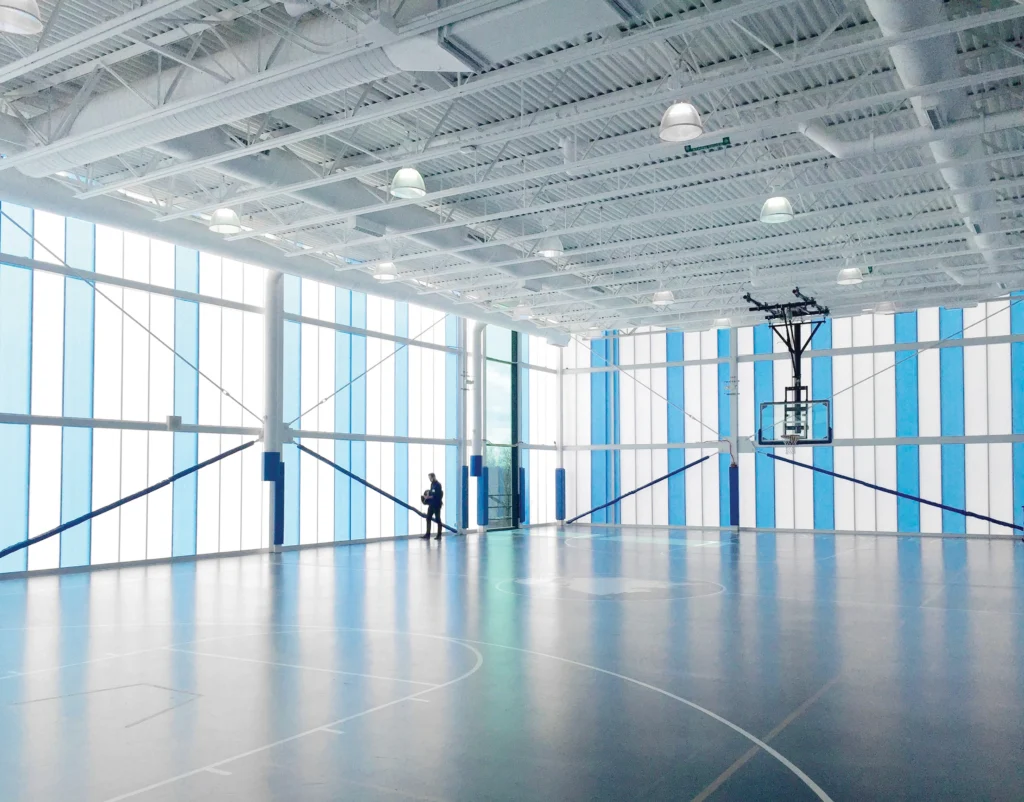
Eagle Academy features a high-performance translucent polycarbonate façade that enables controlled daylight transmission, improving classroom lighting while reducing the need for artificial illumination. By night, the façade emits a soft glow, reinforcing the academy’s presence in the community.
The daylighting design incorporates translucent multiwall systems and strategically placed cladding, minimizing visual contrast between clear vision glass, which provides outdoor views, and translucent walls, which diffuse daylight evenly. This balance optimizes visual comfort, reduces glare, and eliminates the need for interior blinds or shading.
Daylighting as a Core Principle of Biophilic School Design
Daylighting is one of the most effective passive biophilic strategies—an approach that integrates natural elements to enhance occupant well-being and academic performance—offering both physiological and psychological advantages. Natural daylight, outdoor views and ventilation strengthen students’ connection to their environment, reducing stress, increasing motivation, and enriching learning experiences. Beyond its human-centered advantages, biophilic design also promotes sustainability by reducing energy consumption and dependence on electric lighting.
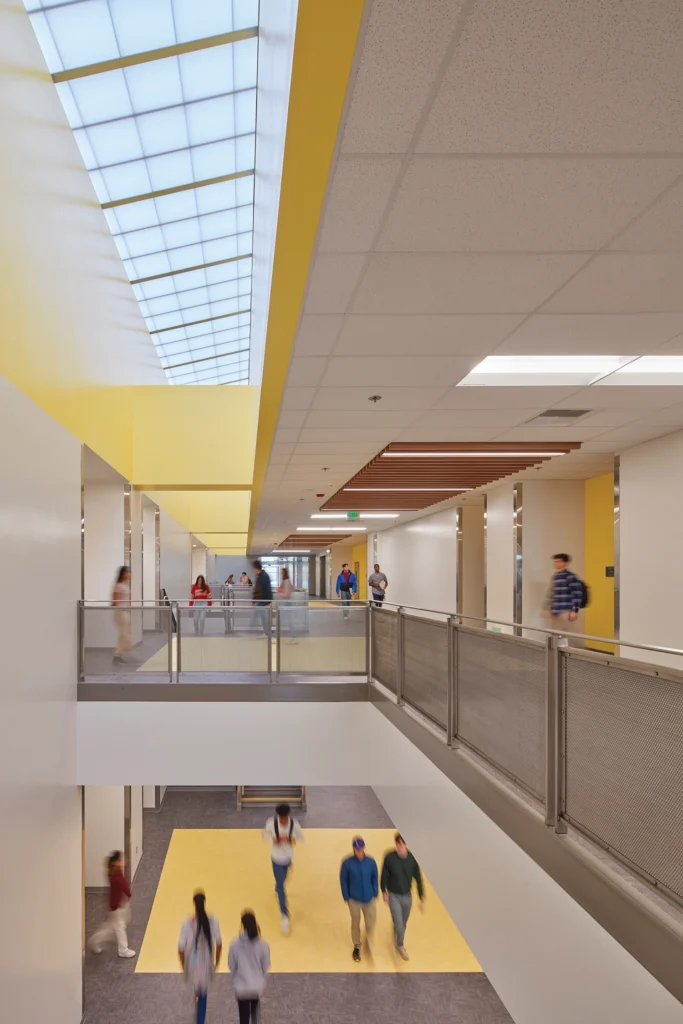
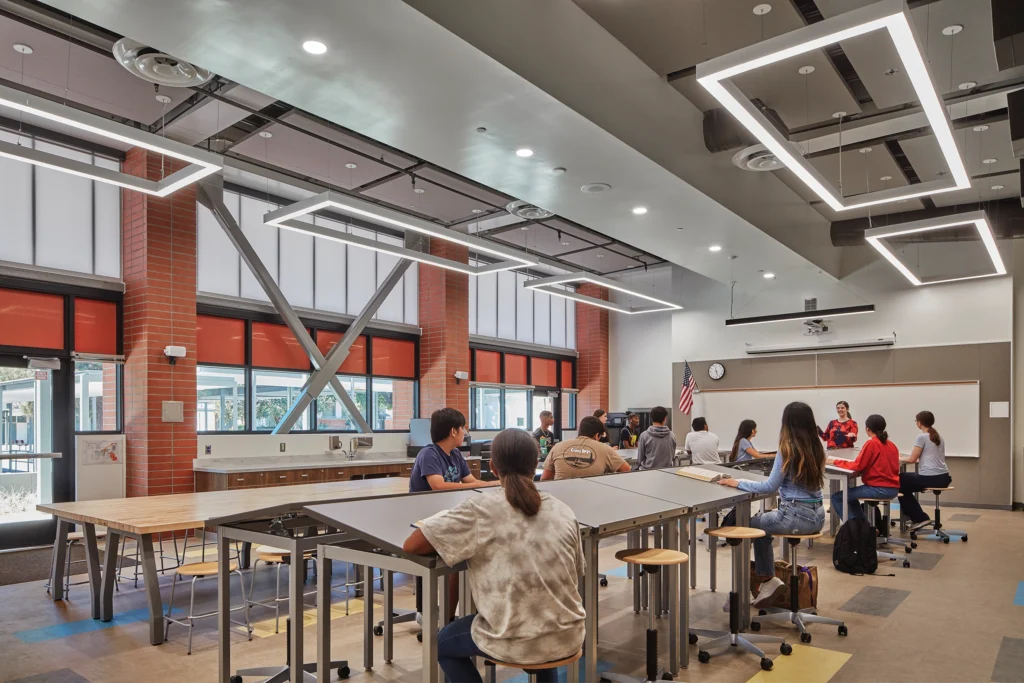
Grover Cleveland High School – Los Angeles, California
Built in 1961, Grover Cleveland High School underwent a 176,000-square-foot expansion to address overcrowding and modern educational needs. The renovation utilized translucent polycarbonate skylights and wall panels to maximize natural daylight, enhancing student performance, energy efficiency and overall well-being. The skylight and wall panels featured Removable Skin Technology (RST), which allows for the repair of sections of the system without opening the space to the elements, ensuring long-term durability, reduced maintenance costs and compliance with the school district’s stringent security requirements.
Vision glazing was strategically integrated into select wall panels, providing light control and clear views of mature trees and newly raised bio-filtration planters, enhancing the connection between occupants and nature. Prioritizing outdoor learning spaces, the redesign incorporated translucent polycarbonate canopies, landscaped courtyards and a central quad, creating an environment that fosters collaboration, social interaction and engagement with the outdoors.
By optimizing daylight penetration while minimizing glare and thermal gain, Grover Cleveland High School was transformed into a modern learning space, balancing historical preservation with modern functionality and student-centered design.
Energy Efficiency and Operational Benefits of Daylighting in Schools
Integrating daylighting into new school construction and retrofit projects presents substantial energy efficiency and cost-saving opportunities. Electric lighting accounts for approximately 35-50% of a school’s total energy consumption, generating significant waste heat that increases cooling loads and HVAC system demands. By implementing effective daylighting strategies, schools can reduce cooling requirements by up to 15% and decrease electric lighting consumption by 75-80%.4
From an operational perspective, daylighting reduces long-term maintenance and energy costs, creating a more sustainable financial model for school districts. Many modern daylighting solutions, such as tubular daylighting devices (TDDs) and skylights with advanced glazing and RST, provide highly efficient lighting with minimal upkeep, ensuring cost-effective implementation over the lifespan of the building.
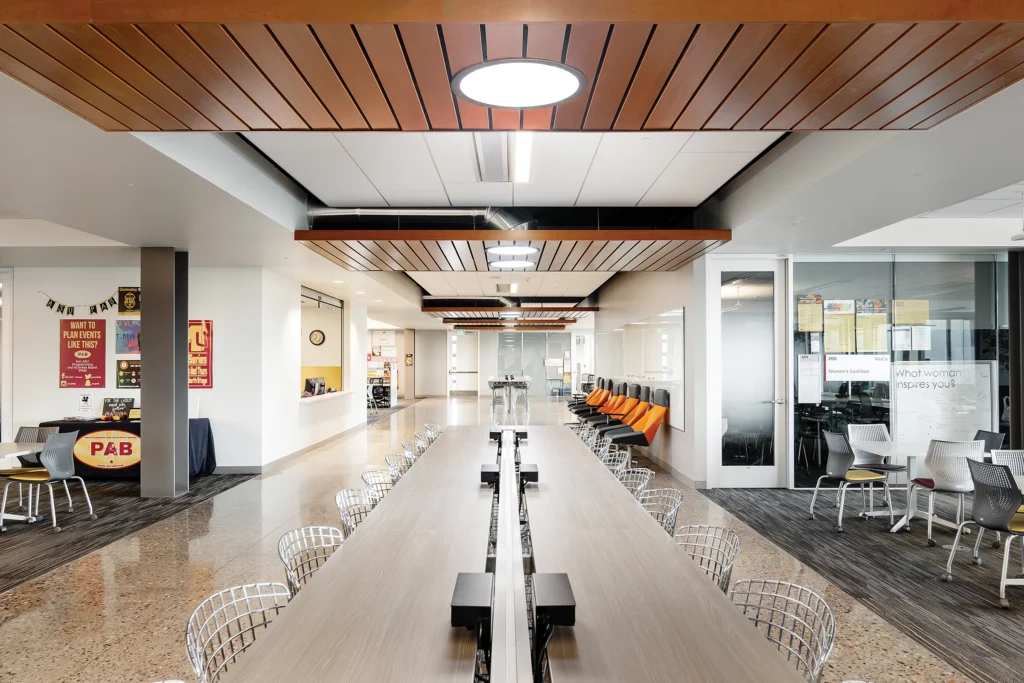
Arizona State University Student Pavilion – Tempe, Arizona
The 74,843-square-foot Student Pavilion at Arizona State University was designed as a Net Zero Energy building, emphasizing sustainability and occupant well-being. One of the main challenges was delivering natural daylight to collaboration corridors on the second and third floors, where traditional skylights were not an option.
The solution involved tubular daylighting systems capable of transporting natural daylight 35 feet with multiple 90-degree bends, ensuring even distribution. Thermal insulation and rooftop optimization further improved efficiency while minimizing heat transfer.
Now a LEED Platinum-certified building, the pavilion features bright, naturally illuminated communal areas that enhance visual comfort, student productivity and collaboration.
Design Strategies for Effective Daylighting in Schools
To maximize the benefits of daylighting, designers must integrate a combination of passive and active daylighting strategies. Proper building orientation, window placement, and daylight distribution are essential for ensuring uniform illumination across classrooms, corridors, and common areas.
One of the primary challenges in daylighting design is achieving deep daylight penetration beyond the building’s perimeter. Solutions such as rooftop fenestration, TDDs and light-redirecting architectural surfaces allow natural daylight to reach interior spaces without increasing glare or thermal loads. In retrofits and adaptive reuse projects, where window placement is often limited, these technologies introduce daylighting without significant structural modifications.
Another critical consideration is glare control and thermal regulation. High-performance glazing, light-diffusing materials, and automated shading systems help mitigate excessive brightness and maintain indoor thermal comfort. Integrating dimmable LED lighting systems with daylight sensors also ensures a seamless transition between natural daylight and electric lighting, optimizing energy efficiency without compromising visibility or comfort.
Compliance with building codes and sustainability certifications is another key factor in daylighting implementation. Standards such as LEED, WELL Building and the Collaborative for High-Performance Schools (CHPS) provide guidelines for integrating daylighting solutions that support both student well-being and environmental sustainability.
Enhancing Design with Advanced Daylight Modeling
Daylight modeling is essential for creating spaces that enhance well-being and reduce reliance on electric lighting. However, accessing the right data, files and expert guidance can be challenging. To address this, manufacturers have developed technical tools and resources that assist design professionals in daylight modeling, evaluation, and refinement.
These tools enable quick performance analysis, allowing the comparison of multiple daylighting systems within various design configurations. In moments, designers can generate point-by-point illuminance calculations, essential for U.S. Green Building Council (USGBC) LEED v4.1 compliance and access product-specific Institute of Education Sciences (IES) data files that integrate seamlessly with radiosity-based lighting analysis tools.
Additionally, BSDF (Bidirectional Scattering Distribution Function) data files integrated into ray trace modeling software enable advanced daylight, lighting, and energy simulations. These advanced daylight modeling tools provide simulation workflows, helping designers and consultants optimize energy efficiency, daylight access, electric lighting performance and occupant comfort. By supporting both visual and thermal comfort, these solutions ensure that spaces are not only energy-efficient but also promote health and well-being.
The Future of Daylighting in Educational Facility Design
As research continues to reveal the cognitive, physiological, and environmental benefits of daylighting, it is evident that natural daylight must be a foundational element in the design of educational facilities. From improving student performance and well-being to reducing energy consumption and operational costs, daylighting offers a multi-faceted solution that aligns with the evolving needs of modern learning environments.
References
- Available at: https://www.lrc.rpi.edu/programs/lighthealth/LightAlertness.asp
- Available at: https://www.tandfonline.com/doi/abs/10.1080/00994480.2002.10748396?journalCode=uzie20
- Available at: https://pubmed.ncbi.nlm.nih.gov/22160822/
- Available at: https://www.sciencedirect.com/science/article/pii/S1110016819301978