


Dina Sorensen’s unique pathway into architecture and focus on humanism and contextual research make her stand out in a field dominated by typologies and trends. Dina’s work brings together arts, architecture, and research to create dynamic, ecological learning spaces filled with music, art, and nature. Her designs meticulously integrate every detail, creating environments where children thrive.
Her leadership in advancing research within educational design is noteworthy. Together with Caroline Lobo, Dina co-founded the American Institute of Architects Committee on Architecture for Education’s first research-focused sub-committee, forming a think-tank of internationally recognized advisors. This initiative has significantly influenced the industry, fostering interdisciplinary dialogue and collaboration among architects, educators, students, and allied professionals.
Dina’s projects are widely acclaimed. Her work on Bluestone Elementary School earned the Most Livable Building in the U.S. title. Discovery Elementary School, known for its zero-energy design, sets a new standard for sustainable education environments and has received multiple certifications and awards. Her contribution to the Carter G. Woodson Education Complex exemplifies the integration of public health research in educational design.
Beyond her professional achievements, Dina is deeply involved in philanthropic endeavors. She volunteers with Green Schoolyards America, offering pro bono design services to create innovative outdoor learning environments. Her commitment extends to teaching and mentoring students in human-centered design methods at James Madison University and The City University New York (CUNY) Graduate School of Public Health. At CUNY shaping the next generation of designers and public health practitioners.
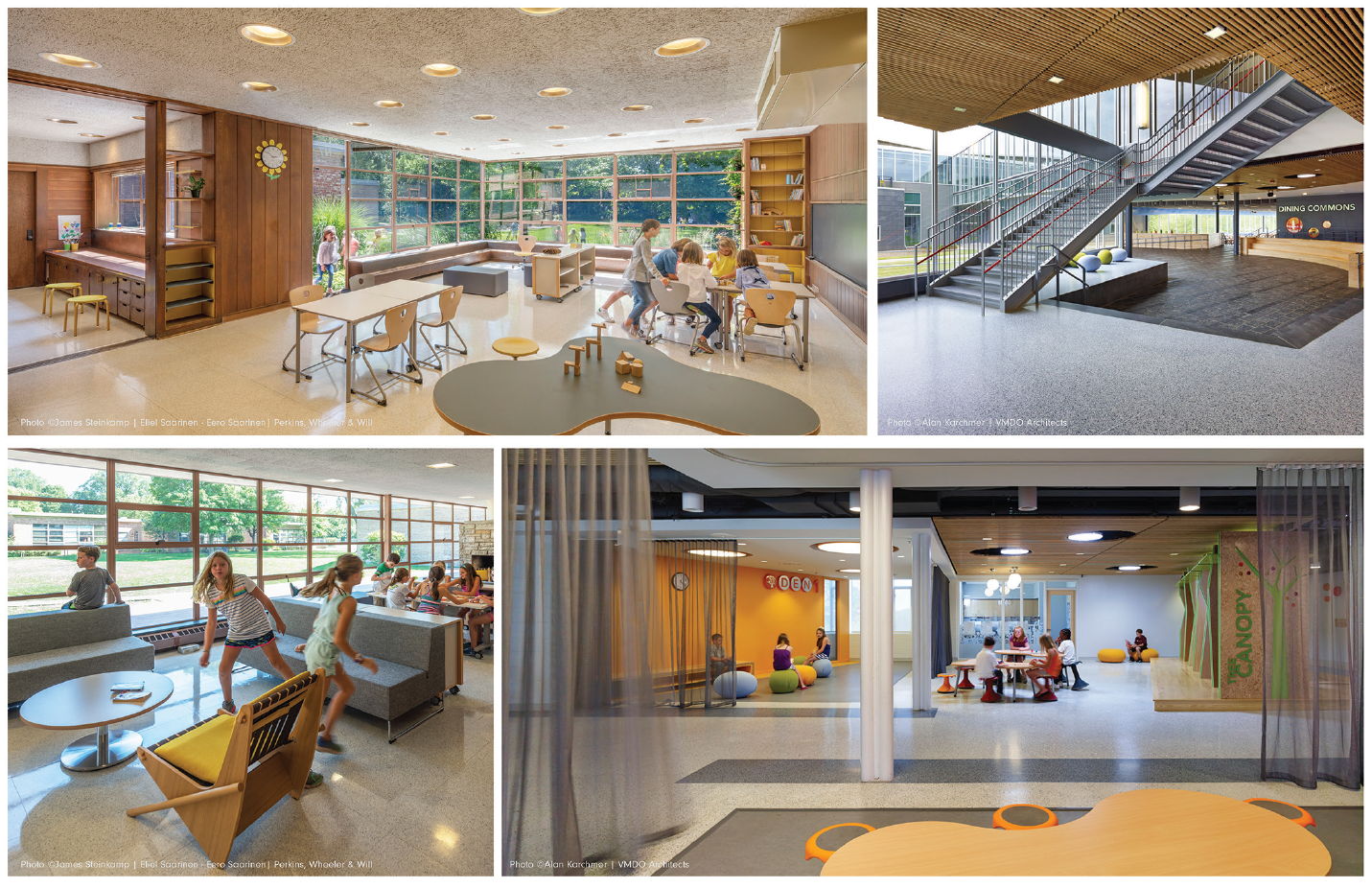
Dina’s research has made significant contributions to architectural scholarship. She leads initiatives focused on historic landmarks like Crow Island School, integrating new design elements while honoring legacy. Her involvement in significant projects has set a precedent for health-centered school environments, promoting healthy eating and physical activity through design.
Dina’s dedication is “a calling” rather than a job. She has redefined the role of design in education, public health, and sustainability. Her integrated approach to planning and design brings together experts from various fields, fostering collaboration and innovation. Dina’s work is not only about creating beautiful and functional spaces but also about enhancing the overall well-being and development of children and communities.
Dina’s vision for the future of educational environments is encapsulated in her upcoming publication on outdoor learning, aiming to engage educators and architects in new discourses about connecting children with nature. Through her work, Dina continues to inspire and lead, making lasting contributions to the design of healthier and more innovative learning environments.