


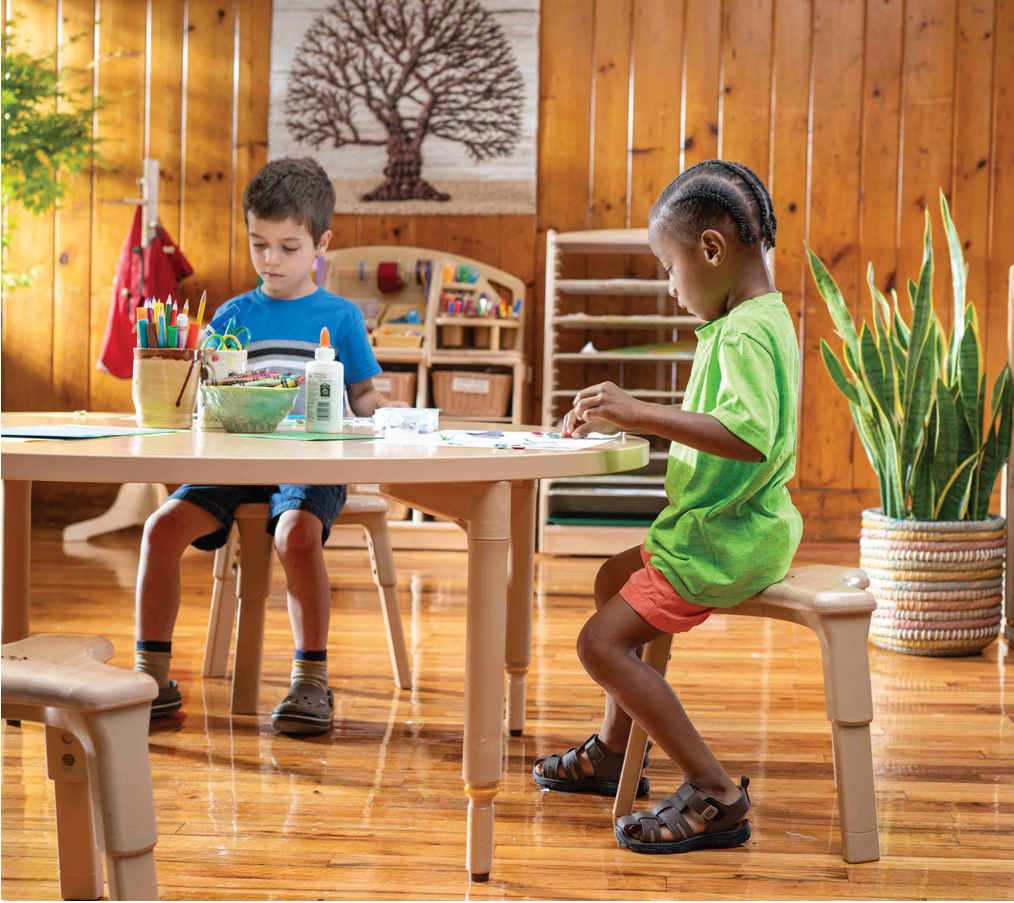
What if one of the most overlooked specifications in an early learning environment turned out to be one of the most developmentally significant? Designers carefully select flooring, acoustics, and lighting, yet seating often defaults to the same right-angle form that has furnished classrooms for generations. Research into how young children actually sit and develop suggests it is time to revisit that assumption.
Active play and movement are rightly the foundation of early learning, and no piece of furniture changes that. But for those moments when children do sit—at tables for focused work, during meals, in creative exploration—the design of that seating either supports their developing bodies or works against them.
The Myth of the 90-Degree Standard
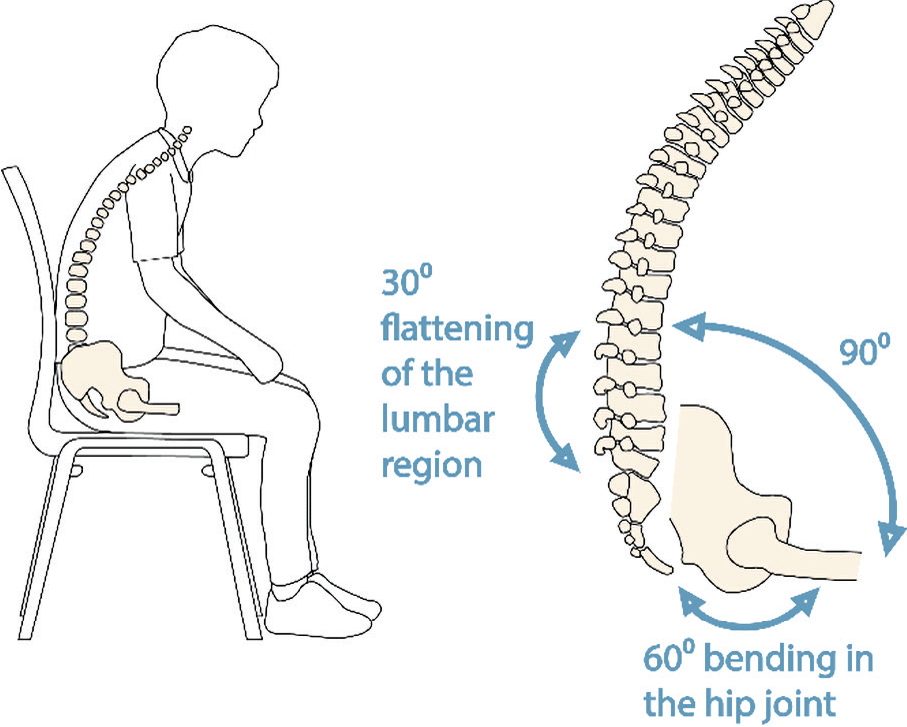
In most classrooms, children sit with hips, knees, and ankles positioned at 90 degrees. This “reference posture” became standard not because it was proven healthy, but because it offered a convenient measurement model for furniture design.
In the 1970s, Danish researcher A.C. Mandal questioned this assumption. He noted that the 90-degree position originated as a bureaucratic standard for measurement, not as a biologically optimal way to sit. Over time, it simply became the norm.
The problem is that young children cannot comfortably maintain this rigid, upright posture for more than a short period. When required to do so, their bodies compensate.
What Happens to the Body
In a right-angled chair, the pelvis tilts backward, flattening the spine’s natural lumbar curve. Maintaining an upright position requires continuous muscular effort. Children fatigue quickly, leading to the familiar slumped posture.
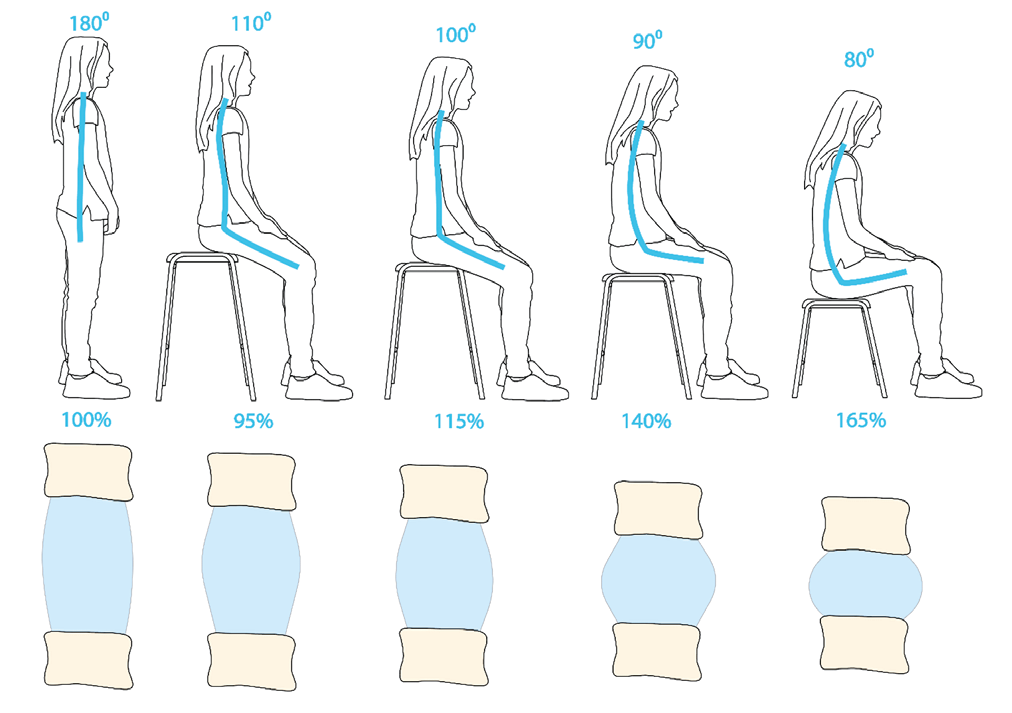
This shift has physiological consequences. Slouched sitting increases pressure on spinal discs compared to standing. Compression of the chest and abdomen can reduce lung expansion and create subtle physical discomfort. That discomfort competes directly with attention.
What is often labeled “fidgeting” may simply be the body seeking relief. When children lean, twist, or prop themselves on furniture, they are responding to strain, not defying instruction.
Postural habits formed early can persist. While a chair alone does not determine long-term health, repeated daily positioning during The formative years play a role in musculoskeletal development.
Movement Supports Focus
Educational design has often equated stillness with concentration. Developmental science suggests the opposite. Small, non-locomotor movements—shifting weight, adjusting posture, engaging core muscles—support circulation and sensory regulation.
These movements stimulate the vestibular and proprioceptive systems, which contribute to balance, spatial awareness, and self-regulation. They also influence neurochemicals associated with attention. Restricting movement may actually undermine sustained focus.
This principle is particularly visible in children with ADHD or sensory processing differences, but it applies broadly. All children benefit from seating that allows subtle motion rather than enforcing rigidity.
The goal, then, is not to eliminate movement but to channel it productively.
Rethinking the Geometry of Sitting
Mandal’s research demonstrated that the body’s natural resting hip angle is closer to 135 degrees between the torso and thighs—far more open than 90 degrees. At this angle, the pelvis can tilt forward naturally, and the spine maintains its healthy curves with less muscular strain. He compared the posture to sitting astride a horse: upright, balanced, and stable.
From this understanding come several design principles for developmentally supportive seating:
- An open hip angle that allows thighs to slope downward
- A seat surface that positions the pelvis without forcing rigidity
- Firm, stable foot placement
- Built-in capacity for small balance adjustments
This geometry also accommodates a range of body sizes. When the hip angle is open, exact seat height becomes less critical, making alternative seating more adaptable across mixed-age classrooms.
Design in Practice: The Grow-Right Stool
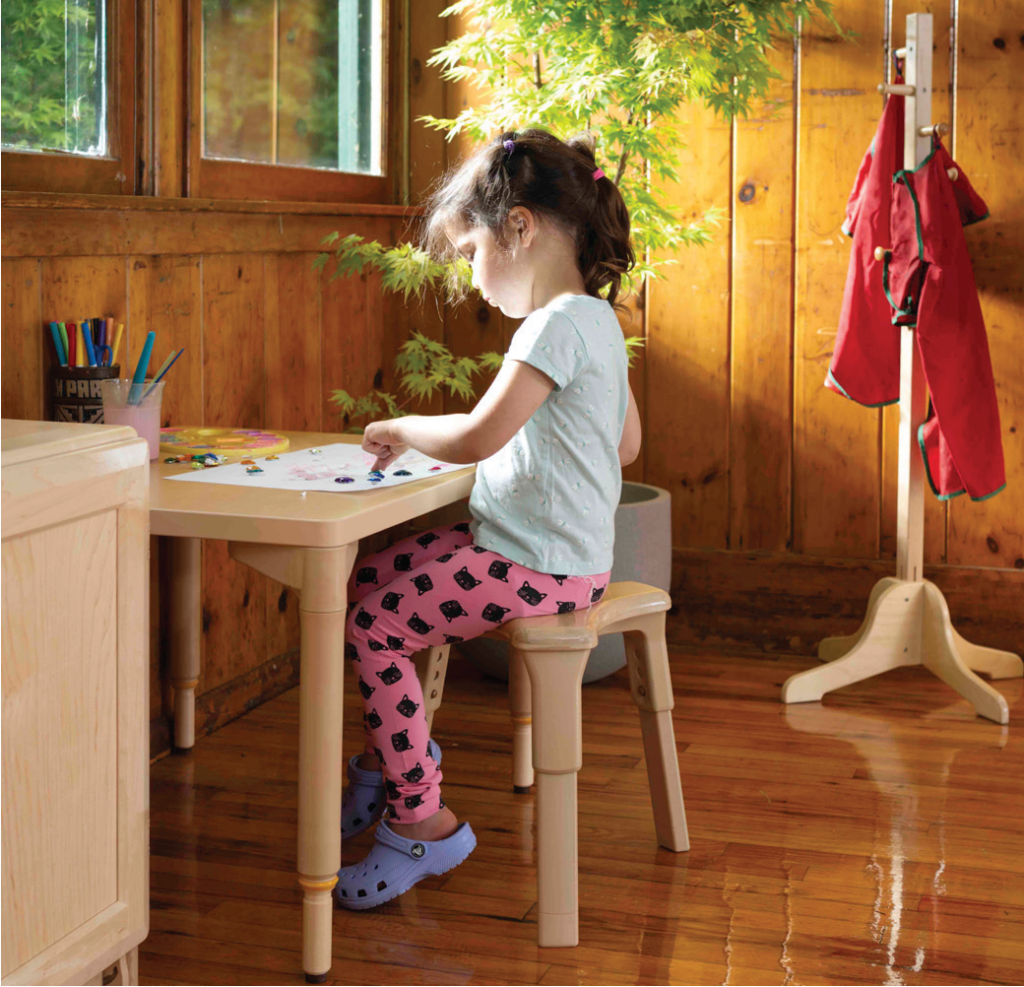
The Grow-Right Stool applies these biomechanical principles in a practical form. Its unique top allows a child’s legs to fall naturally away from the torso, opening the hip angle while remaining comfortable to straddle. This position supports spinal alignment and reduces compression through the abdomen and lower back.
Rather than enforcing stillness, the stool supports subtle, ongoing shifts in balance. Stability comes from a triangular base formed by the child’s two feet and their sit bones. With feet grounded and weight distributed across a seat designed for movement, children can adjust naturally without losing focus.
Height adjustability allows the stool to fit a range of children, an important feature in early learning settings. Sitting upright also engages core musculature, contributing to strength development that supports posture beyond the classroom.
Transitions become easier as well. Moving from seated to standing requires less effort when the body is already positioned in an open, balanced stance.
The objective is not to increase seated time. It is to improve the quality of seated moments so that children can focus on learning rather than compensating for discomfort. Some children may initially notice the difference as they engage their muscles in new ways, but this represents an opportunity to build stabilizing strength.
Toward a More Intentional Standard
The 90-degree chair became standard largely because it was simple and measurable, not because it was ideal for developing bodies. Today, research and design innovation offer alternatives that align more closely with how children naturally sit and move.
In a world where sedentary habits are increasing and environments are often designed around adult proportions, early childhood spaces present an opportunity to support healthier patterns from the start.
Seating that encourages an open posture, allows movement, and supports core engagement does not ask children to conform to furniture. It adapts to their biology. When we align design with developmental science, we create learning environments that respect the whole child—body and mind alike.
Reference:
FIRA International Limited. (2025). Ergonomics: Rethinking classroom seating [White paper]. FIRA International. https://www.fira-international.com/