

Issue and Proposed Solutions:
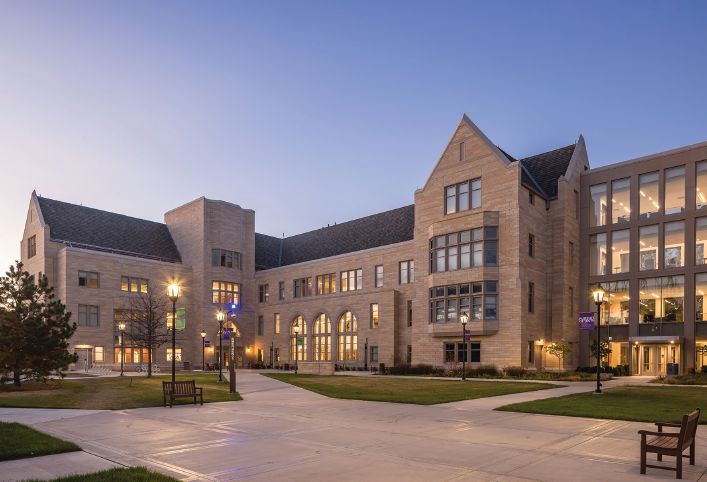
The University of St. Thomas sought to integrate science and engineering spaces with liberal arts programs in one cohesive environment, creating a unique program that maximizes learning possibilities for every student. Based on guiding principles established at the onset (Innovative, Adaptable, Connected, Inclusive, and Sustainable), the new facility for STEAM education fuses students from many majors across STEM and the arts together for enhanced collaborations, putting learning on display while being adaptable over time.
What was your approach to working toward a solution?
The Schoenecker Center represents the University’s mission to integrate knowledge across disciplines. Significant amounts of glazing provide visibility into each of the unique spaces, promoting exploration beyond each student’s major. A central atrium and abundant gathering spaces create natural opportunities to meet and exchange ideas, readying students for an increasingly interprofessional workforce. The exterior avoids a single disciplinary identity, reinforcing that it is a place for all students within the campus’s historical architectural tradition.
How were you able to resolve/ minimize this challenge, and what was the overall impact?
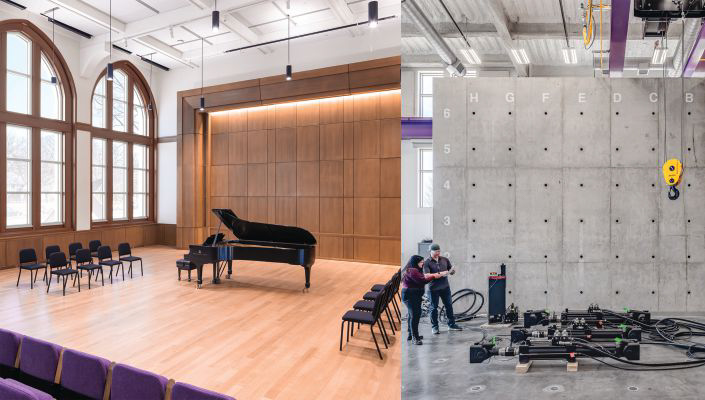
The project’s innovative design model exposes occupants to ideas across fields, bringing fresh perspectives to each program in support of dynamic, well-rounded students. The facility offers literal and experiential visibility into wide-ranging spaces from music rehearsal rooms to video production to civil engineering materials labs while retaining vital light control and acoustic separation. The result is a building that housed all program spaces within budget while optimizing collaboration and enhancing connectivity between disciplines.