

What is playful learning, and how does it shape educational experiences?
Playful Learning, or learning by doing, combines play with goal-driven learning to promote cognitive, social, and emotional growth in children–skills foundational to future success. This approach is proven to enhance development and close gaps in early childhood literacy, especially for children lacking access to quality learning opportunities. Playful learning aligns with 21st century learning through these purposeful learning goals which include collaboration, communication, content, critical thinking, creative innovation, and confidence.
How would you describe playful learning environments, and can you share examples?
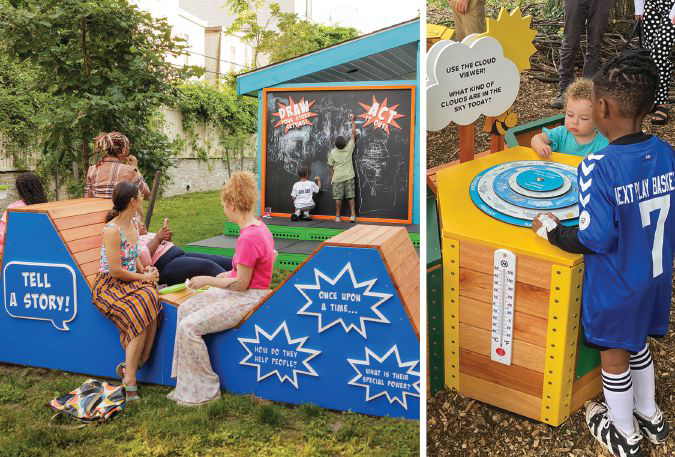
Playful learning environments are interactive spaces that weave learning into everyday life, inviting children and caregivers to explore through community-driven stories, themes, and activities. Using Playful Learning Landscapes Action Network’s research, KSS designed community-informed installations reflecting each neighborhood’s story: Germantown’s nature-themed “The Nest”, “The Hive”, and “Seeds and Bees”; North Philadelphia affordable housing community’s hero-focused “A Graphic Novel come to Life”; and a pediatric medical campus “Sensory Garden” offering accessible music and literacy experiences.
How does a playful learning approach inform the design of educational environments?
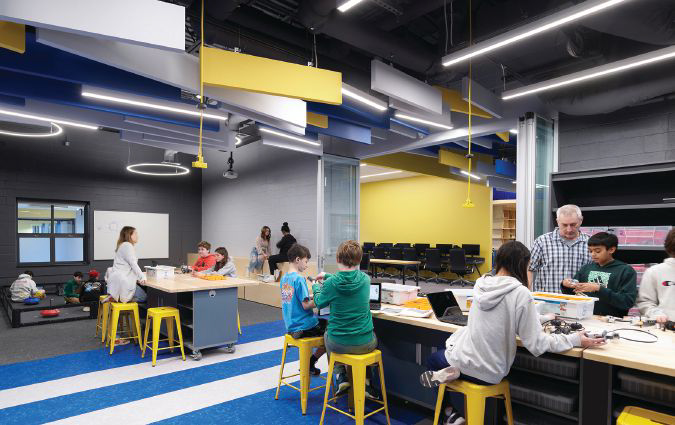
Playful learning builds the foundation for lifelong curiosity evolving into project-based learning where students take ownership of their interests and education. New Hope-Solebury’s STEAM Hub reflects this progression with flexible, engaging spaces for both individual focus and collaborative learning—mirroring playful learning environments. Close proximity between the robotics lab, digital fabrication lab, and gathering areas fosters seamless movement between technology, people, and activities, encouraging students to pursue their passions in an authentic, workplace-inspired setting.