

What is your background and your current role?
I’ve been with ESa for 19 years and currently serve as a principal, with a key interest in medical education spaces. Over the years, I’ve had the opportunity to work on a wide variety of spaces in this sector, from science labs to collaborative health education spaces and medical simulation centers. Exposure to that wide variety continues to inform how I approach academic environments. I especially enjoy the challenge of designing spaces that perform exceptionally and feel thoughtful and tailored to the people using them every day.
How has your knowledge of medical education design impacted the design of educational environments?
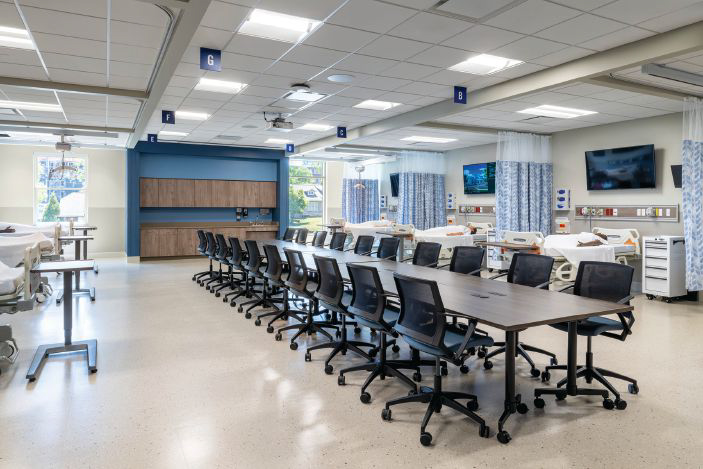
I applied my interprofessional education experience to the design of the Thomas F. Frist, Jr. College of Medicine at Belmont University. A key element was the design of a simulation center not tied to any one discipline. It had to support students across nursing, pharmacy and more. Our layout allows students to move between types of spaces and run full simulations as a team. That collaborative setup mirrors real-world healthcare, enhancing the relevance and impact of learning.
Tell us about a significant contribution you’ve made to the industry and/or a valuable piece of advice when building or renovating educational space.
My advice is to listen. The people using a space every day often have a gut feeling about what will work, and it’s our job to translate that insight into environments that truly support them. At Frist, that meant open conversations and being willing to adapt – whether designing for daylight and wellness or rethinking spaces when the school shifted from virtual learning to hands-on anatomy labs. The best ideas come from working through those challenges together.