

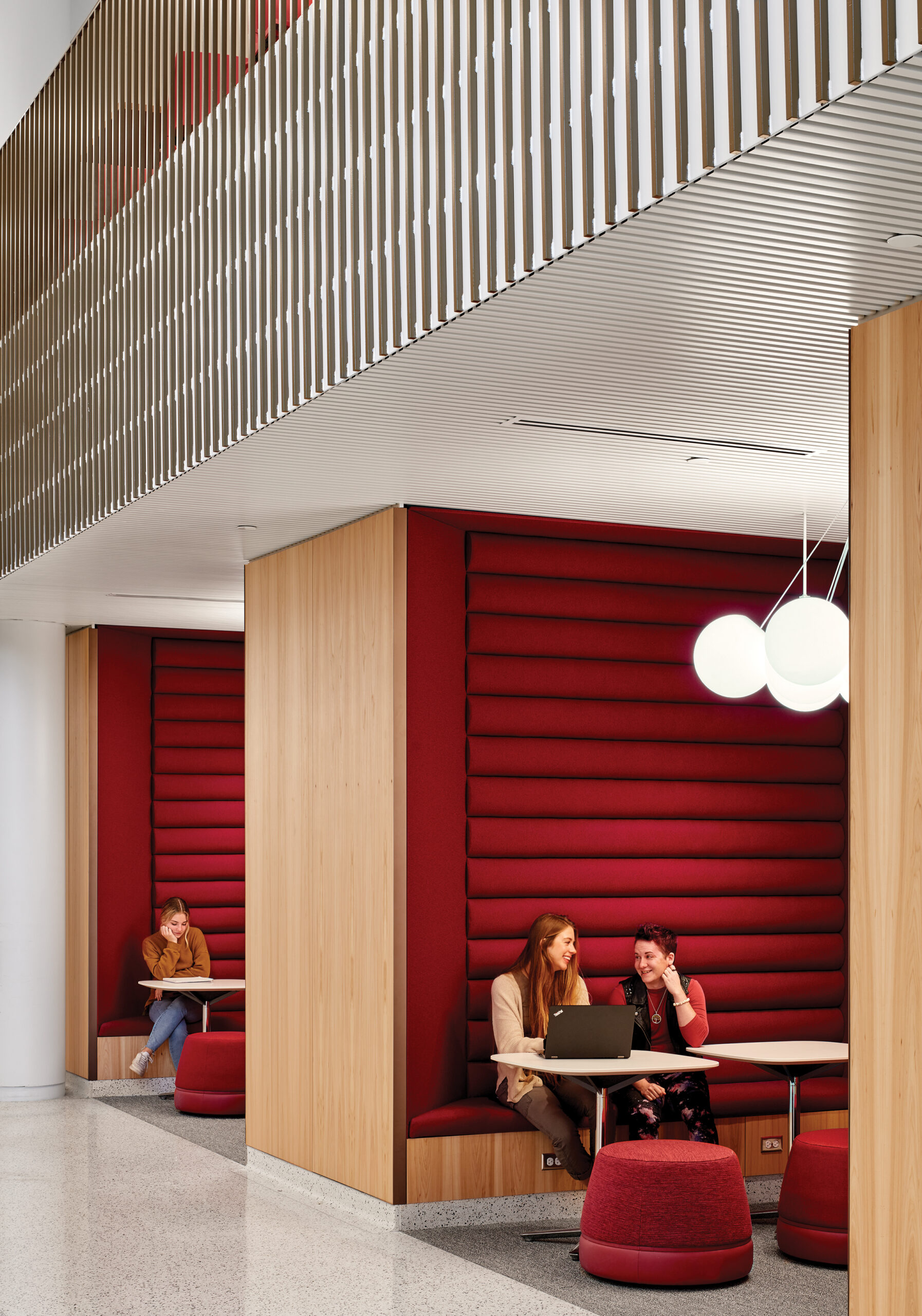
Engaging learning. Breakthrough research. Purposeful work. Innovative partnerships. Inspiring communities. Amazing things happen on college and university campuses. Campus facilities make all these possible. Our buildings and landscapes realize their full potential when they foster connections and make meaningful experiences. Lora Strigens, Vice President for Planning & Facilities Management at Marquette University, puts this so well when I interviewed her for my book The Connected College1: “The spaces that are meaningful on a campus or in the city are the ones that create memories. They are opportunities to meet somebody or to have a great conversation or experience something that helps you remember or understand what is going on in the world around you.”
- Two-thirds of applicants factor campus facilities into their college decision, with the library, fitness center, dining hall, labs, and residence halls as the most likely to attract them to a campus, in declining order, according to a Student Voice Survey by Inside Higher Ed.3
- A national student experience survey found a moderately strong correlation ( p = approx. 0.5) between students’ satisfaction with facilities and their likelihood to recommend their college or university.
- Consolidating and co-locating student services in one single “one-stop” location is associated with about a three percentage point increase in retention; likewise, living in a residence hall on campus is associated with about a three percentage point increase in retention.
- Residence Halls that are designed to promote more interaction4 lead to a greater sense of community5 and higher GPAs.6 Students who use library resources are 1.44 times more likely to graduate than those who do not.7
- College grads who rated their experiences with career services as “very helpful”8 are about six times more likely to strongly agree they were prepared for life after college and nearly three times more likely to donate to their alma mater as alums.
We also know that hybrid work, online learning, project-based learning, and niche communities have changed how people live, learn, and work. Online and on-campus activities are blending with hybrid work, learning, and events. Spaces blend academic and social activities together; for instance, libraries and student centers are converging, like in the combined facility the University of Minnesota is planning with Alliance and Workshop Architects.
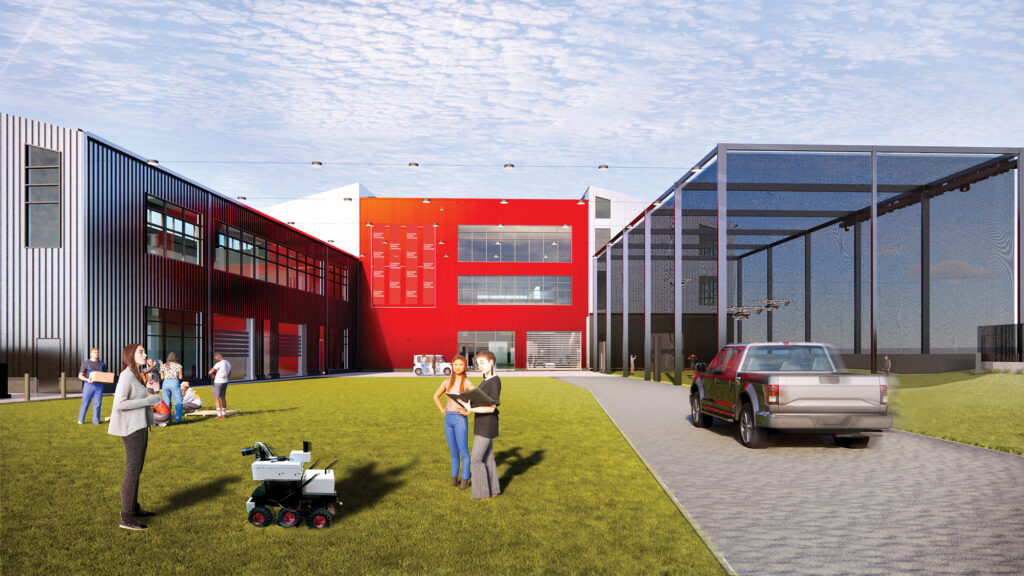
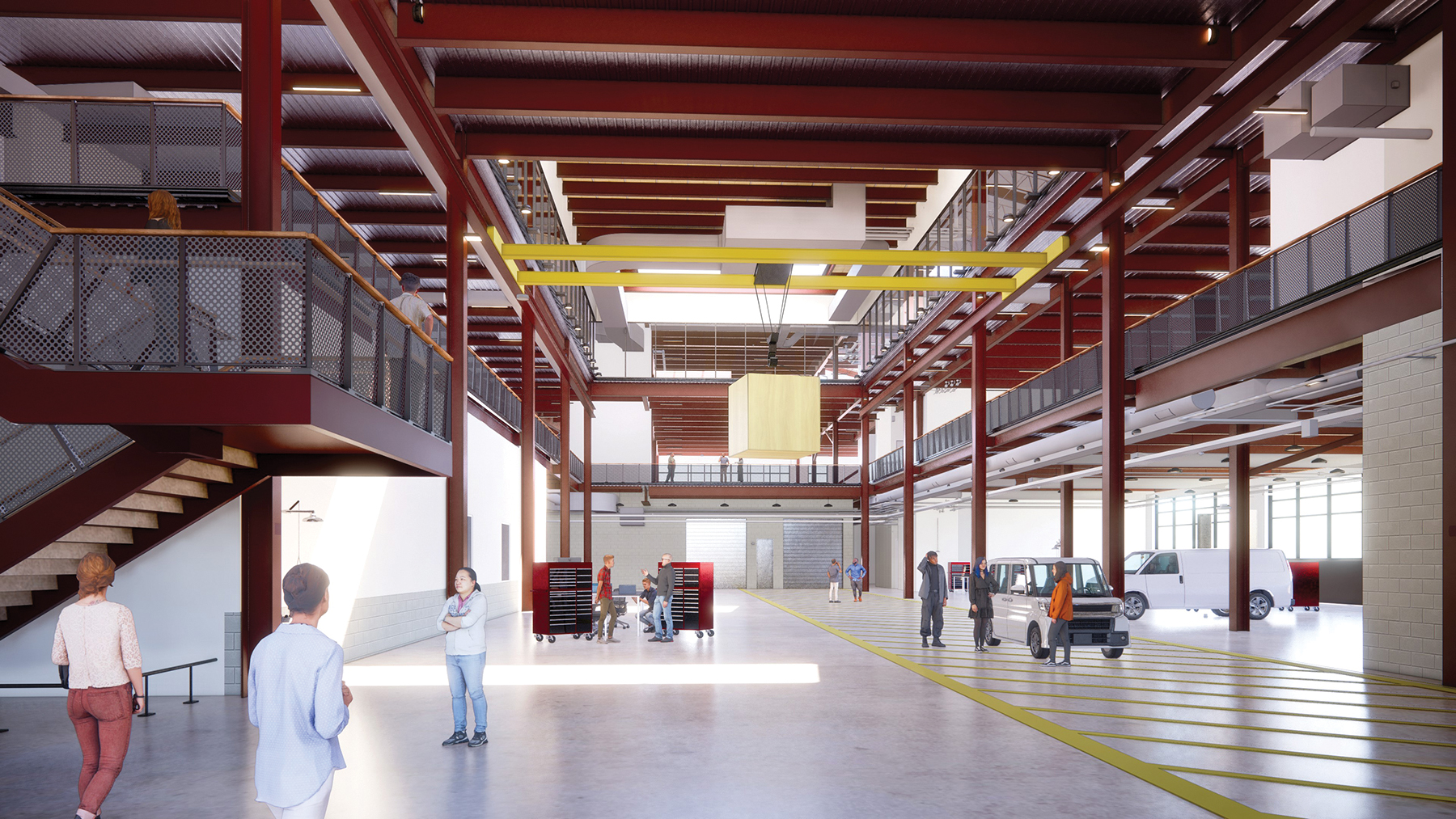
Campus and corporate, and community users share spaces as in the Robotics Innovation Center Carnegie Mellon University is building which was programmed by Buro Happold and designed by Perkins Eastman. Technology is changing not only how people use spaces but how they find them and get to them.
If everything stayed the same, we could plan, design, and build campuses the way we always have. Instead, we must do two things differently. First, we must effectively engage stakeholders and coordinate planning and operations to respond to the needs of today’s students and be flexible enough to work with the pace of change. Second, we must plan space and organizational changes together so that our spaces are not inert containers but essential tools to advance institutional strategy. Then, our campuses can foster community and belonging, connect students with the support to succeed, and enable experiential learning that ties coursework to career paths.
Engage Campus and Community Stakeholders
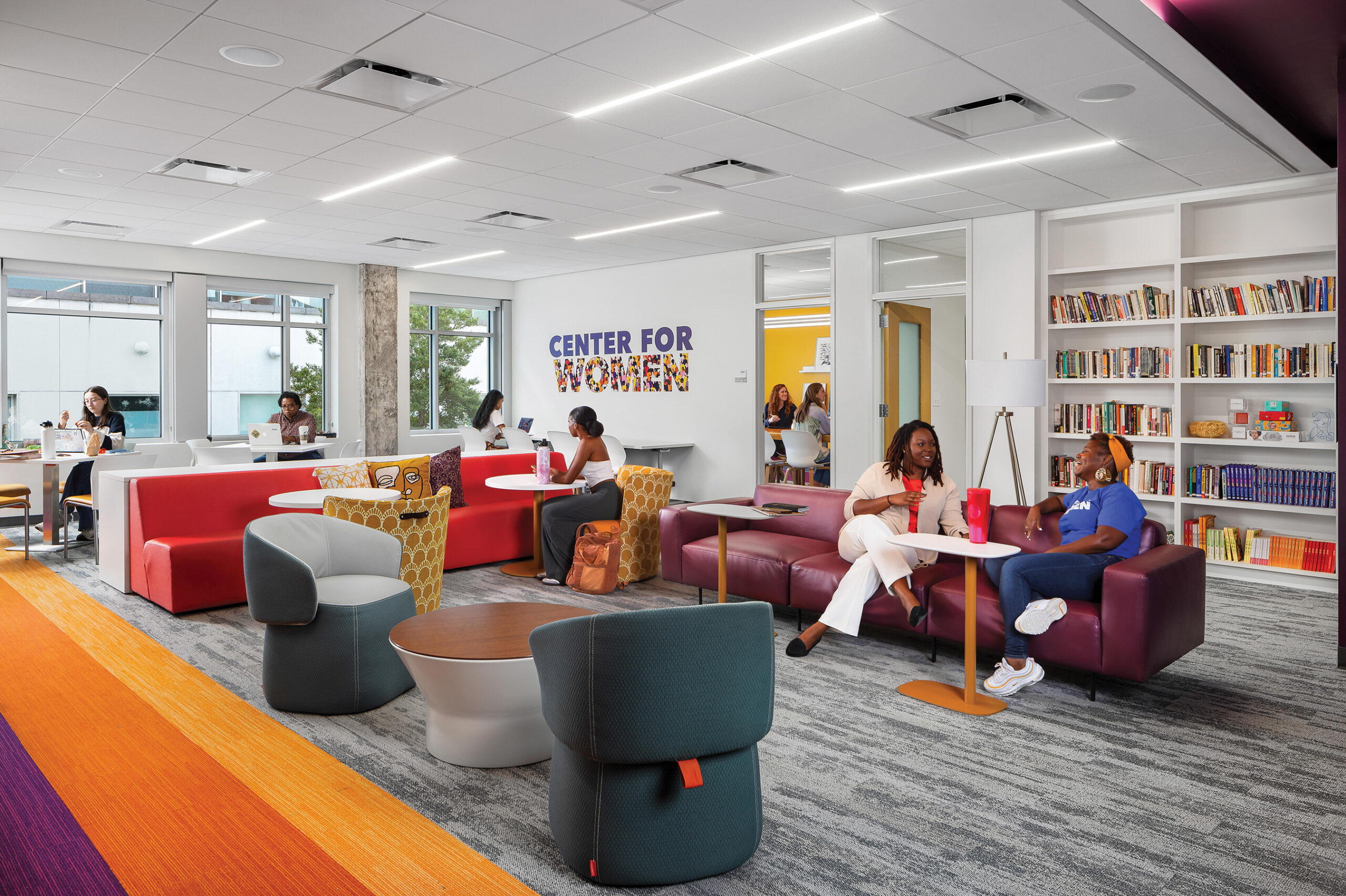
Effective facilities planning requires engaging a wide range of stakeholders, including students, faculty, staff, and the surrounding community. Understanding their needs and perspectives is crucial for creating spaces that meet their changing needs and truly serve the institution’s mission. This means talking to the right people, at the right time, guided by the right questions, to make the right decisions. This starts by identifying and mapping stakeholders to understand their relationships. Then you can ask meaningful questions, actively listen to feedback, and act on what you learned. By engaging campus and community stakeholders you can create spaces that foster community. This is crucial since only 65% of students currently feel a sense of belonging, according to the American College Health Association’s national survey.9 Emory University’s Identity Spaces Project10, designed by Perkins&Will, is a great example of an institution systematically transforming the spaces where communities connect. Small renovations and relocations can have an outsized impact, especially since identity spaces are often stuffed in basements or relegated to campus edges. On a larger scale, Michigan State University opened in February 2025 a new, 32,000 square-foot Multicultural Center to serve as a hub for events, workshops, and activities designed by SmithGroup.Plan Space and Organizational Changes Together
Raising the bar for campus facilities beyond efficiency and effectiveness requires thinking about spaces and the organizational cultures that create and operate them. People don’t miraculously learn or work differently by changing the spaces they’re in. You must change organizational culture and structure along with your operations too. This takes an engaging planning process but also embedded change management into the process. Defining the change, assessing readiness, and addressing gaps through training and communications, as well as prototyping and pilots.
New spaces should enable new ways of living, learning, and working. Virginia Commonwealth University’s new STEM building, designed by Ballinger Architects, is a great example. Office hours are confusing and intimidating—I’ve even heard some students assume that these are the hours faculty are not free. So, in addition to changing their space, VCU changed the way they hold office hours. They moved from faculty offices to a communal science hub. This attracted 60% more students to faculty office hours compared to meetings in professors’ offices. They also reached different students as well: One-third of the students had never been to office hours before. Normandale Community College worked with Buro Happold (then brightspot strategy) and HGA architects to renovate their student services center and moved to an integrated service model. This consolidated student support offices, created a shared help desk with cross-trained staff, and leveraged shared consultation spaces. Putting these together freed up enough space to create common study spaces adjacent to the help desk, meeting students where they are.
Use Your Space to Advance Your Strategy
Campus facilities can be more than containers. They can be powerful tools to enable learning, interaction, belonging, and well-being. They can support and symbolize institutional strategy and create meaningful memories and connections. If campus facilities aren’t working well, people can’t do their job well. Students won’t feel welcome or comfortable. The strategic plan will stay an abstract concept on paper, rather than something people can see, touch, feel, and experience. The campus will stay static instead of evolving to meet changing needs. Lora Strigens observed: “We need greater rigor around how institutions make decisions about capital investments. Institutions must become increasingly more disciplined about making choices to stop investing in things that are no longer serving their strategy and institutional priorities.”
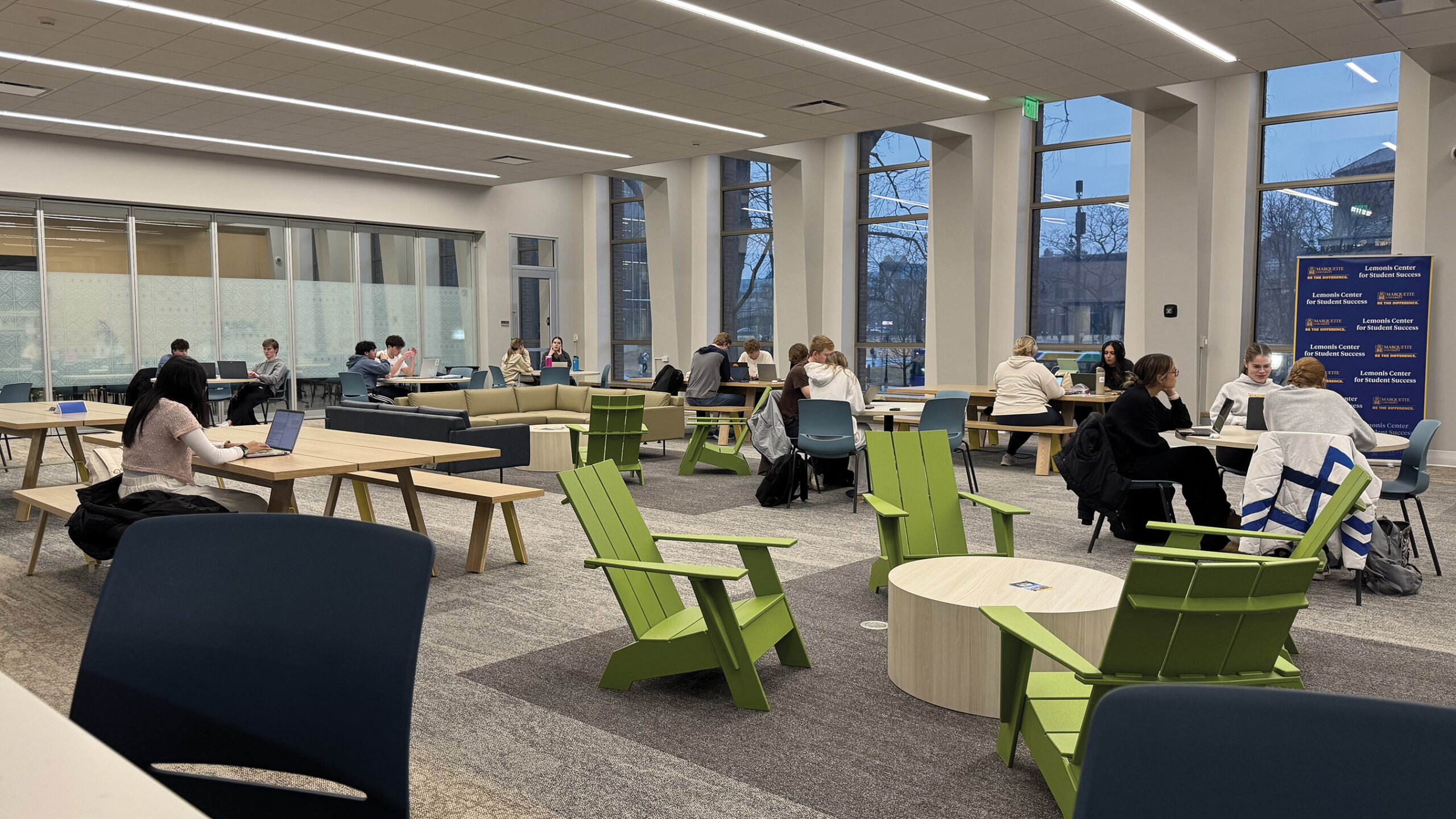
Student success is part of every institution’s strategy. But still, students get the runaround from office to office to get help, if they even know it exists. Marquette University connected students with support by creating their Lemonis Center for Student Success on two floors of the university’s library complex. Designed by Workshop Architects, and opened in August of 2024, the Center houses academic support, tutoring, career services, and other programs to support students from their first days on campus to their careers post-graduation. It also draws in university partners for career exploration programs, job interviews, mentoring, and more. Likewise, Arizona State University’s charter calls for it to assume “fundamental responsibility for the economic, social, cultural, and overall health of the communities it serves.” Spaces advance this strategy by locating programs focused on community health, entrepreneurship, and public policy directly within the communities they serve on their downtown Phoenix campus.
How to Get Started
Transforming campus facilities requires collaboration across the institution. This includes gathering input from faculty, staff, and students, aligning space with academic needs, partnering with student affairs, empowering institutional leadership, engaging with advancement, and showcasing the campus with admissions. Bold decision-making and a willingness to take risks are essential. Lora Strigens recommends you “Build a culture that’s comfortable talking about big ideas and testing them.” Piloting new ideas can help mitigate risk and build momentum. By collaborating internally and partnering externally, colleges and universities can create learning environments that support student success, advance institutional strategy, and contribute to a more sustainable future.
Conventional wisdom often prevails in higher education. Traditions are our strength. Embracing the market will undermine the mission. Demographics are destiny. Follow best practices and align to peer benchmarks. Get consensus before taking action. But it’s unconventional wisdom that enables campus facilities to foster connections between colleges and companies, between courses and careers, and between campuses and surrounding communities. Find strength in agility, not tradition. Instead of doing more with less, focus so you can do less with more. See differentiation as destiny. Bust silos and make bold decisions. Use your space not just as a container but to create better connected colleges and universities. As Lora Strigens notes: “Every facilities project is an opportunity to improve student success.”
Sources
- http://www.elliotfelix.com/connectedcollege
- https://www.qualtrics.com/ebooks-guides/hed-state-of-studentexperience-2022/
- https://www.insidehighered.com/admissions/article/2022/12/12/survey-how-campus-facilities-factor-college-choice
- https://openurl.ebsco.com/EPDB%3Agcd%3A6%3A22563270/detailv2 sid=ebsco%3Aplink%3Ascholar&id=ebsco%3Agcd%3A 36087493&crl=c
- https://journals.sagepub.com/doi/10.1177/0013916507301128
- https://www.tandfonline.com/doi/full/10.1080/19496591.2019.1611590
- https://crl.acrl.org/index.php/crl/article/view/16737/18250
- https://www.forbes.com/sites/brandonbusteed/2020/12/21/career-services-will-define-the-next-big-boom-in-collegeenrollment/
- https://www.acha.org/wp-content/uploads/2024/07/NCHAIII_ fall_2022_reference_group_executive_summary.pdf
- https://identityspacesproject.emory.edu/