

Functionality and Design
Educators and designers understand the importance of creating warm, inviting environments conducive to learning. They recognize that designing educational spaces requires a balance between functionality and design. Central to achieving this balance is selecting commercial flooring that not only meets performance requirements but also contributes to the longevity and sustainability of the educational space.
Compliance and Reliability
Many school districts have established technical specifications for flooring products, ensuring consistency and reliability. By adhering to these guidelines, specifiers and designers can confidently select products optimized for long-term performance. This proactive approach enables maintenance teams to develop strategies for maintaining flooring integrity over time.
For instance, incorporating modular flooring systems allows for easy replacement of damaged tiles without disrupting the entire floor, reducing maintenance costs and minimizing downtime.
Importance of Quality
In the United States, the average public elementary school accommodates around over 526 students, alongside faculty and staff. This translates to a significant amount of foot traffic daily, bringing in dirt, water, snow, and more. Consequently, the flooring in these spaces must exhibit exceptional performance to withstand such wear and tear.
Inexpensive flooring materials that are poorly constructed will quickly succumb to the rigors of daily school life. Stains damage the surface prematurely, frayed edges pose safety hazards, and poor quality LVT shows signs of wear far sooner than anticipated. What was intended to be a long-term investment becomes a revolving door of repairs and replacements, draining operational budgets and disrupting the learning environment.
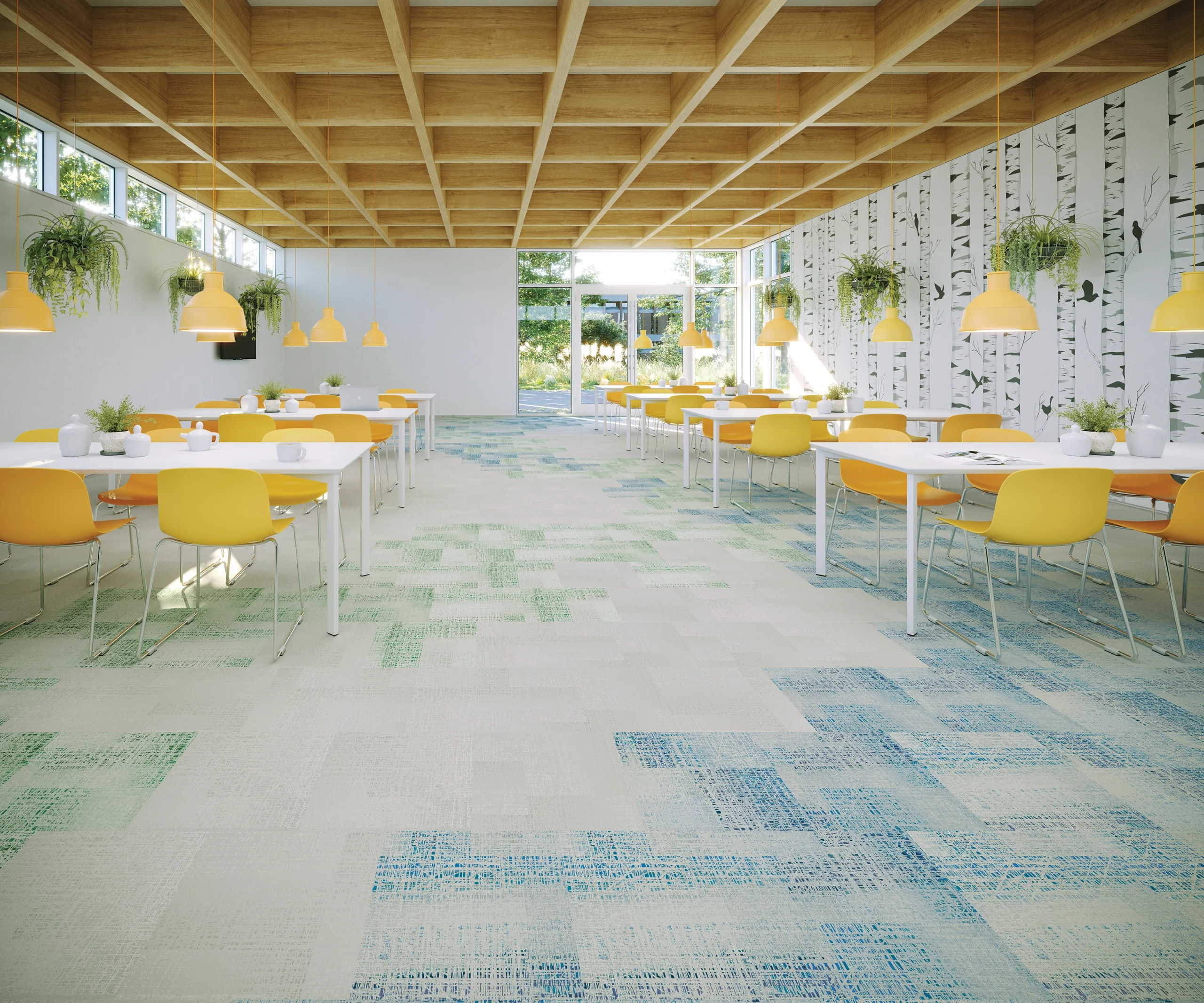
Active Lines | Shift | Zoom ALS301
Active Lines | Shift | Zoom Blue ALS303
Active Lines | Shift | Zoom Green ALS305

New Composition | Inner Share | Metaphor 13155
New Composition | InnerShare Abstract 64159
Performance and Sustainability
When considering carpet, various factors contribute to its overall performance and durability, including the TARR rating, carpet backings, and fiber systems. The TARR rating is pivotal, assessing a carpet’s resilience against foot traffic under specific conditions. Moreover, the choice of fiber greatly impacts the commercial carpet’s performance, maintenance requirements, and cost-effectiveness. Among the fiber options, nylon emerges as a standout choice due to its exceptional durability. While both Nylon 6 and Nylon 6,6 offer beneficial qualities, each catering to distinct preferences and needs, Nylon 6,6 often is recommended for its strength and longevity. On the other hand, Nylon 6 presents a more economically viable option, particularly for those prioritizing recyclability without compromising performance. Therefore, the decision between Nylon 6 and Nylon 6,6 depends on factors such as budget, sustainability goals, and the specific demands of the carpet’s application.
Designers, specifiers, and facility managers increasingly prioritize sustainability in commercial flooring choices, particularly in the education sector. At Mannington Commercial, we understand this concern and offer comprehensive environmental solutions. Our product line includes PVC-free carpet backing and PVC-free Luxury Vinyl Plank options, aligning with our commitment to sustainability. These options, alongside advancements in manufacturing utilizing recycled materials and our other corporate responsibility partnerships, ensure both performance and environmental benefits. Additionally, our product line extends to LVT, rubber, and resilient sheet options, each tailored to specific performance and sustainability requirements. By choosing high-quality flooring from Mannington Commercial, clients not only benefit from durability but also contribute to waste reduction and promote greater sustainability practices.
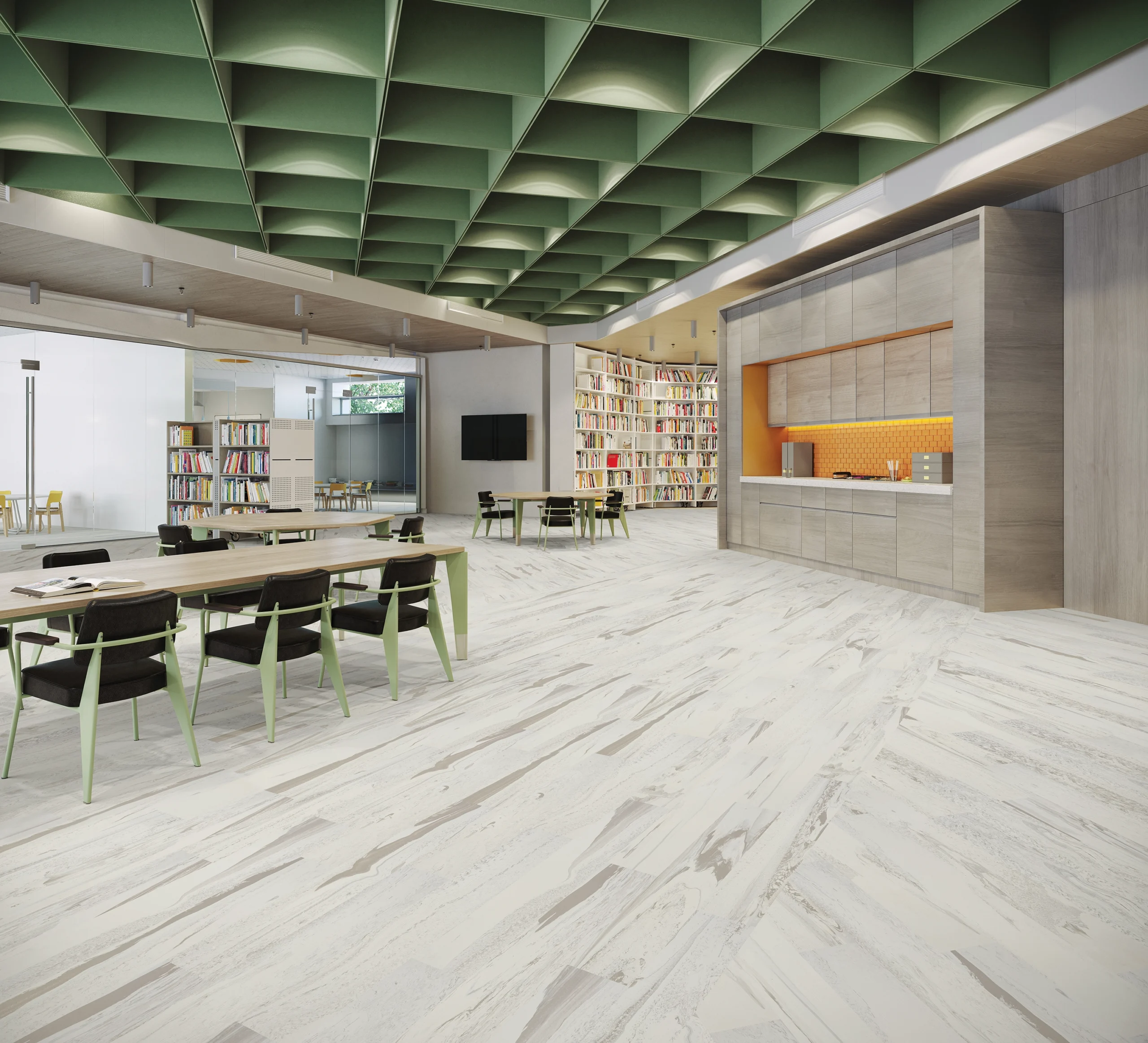
Open Range (PVC-Free) | Blake

Maintenance
Properly cleaning and maintaining commercial flooring is essential for extending its lifespan. Different flooring types require specific care methods. For carpets, Mannington Commercial recommends the T.A.C.T. (Time, Agitation, Chemical, Temperature) approach, prioritizing regular vacuuming, stain treatment, and mild detergents, with periodic deep cleaning using minimal chemicals. Stain resistance, particularly important in educational areas, can be enhanced through topical solutions or built-in protection. Rubber flooring requires simple maintenance, including sweeping, mopping with a neutral cleaner, and occasional scrubbing for a glossy finish. LVT and sheet vinyl, known for their ease of maintenance, only need water, the right equipment, and Mannington Commercial’s Quantum Guard finishes for stain resistance, eliminating the need for polishing. This comprehensive approach ensures the longevity and cleanliness of any commercial flooring.
Balancing Budget Constraints
When a Facilities Director or architect cuts corners, it’s not just a matter of saving a few dollars; it impacts everyone. Students and teachers find themselves displaced, and the funds meant for teaching and learning take a hit. This means that taxpayer dollars, which should be invested in education, end up being diverted towards constant repairs and replacements instead. Ultimately, it’s the quality of education that suffers, and the children within the district are the ones left shortchanged.
Balancing budget limitations while aiming for top-notch performance is an ongoing challenge in educational projects. Whether it’s choosing carpet, rubber, sheet vinyl, or luxury vinyl tile (LVT), it’s crucial that each product is both durable and visually appealing, ensuring a safe and comfortable learning environment. It’s important to recognize that investing in high-quality, high-performing products can save money in the long run by reducing maintenance, repair, and potential early replacement costs, which should factor into decision-making alongside durability.
Whether it’s choosing carpet, rubber, sheet vinyl, or luxury vinyl tile (LVT), it’s crucial that each product is both durable and visually appealing, ensuring a safe and comfortable learning environment.
Commitment to the Future of Education
By prioritizing quality flooring products, like those from Mannington Commercial, schools can create environments that support learning, safety, and sustainability. With careful consideration and informed decision-making, educational spaces can thrive with flooring solutions that stand the test of time while minimizing environmental impact. Remember: choosing quality flooring isn’t just an investment in the present—it’s a commitment to the future of education.
Photos: The Right Exposure, courtesy of Mannington Commercial