



When it comes to learning environment design, we already know that one size does not fit all. To accommodate the many needs of users, flexible furniture has been the industry-wide solution. Over the years, a wealth of information on the importance of student-centered design has been at the core of 21st-century learning. However, the key question arises: are we making the right choices in our pursuit of flexibility? Flexibility in furniture isn’t just about offering options; it’s about offering the right options.
At MooreCo, our commitment to student-centered design has led us to collaborate with experts across various fields, including neuroscience, psychology, physical therapy, and social-emotional development. Through these collaborations, we’ve embarked on a journey called Thrive, to redefine the paradigm of furniture on learning spaces.
Dr. Lisa Harris and Dr. Amy Rohsner, from Healthworks Ergonomics, helped our team analyze both the physiological aspect of furniture design as well as the sensory response to it. There is a profound link between posture, breathing, and blood circulation to emotional well-being, anxiety, and stress. How students respond, engage, or withdrawal from stimuli deeply affects their cognitive development, concentration, self-esteem, and sense of inclusion. Dr. Harris & Dr. Rohsner categorize students’ sensory response to the environment into four groups:
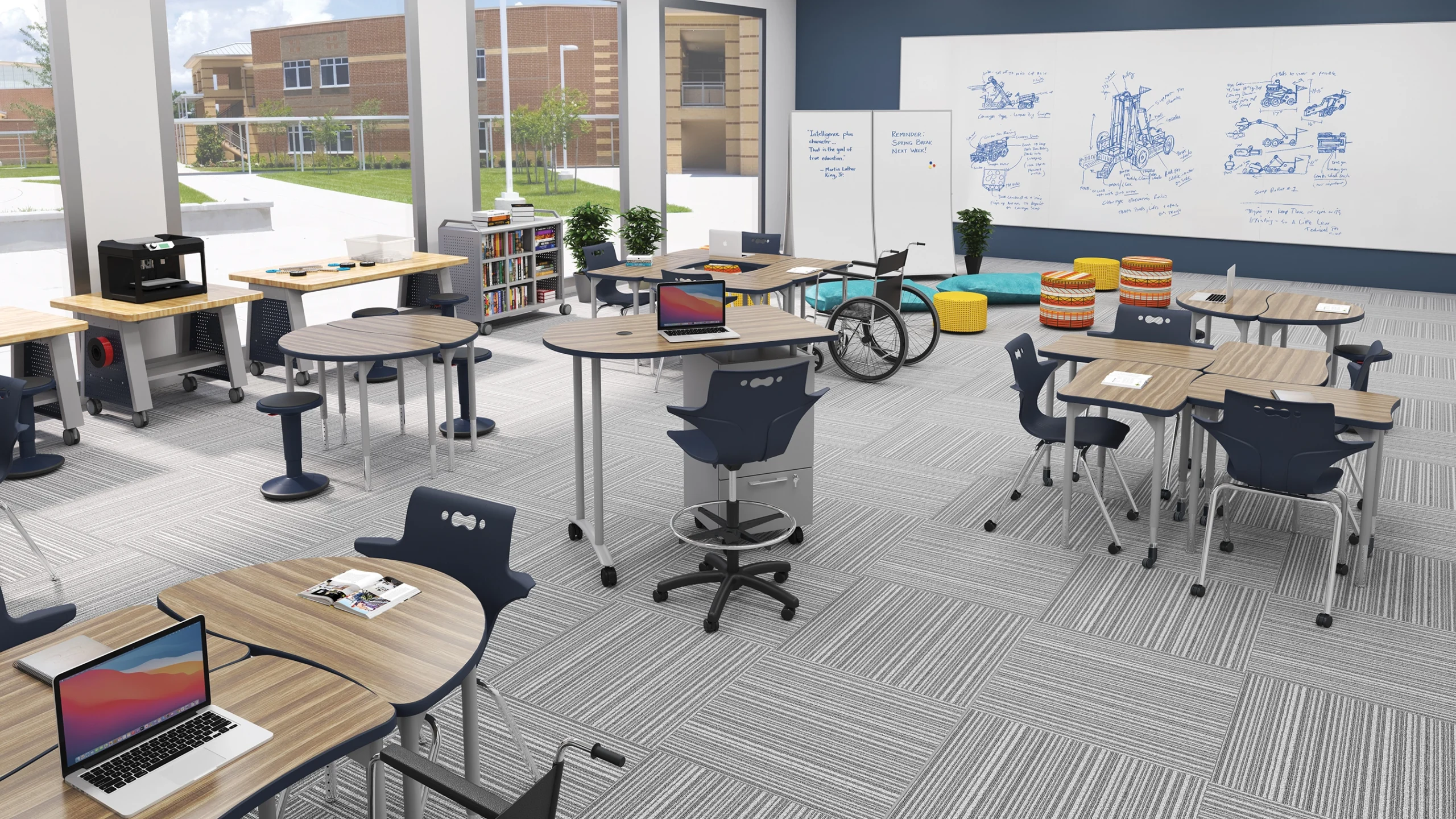
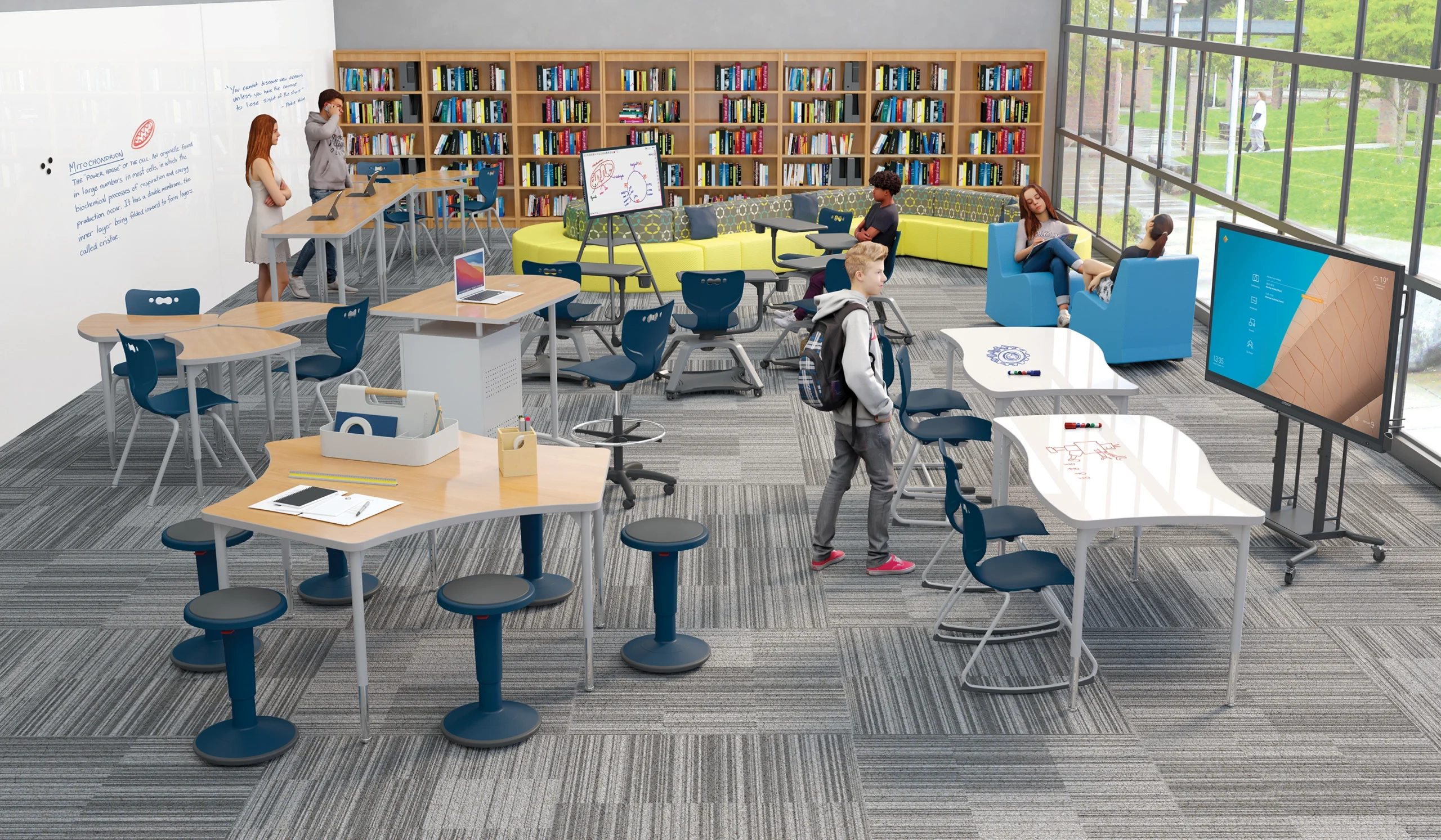
Seekers are more engaged in sensory learning, seek stimulation and easily grow bored. The pneumatic, height-adjustable swiveling wobble stool provides ideal support, promoting proper posture and stimulating core muscles for improved circulation and focus. Its swiveling motion soothes seekers and enhances alertness akin to a fidget spinner for the body and mind. However, fixed-height wobble stools pose issues for taller students, potentially leading to posture problems and overstimulation. Products like tablet chairs should be avoided as they can turn into distractions for seekers, encouraging inappropriate use.
Bystanders are passive, miss sensory cues, and don’t need a lot of physical action. Misunderstood as disconnected and clumsy, they are comfortable in any environment. Bystanders typically need to be motivated to move. Tablet chairs are ideal, as it invites full body motion to participate and connect with others. Sit-to-stand desks or bar-height tables and stools work well too. Other support tools to offer bystanders are dry erase tabletops, easy to configure desks, and tabletop earth magnets. Products to avoid with bystanders include traditional 4-leg chairs and a singular student desk set up.
Avoiders are more likely to retreat from unfamiliar or overstimulating situations. They prefer sitting away from others as much as possible and remove themselves from surrounding stimuli. Unlike swivel stools, rocking chairs provide back support and offer a steady, soothing full-body motion. Soft seating pieces with or without motion create communal setups that help avoiders engage with others.
Sensitives are hyper aware of every sound, smell, and sight in their environment, and it affects how they respond. Without the right tools, sensitives withdraw and become rigid and uncooperative. Because sensitives react very quickly to stimulus, rhythm and repetition can engage them. Soft seating pieces with motion and textured fabrics that can be touched and stroked help calm this easily stimulated mind. High back seats and pods shield sound and light while allowing the student to be present and participate with their peers.
Dr. Jessica Church-Lang, UT Austin’s Developmental Cognitive Neuroscience Lab Principal Investigator, employs brain imaging to explore children’s control development. She examines how this system aids task completion, impulse inhibition, and transition from childhood to adulthood. “We are really interested in how control interacts with academic success, because the environmental context of those interactions really matter, which is why classroom design is so important,” Dr. Church-Lang explains. While collaborating with MooreCo’s R+D team, “we analyze student feedback on how furniture soothes or stimulates them. This offers great insight into their physiological needs.”
When considering the physiological aspects of learning environments, selecting age-appropriate, inclusive furnishings that promote proper posture, circulation, and breathing is essential. Dr. Christopher Fagundes, Associate Professor of Psychology at Rice University underscores the importance of recognizing ergonomic needs and the different growth rates of students. “There’s a lack of recognition around ergonomics, we make kids use the same desks and chairs when they are 11 as they do when they’re 18.” According to Dr. Harris, “Poor posture not only affects the tissue of the spine and neck, but causes shallow breathing and increased cortisol levels which triggers anxiety”. Proper, slow-paced breathing is proven to relax and calm students down.
While collaborating with MooreCo’s R+D team, “we analyze student feedback on how furniture soothes or stimulates them. This offers great insight into their physiological needs.”
—Dr. Church-Lang
Additional sensory factors to consider are the impact of glare and sound on cognitive performance. Materials such as porcelain steel are effective in mitigating glare over HPL. Additionally, furniture choices can aid in tackling acoustic challenges on a smaller scale. Incorporating pods and acoustic dividers throughout the environment contributes to sound reduction.
As Dr. Church-Lang articulates it: “I urge you to think about students as active participants in the process of learning and to include them in decision making around the design. They love peer interaction, flexibility in design, and ability for things to be different, depending on their mood. The MooreCo designs are very flexible, adaptable, and are really fabulous examples of this.”