


When I meet someone new outside of work and they ask what I do, I often say that I study how the design of learning environments shapes teaching and learning. Depending on their interest, the conversation may go deeper, but most of the time, I get a version of the same follow-up question: If there is one thing I should know about school design, or one thing every classroom should have, what is it? My answer is always the same. Windows. No windowless classrooms. The benefits of daylight are well established, as are the benefits of transparency. Access to natural light, views to the outdoors, and visual complexity can support student and teacher well-being, improve attention restoration, and create opportunities for passive learning. And while those benefits are clear, educators and administrators raise valid concerns about safety and distraction. These tensions represent the complexity of real learning spaces where transparency affords visibility that, paradoxically, may both support and compete with a student’s ability to focus. This raises an important question: What does the evidence say about how we can achieve the benefits of transparency (visibility, daylight, and connection) while mitigating the risks that come with them?
A key decision point in how we use any design strategy is weighing its potential to distract against its potential to help us achieve our design and educational goals. In other fields, this cost-benefit approach is commonplace and methodologically rigorous. For example, medical research is, almost by definition, structured as a cost-benefit analysis, weighing an intervention’s intended effects against its unintended side effects. Prominent education researcher Yong Zhao, advocates for a similar approach for education side effects because even empirically successful strategies can have unintended consequences that may even outweigh the “success” that is the focus. For example, many school districts across the US have rolled out 1:1 device programs at scale, often on the assumption that access alone drives achievement. The evidence, however, has yet to catch up to the policy. As one review put it, 1:1 laptop programs have proliferated in US schools even though it remains unclear how much they actually improve outcomes for students and teachers, with researchers repeatedly flagging a lack of conclusive studies on their effectiveness. The pattern holds in reverse, too. Pull devices back, as Florida did with its 2025 cellphone ban, and test scores tick up while absences drop. Now there’s a push not to repeat that mistake with generative AI, with researchers urging schools to weigh the benefits of personalized learning against real risks like plagiarism, misinformation, and diminished critical thinking before setting policy, rather than after.
The built environment shouldn’t get the same pass. If we’re asking for evidence before scaling a new app or device, we should be asking the same of a new classroom layout, daylighting strategy, or open-plan school before it’s replicated across a district. When design researchers look at how projects implement strategies for transparency, they should understand the many opportunities for positively impacting their projects, while mitigating the potential challenges as well.
Connection and Distraction
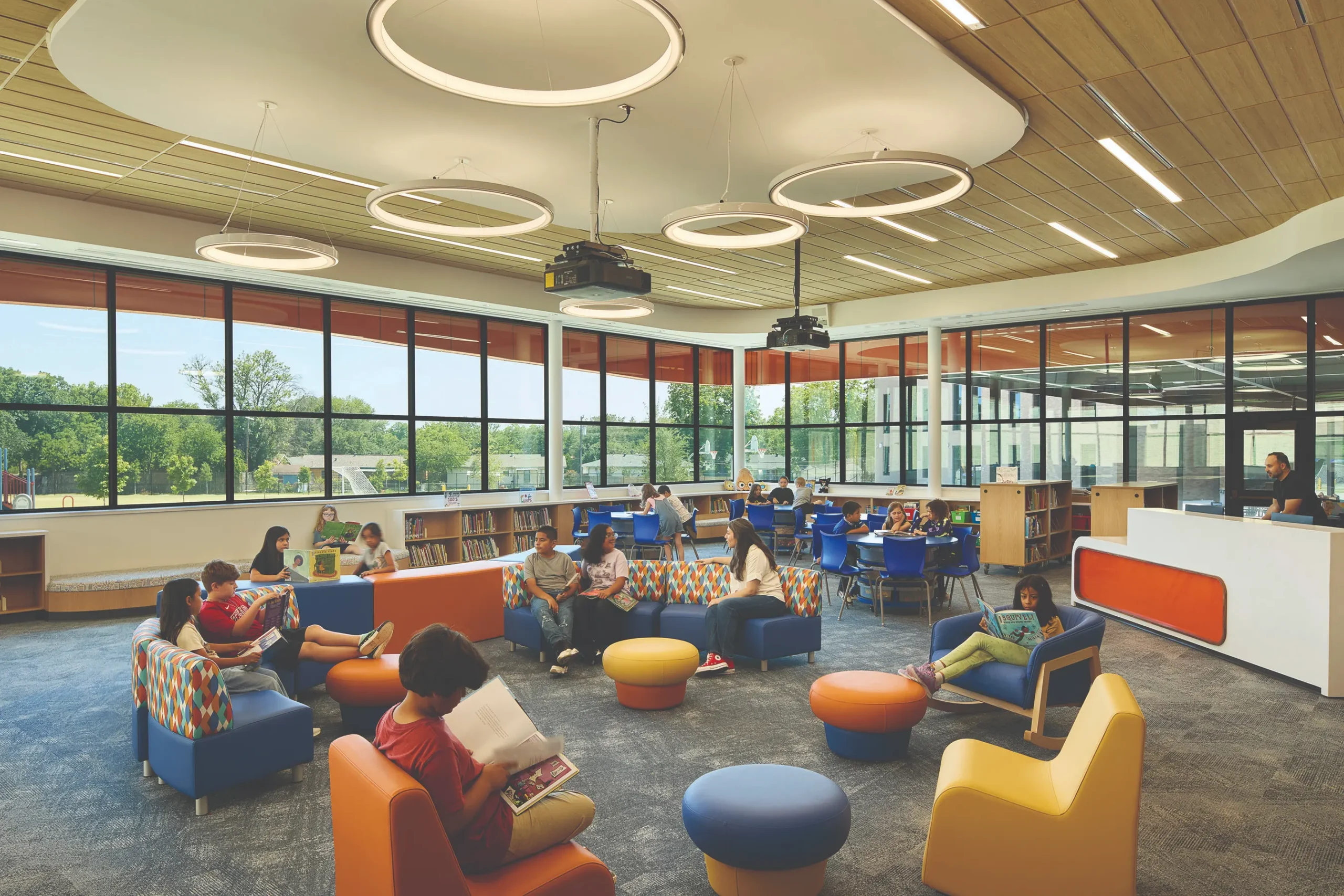
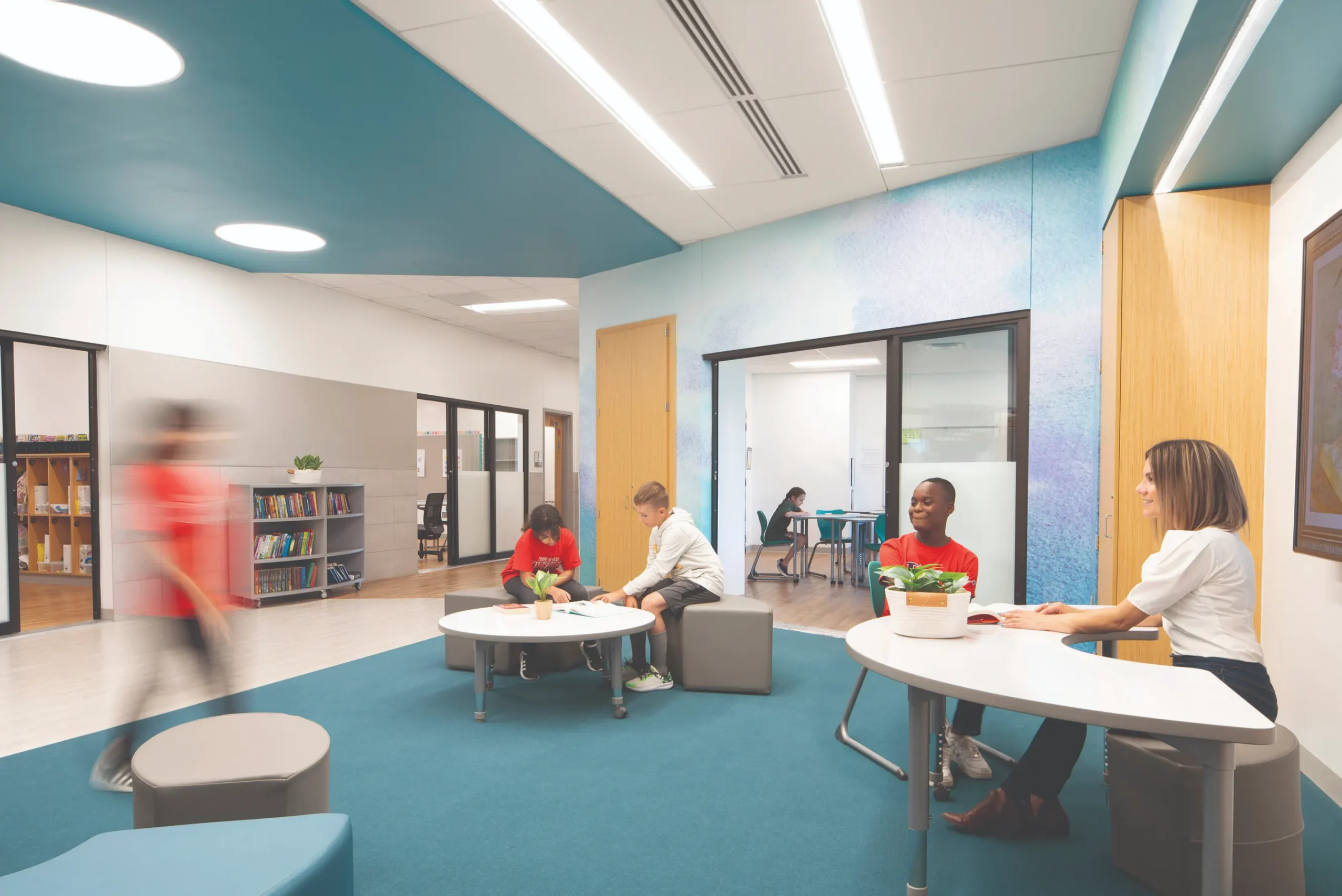
Within the Coalition for the Advanced Understanding of School Environments (CAUSE, www.causecoalition.org) framework, interior transparency is defined as the visual connection to other internal spaces. There are multiple ways to design for transparency, including the use of glass walls and floor length windows. Whichever strategies a project uses, the goal is often to cultivate greater connection within the school community. Younger students may see an older class engaged in a project they are excited to do themselves one day. One class may see another class in their same grade level and feel a sense of kinship as they work on the same project. Even among teachers, there can be a nod or a smile from one colleague to another as they recognize a successful lesson. These moments can reduce teacher isolation and create a greater sense of belonging for students.
While visual connection can be a powerful design strategy for driving human connection, it comes with potential challenges often functioning as a detraction from the ability to focus while teaching and learning. A common phenomenon revealed in many industry post occupancy evaluations (POEs) is the tendency for some teachers to cover interior windows with posters, curtains, or other decorations. However, research has shown that excessive decorations create additional cognitive load, functioning as a burden for students by leaving them with less available working ability to attune to their lesson instead of these environmental stressors. Distractions can also arise from functional windows if circulation areas lead to students interacting with their peers in the hallway (ex: waving to passersby or feeling like they are being watched, creating an invasive “fishbowl” effect). Within CAUSE’s own pilot data analysis, we have measured a relationship between the visual distractions in the environment and teachers’ agency to change their classroom. That agency was also connected to their use of different innovative pedagogies like Project-based Learning (PBL). This suggests physical flexibility may be a lever for pedagogical innovation, though the data can’t yet tell us whether a low-distraction environment enables that agency or whether teachers already inclined toward PBL are the ones asserting it in the first place. The key: use interior transparency to maximize the school’s sense of community and teacher agency, while minimizing the rise of visual distractions.
Nature and Safety
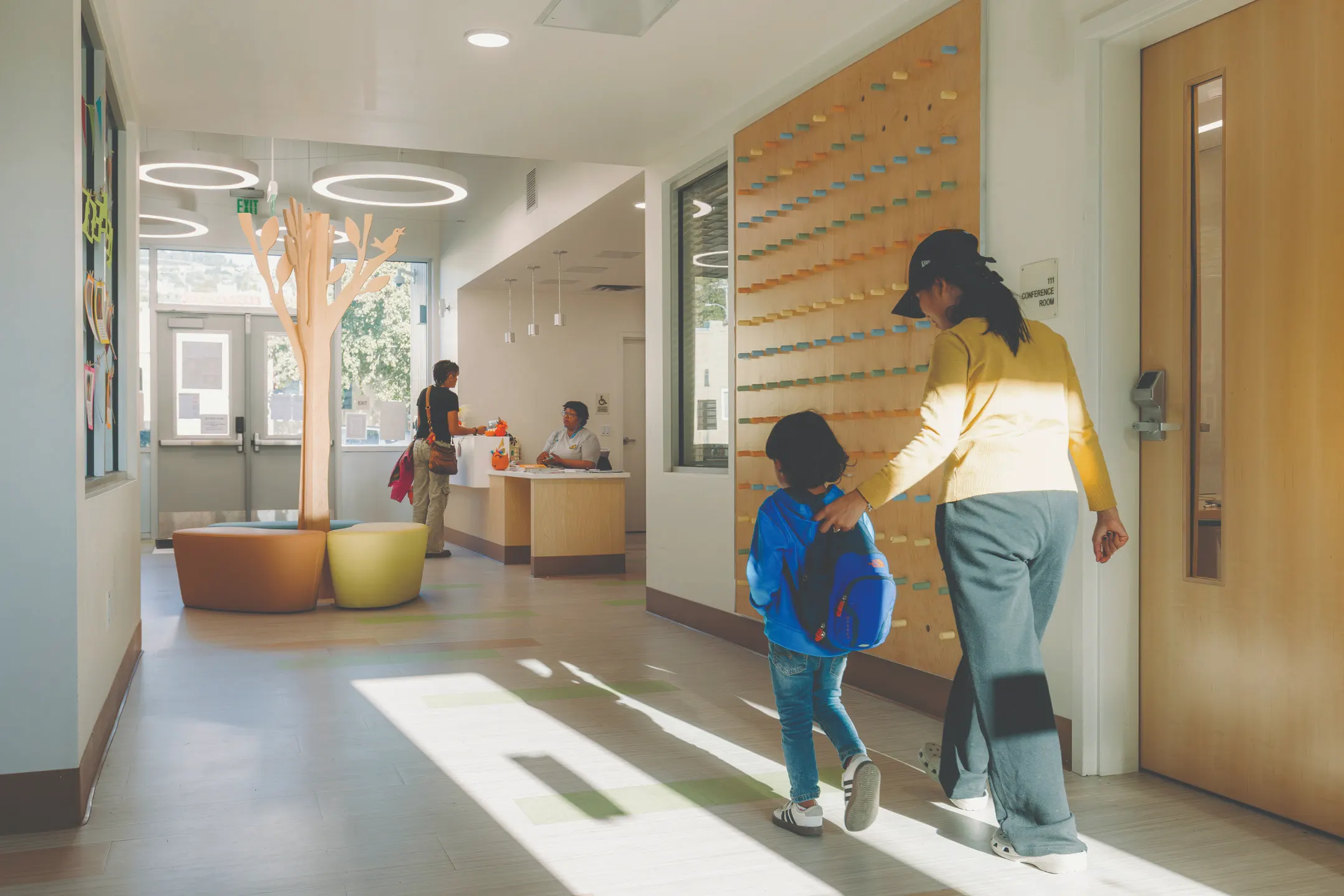
The CAUSE framework also categorizes how transparency can build connection to the natural world outside the school walls, an aspect of biophilic design that is well established to have many positive outcomes for users. The goal for these connections is to connect the human body with the natural cues we are biologically hardwired to operate within. The shifting natural light coming from exterior windows provides a sense of the passage of time throughout the day. The appearance of plants and animals communicate the seasons and ground our sense of place within the local ecology. Students and teachers alike may notice an opportunity to move a class activity outside if they have the opportunity to see it out their window. Reducing the artificiality of a space with connections to the outdoors is good for most humans (“and many animals—looking at you,” Stevie the class lizard).
However, in a recent occupancy evaluation of a school with both windowed and windowless classrooms, one teacher captured the feeling directly:
“I don’t have windows in my classroom… I think I am a little envious of the teachers who have windows. I literally go the entire day without seeing the outside world, and that can be a little bit rough. 7:15[am] to 4:15[pm] without seeing sunlight can be kind of hard.”
Her colleague down the hall, in a room with abundant windows, had positioned large lateral filing cabinets in front of the glass to block sightlines from potential threats outside the building. These examples underscore how isolation from the outside world is often harmful, but exposure to the outside world also raises concerns for safety across a wide variety of its definitions.
Many studies, like one linking a biophilic classroom to reduced student stress and higher math scores and one linking biophilic school design to lower stress and better cognitive function, have described positive impacts from strategies that integrate
biophilic design principles. Analysis of international data from the Organisation for Economic Co-operation and Development (OECD) shows that roughly 1 in 3 teachers in the United States report some level of negative impact to their teaching due to lack of access to natural elements. However, sun angles and direct natural light have implications for both thermal comfort and glare. There are also potential impacts from exterior noise (e.g., traffic noise, other classes doing outdoor activities) or outdoor air quality events like pollen or wildfire (if those windows are operable). Recent research on the positive effects of school breaks found that indoor environments deliver greater benefits when they’re well connected to surrounding natural areas. The students in that study reported the benefits of indoor spaces came from protection from noise and air quality issues. The key: use exterior transparency to connect the school to the natural world outdoors while minimizing exposure to sources of harm.
Finding the Balance
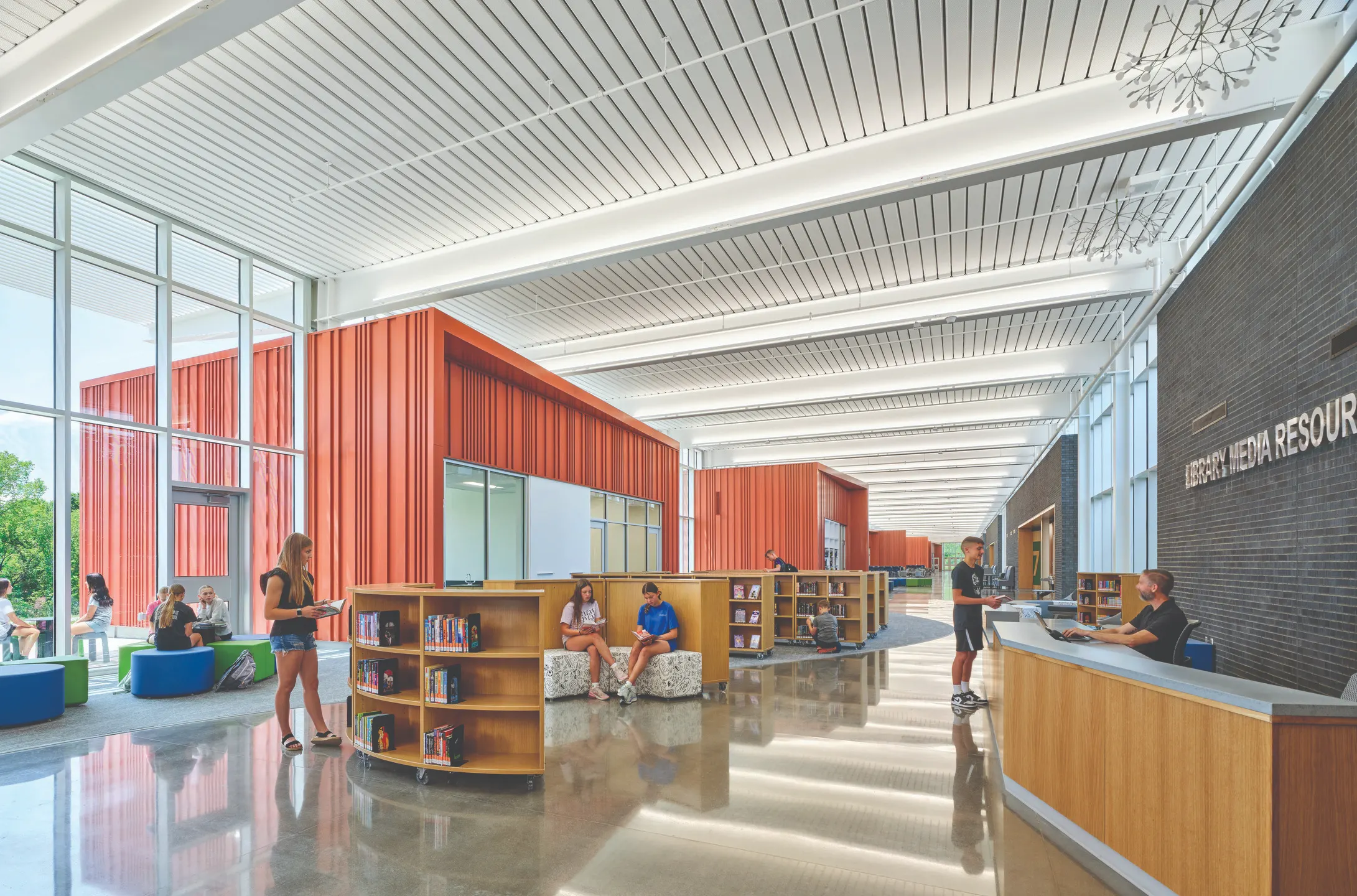
The examples throughout this article point to a tension that runs throughout the design of learning environments: the same transparency that supports learning can also genuinely create problems. The issue isn’t intention – everyone in the school design process wants to build environments where students can learn and teachers can do their best work. Rather, the issue is the field has never had a reliable way to conduct the cost-benefit analyses that transparency decisions require. What does it cost, in focus and security and thermal comfort, to maximize daylight? What does it cost, in well-being and connection to the natural world, to control visual distractions? Designers must embrace the balancing act in projects today to help clients integrate transparency that results in a net positive. We must also collect more data, using tools like those from CAUSE, to understand the benefits and tradeoffs through POEs so the field can move forward with a better understanding to serve our clients into the future. LBD
References
- Zhao, Y. (2018). What works may hurt: Side effects in education. Journal of Educational Change, 18(1), 1–19. https://doi.org/10.1007/s10833-016-9294-4
- Slotoroff, C. G. (2021). Examining teachers’ observations of a 1:1 implementation’s impacts on high school students’ communication and social skills: A qualitative case study [Doctoral dissertation, Baylor University]. ProQuest Dissertations Publishing. https://eric.ed.gov/default.aspx?q=descriptor%3A%22High+Schools%22&pg=147&id=ED668959
- Figlio, D. N., & Özek, U. (2025). The impact of cellphone bans in schools on student outcomes: Evidence from Florida (NBER Working Paper No. 34388). National Bureau of Economic Research. https://www.nber.org/system/files/working_papers/w34388/w34388.pdf
- Burns, M., Winthrop, R., Luther, N., Venetis, E., & Karim, R. (2026). A new direction for students in an AI world: Prosper, prepare, protect. Center for Universal Education, Brookings Institution. https://www.brookings.edu/wp-content/uploads/2026/01/A-New-Direction-for-Students-in-an-AI-World-FULL-REPORT.pdf
- Arnberger, A., Eder, R., Allex, B., Wallner, P., Weitensfeder, L., Kundi, M., & Hutter, H. (2026). Effects of school breaks on cognitive performance and mental wellbeing of high school students in indoor and outdoor environments. Urban Forestry & Urban Greening, 117, Article 129302. https://doi.org/10.1016/j.ufug.2026.129302
- Determan, J., Akers, M. A., Albright, T., Browning, B., Martin-Dunlop, C., Archibald, P., & Caruolo, V. (2019). The impact of biophilic learning spaces on student success. AIA Committee on Architecture for Education. https://www.hcmdesign.com/wp-content/uploads/AIA-Biophilic-Design-Research_The-Impact-of-Biophilic-Learning-Spaces-on-Student-Success.pdf
- Li, M., Yin, J., & Xu, L. (2025). Protective and restorative effects of biophilic design in high school indoor environments on stress and cognitive function. Indoor Air, 2025(1), Article 8696488. https://doi.org/10.1155/ina/8696488
- OECD. (2025). Results from TALIS 2024: The state of teaching. OECD Publishing. https://www.oecd.org/en/publications/2025/10/results-from-talis-2024_28fbde1d.html
- Rodrigues, P. F. S., & Pandeirada, J. N. S. (2018). When visual stimulation of the surrounding environment affects children’s cognitive performance. Journal of Experimental Child Psychology, 176, 140–149. https://doi.org/10.1016/j.jecp.2018.07.014