



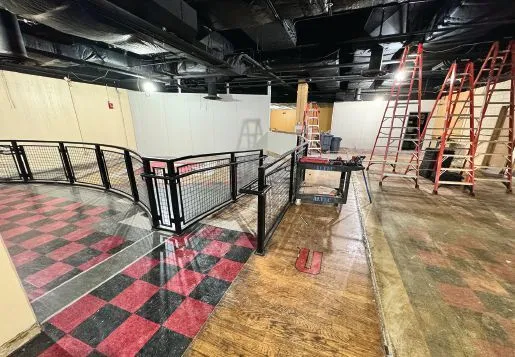
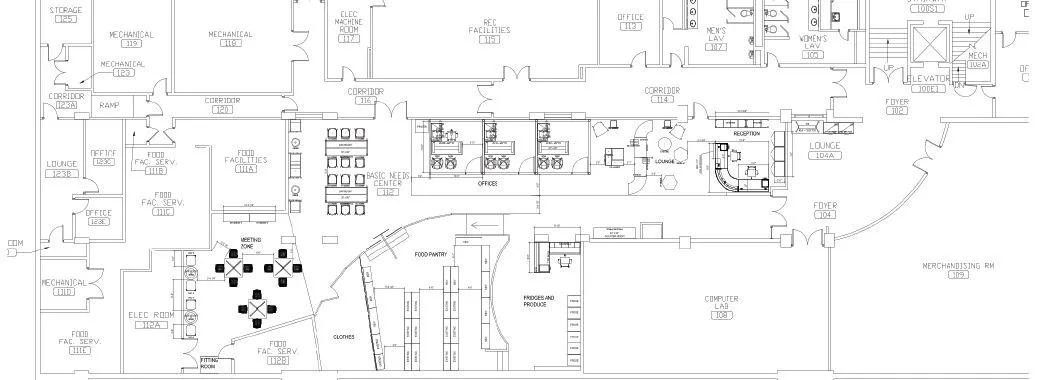
The Rutgers Basic Needs Center, a new kind of campus resource, is a vibrant, inclusive hub that provides food, clothing, social services, and community programming for students in need. Located on the lower level of the College Avenue Student Center in New Brunswick New Jersey, the 4,212-squarefoot space underwent a complete transformation in 2024—turning an underutilized basement into a polished, welcoming, and purpose-built destination.
With a project budget of $886,000, the renovation was initially scoped as a light refresh: updated paint, new carpet, improved lighting, and fresh furniture. But what started as a modest, donorfunded upgrade quickly evolved into something much more impactful—a full reimagining of how space can promote dignity, accessibility, and well-being for students navigating basic needs challenges.
Why the Space Matters
At a university as large and diverse as Rutgers—serving more than 50,000 students in New Brunswick alone—student support needs are both wide-ranging and deeply personal. Nearly half of undergraduates identify as students of color, and more than 40% are the first in their families to attend college. Many are balancing academic responsibilities with jobs, caregiving, and housing or food insecurity.
At its core, the Basic Needs Center was created to address that reality head-on. It’s not just a pantry or a clothing closet—it’s a safe, intentional space where students can access resources without shame or stigma.
“No one should feel uncomfortable when getting the support they need,” said Phillip Smith, Assistant Dean of Students for Student Basic Needs. “We’re refusing to accept hunger and homelessness on campus. That refusal needs to be reflected not just in our services—but in our design.”
Smith, whose own experiences with food insecurity during graduate school shaped the vision for the Center, worked with a dedicated team—including Amber Schreck, Ross Perez, and Kiara Padilla—to reimagine what basic needs support could look and feel like at Rutgers. Their collaboration with Rutgers Institutional Planning and Operations (IP&O) was driven by one goal: creating a space that empowers students rather than defines them.
How It Came to Life
Early in the planning process, project stakeholders discovered that the space would need to undergo a Use Group classification change—significantly altering the scope and complexity of the renovation. A construction project manager was assigned, and an architect was brought on to guide code compliance and design development. That decision opened up design opportunities that may not have otherwise been possible.
Storefront-style glazing was added to create visual transparency into the curated clothing boutique, and an outdated stair and railing system was removed to improve accessibility and circulation in the pantry area. These changes not only enhanced flow and functionality but also allowed for greater architectural expression aligned with the project’s mission.
The Center is located at one of the most trafficked points on the College Avenue Campus—Rutgers’ oldest and most iconic campus, founded in 1766. A new atrium with expanded dining options opened in 2023 just above the Center, drawing steady daily traffic and further destigmatizing its visibility. The location was no accident— it was part of a deliberate strategy to normalize and encourage help-seeking behavior by placing the Center in the heart of campus life.
Designing with Empathy
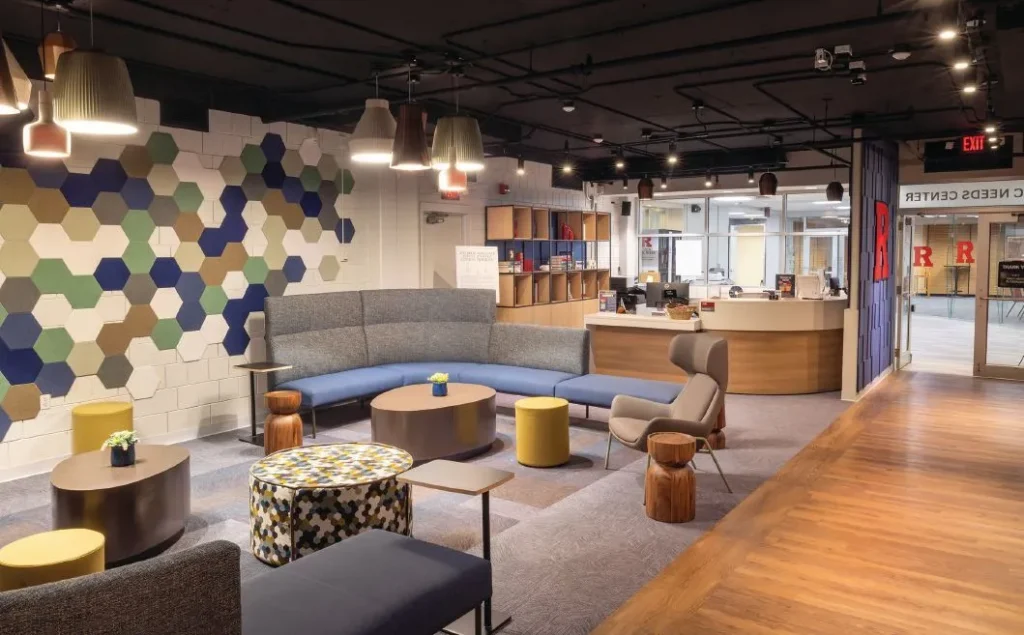
From the start, the design intent was to make the space feel like home. Every detail—from the lighting to the furniture to the acoustics— was carefully selected to foster comfort, calm, and belonging.
The finished space includes:
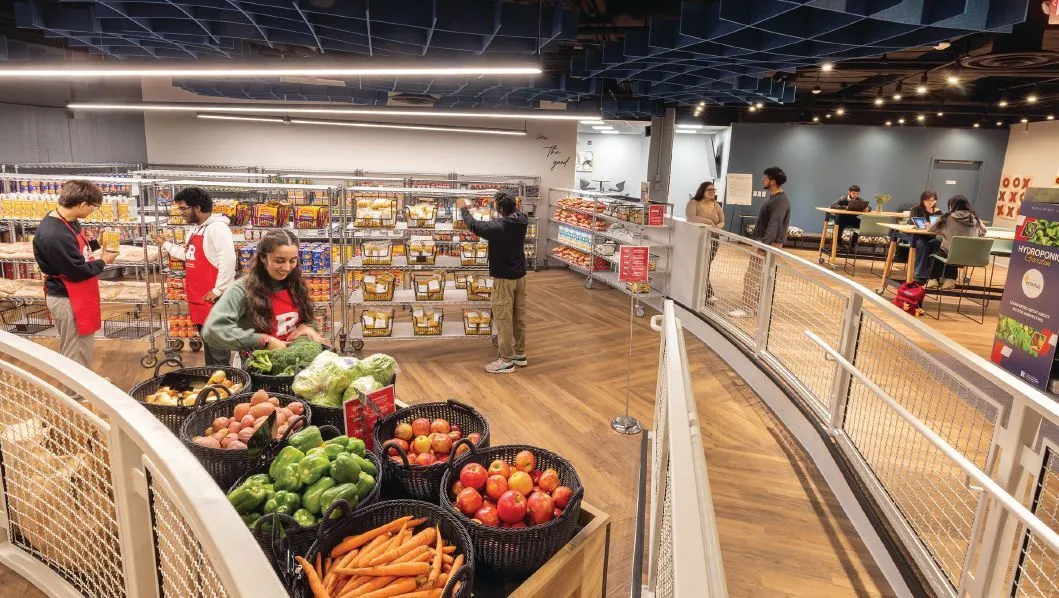
- A full grocery-style pantry with fresh produce, frozen meats, dairy, and dry goods
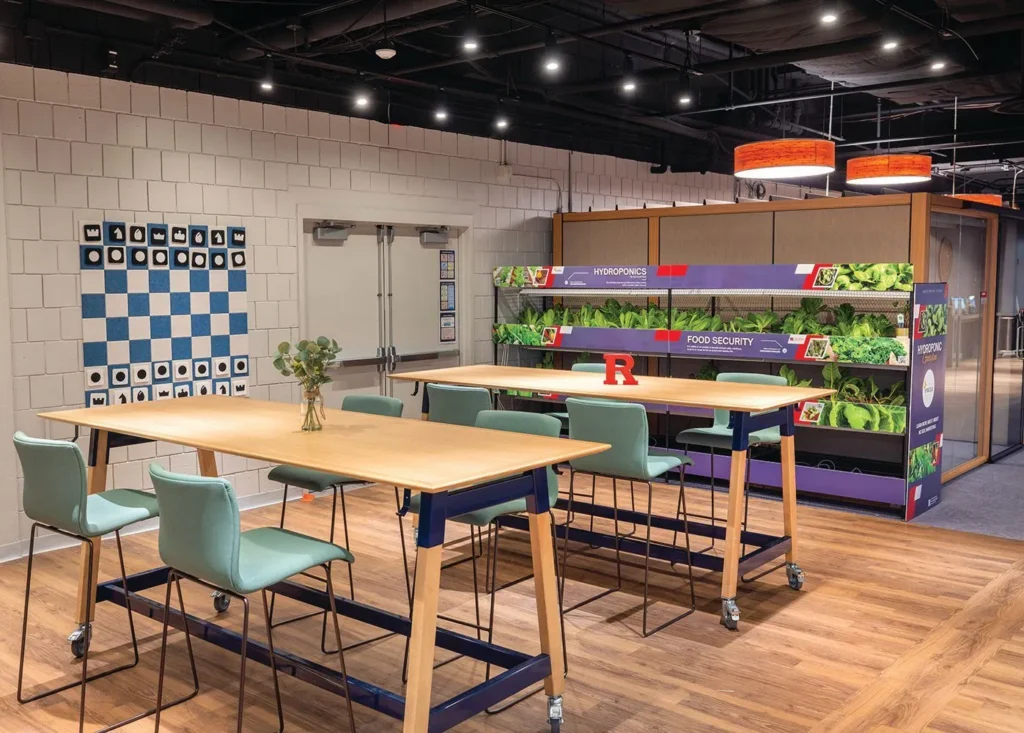
- Hydroponic growing systems for sustainable food education
- A clothing boutique with professional and casual options
- Private consultation rooms for social services and SNAP assistance
- A seminar space for life skills workshops and student programs
- Lounge zones with charging stations and flexible seating
Furniture and finishes were specified not just for durability, but for their emotional impact. Every product was evaluated for quality, aesthetic, comfort, and cost to ensure long-term stewardship and student-centered design.“It’s not just functional,” said Smith. “It feels like Panera or the Apple Store. Students want to be here.”
Furniture and finishes were specified not just for durability, but for their emotional impact. Every product was evaluated for quality, aesthetic, comfort, and cost to ensure long-term stewardship and student-centered design.“It’s not just functional,” said Smith. “It feels like Panera or the Apple Store. Students want to be here.”
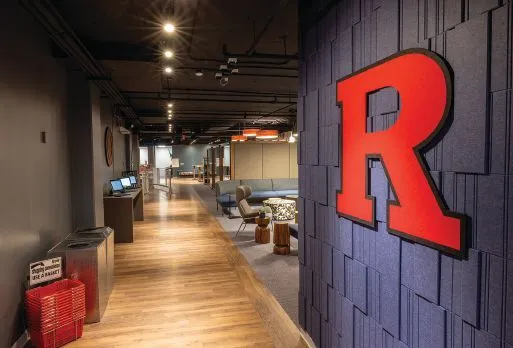
“It’s not just functional, it feels like Panera or the Apple Store. Students want to be here.”
— Phillip Smith, Assistant. Dean of Students for Student Basic Needs
From Makeshift to Model
Before finding its home in the former Red Lion Café, a layered, previously eclectic space that had once served as a bowling alley, bar, and overflow lounge, the Center had bounced between several makeshift locations. Its most recent predecessor was a shared dance studio, where students sat on the floor waiting for services amid cramped storage and little privacy.
This new space is a leap forward in both form and function. In its first week alone, the Center logged over 1,000 visits, a dramatic increase from 175 visits in all of 2018.
To meet rising demand, the Center now offers:
- Knights Meal Boxes for discreet pick-up
- Emergency kits for students facing housing instability
- Free tax preparation and personal care services
- LGBTQ+ inclusive fitting room hours
- Social work support
- Direct referrals to campus wellness, academic, and financial services
What’s Next: A Growing Movement
The Basic Needs Center has attracted national and international attention, welcoming delegations from Ireland, England, and over 40 higher education institutions, including members of the Association of College Unions International (ACUI). With continued donor support, Phase 2 of the project is already in motion and will include:
- A teaching kitchen with recording equipment for cooking classes
- Laundry and shower facilities
- Additional refrigeration and storage
“We want students to leave here not just with groceries,” said Smith, “but with the sense that they’re cared for, capable, and connected to something bigger than themselves.”
A Blueprint for Belonging
The Rutgers Basic Needs Center is more than a renovation, it’s a physical manifestation of care. Its success is not just measured in visits or square footage, but in the way it aligns space with purpose. “Spaces communicate,” said Smith. “They say: You’re welcome. You matter. You’re not alone.”
Through thoughtful, student-centered design, Rutgers has created more than a resource center. It has created a model, and a movement, for how higher education can meet students where they are, with dignity at the core.