



It’s a typical Friday afternoon when the emails start hitting the Association of University Interior Designers (AUID) listserv. They are practical, sometimes urgent, and generally highly specific: “Has anyone purchased sensory chairs for their campus?” “Does anyone have suggestions for a sit-to-stand chair that won’t break in a year?” “What are you using for dining hall tables that are both cost-effective and indestructible?”
To an outsider, these look like simple furniture questions. To those of us in the field, they are the heartbeat of campus life. They represent the moment where “The Grand Architectural Vision” meets the reality of a student who needs to focus, a facility manager who needs to rehab a space, and a budget that needs to last.
When learning spaces “collaborate” with the furniture, it enhances the vital interaction between students and faculty.
For too long, interior design in education environments has been dismissed as the “icing on the cake”—a decorative layer applied after the “real” work of architecture is done. But a room without the right furniture isn’t a room; it is a shell without an operating system. To support student success, we must flip the script: Furniture, Fixtures, and Equipment (FF&E) isn’t a finishing touch; it is a strategic driver of functionality, belonging, and long-term performance.
The “Plunk” Factor vs. Integrated Design
The danger of treating furniture as an “add-on” is very visible when technology is involved. We see the friction immediately when active learning tables with integrated power and AV are “plunked” into a room without a furniture-first mindset.
However, the cost is more than logistical. Recent research into innovative learning spaces suggests that designing an “Active Learning Space” requires a deep understanding of how physical layouts influence pedagogy. If the furniture doesn’t support the teaching method—whether it’s a flipped classroom or a collaborative huddle—the “active” part of learning is lost.
This isn’t just a designer’s preference; it’s a performance metric. Intentional classroom design has been shown to directly improve student engagement. When learning spaces “collaborate” with the furniture, it enhances the vital interaction between students and faculty. By coordinating furniture and construction documentation in parallel, we ensure that every AV panel and power cord is exactly where the student needs it to be. When learning spaces “collaborate” with the furniture, it also enhances the vital interaction between students and faculty.
High Traffic, High Stakes: The Technical Science of Interiors
While we often talk about the “look” of a space, the technical specification of furniture is where a project’s long-term success is won or lost. In the world of Higher Education, our environments face a unique set of demands: high-occupancy, 24/7 usage, and “high- abuse” conditions. A campus lounge isn’t just a living room; it’s a study hall, a dining space, and a high-traffic thoroughfare all at once.
When an interior designer specifies a product, they are evaluating the engineering of the frame, the chemistry of the finish, and the lifecycle warranty. Too often, those without a design background see two tables that look identical and choose the cheaper option. But without an expert who understands the differences in the details, things like “double-rub” counts on textiles, cleanability of materials, and edge-band durability, the institution ends up paying for that furniture twice.
Durability isn’t just physical; it’s also psychological. When furniture finishes are disconnected from the building’s architectural palette, it sends a subconscious message of instability. There is a “hidden cost” to this lack of cohesion. It isn’t just about aesthetics; it’s about creating “spaces within spaces”—using textures and colors to intuitively signal where collaboration happens and where quiet focus is required.
The Procurement Trap: Why Lead Times are Design Constraints
Finally, we must address the “Procurement Gap.” Many stakeholders view furniture as a commodity that can be ordered off a shelf; in reality, high-performance educational furniture is a made-to-order industry. When interior designers are brought in late, we inevitably hit the Procurement Trap.
A high-quality, specified chair might have a 16-week lead time. When a project timeline doesn’t account for this, it becomes clear the “right” furniture won’t arrive by the first day of classes or project deadline, and the team is forced to pivot to a “quick-ship” substitute. These last-minute substitutions almost always compromise the original design intent, the ergonomics, and the long-term durability of the project. By integrating furniture planning into the early interior architectural phases, we aren’t just picking better chairs—we are securing the project’s timeline and protecting the institution’s investment.
Furniture as a Tool for Belonging
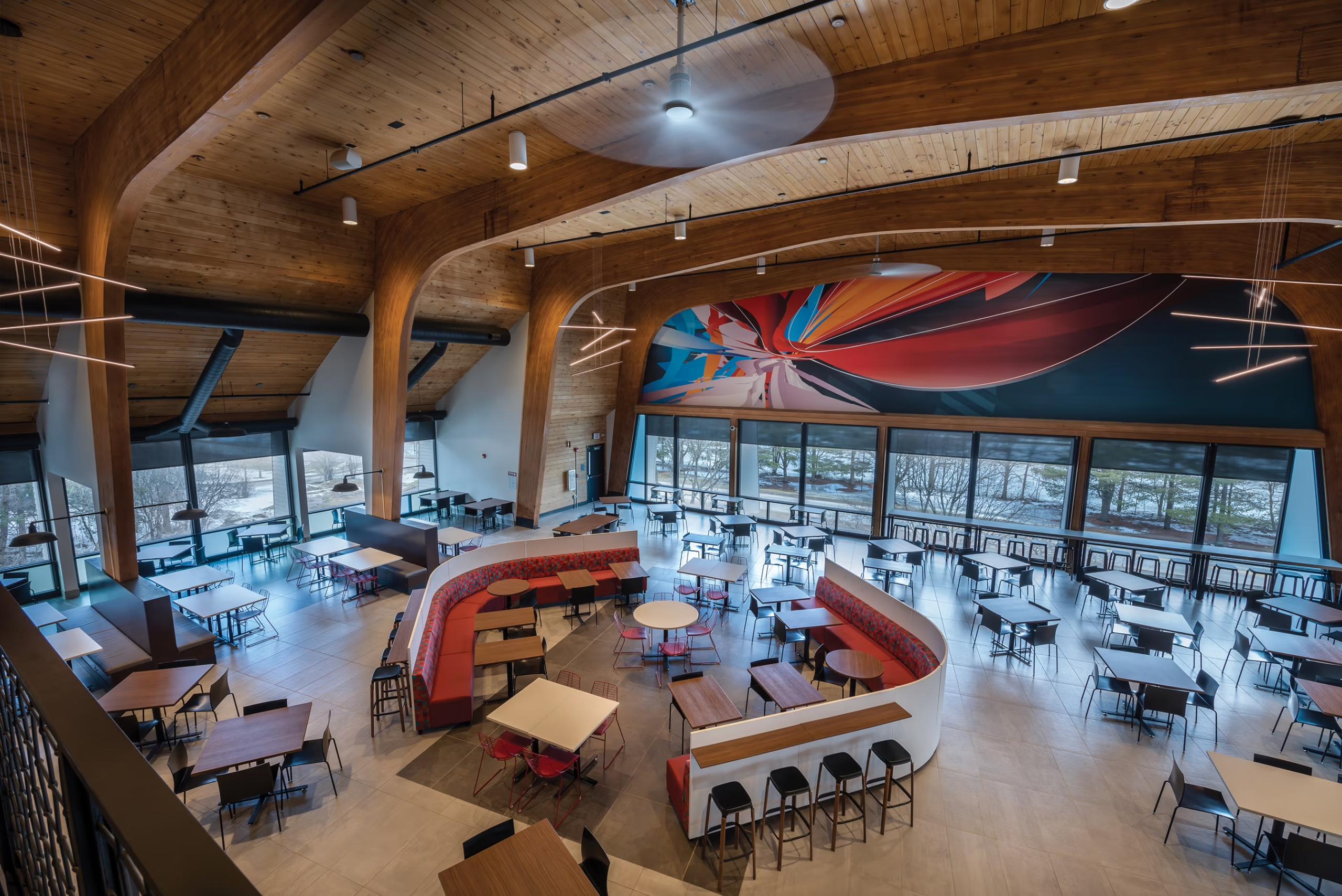
Beyond the technical specs, there is a human element to FF&E that often goes unmeasured: belonging. If architecture provides the shell of a campus, furniture provides the “hug.” Because students touch, move, and inhabit furniture more than any other design element, it becomes their primary interface with the institution.
As research into higher education campus utilization and learning highlights, belonging isn’t just a feeling; it stems from “socio-material participation”—the act of learning together in a shared space. When we specify a soft rocker for a student with sensory needs or a sit-to-stand desk for an active learner, we are providing the tools that allow them to participate.
When a student walks into a lounge and finds a chair that supports their posture, a table with power exactly where they need it, and a layout that allows them to choose between privacy or connection, they receive a silent message: “You were expected here. This space was designed for you.” Whether it is specialized seating or mobile, adaptable seating that allows a group to claim a corner of a library as their own, furniture is the tool that ensures students see themselves reflected in their environment.
Conclusion
Ultimately, the goal of educational design is to create a sense of belonging that fosters academic success. If we continue to treat interior design as an afterthought—the “icing” on a structural cake—we miss the opportunity to truly serve our students.
As we look at the future of our campuses, let’s stop asking what the furniture looks like at the end of the project and start asking how it can drive the success of the project from day one. When we bridge the gap between space planning, technical specification, and procurement, we move beyond “plunking” furniture into a room. We begin designing the intentional, socio-material experiences that define an education. When we design from the inside out, we aren’t just filling a space with objects—we are creating an environment where every student can truly belong, engage, and thrive.
Sources
- Bolkan, J. (2014). Intentional Classroom Design Improves Student Engagement. Campus Technology.
- Borba, M. G., Alves, P., & Campagnolo, R. (2019). Active Learning Spaces: The Interaction Between Students, Faculty, and Furniture.
- Carolina/OFS. The Hidden Cost of Ugly Furniture: Why Cohesion Matters in High-Use Environments.
- Detyna, M., Ogunbase, A., & Briffa, K. (2025). Innovative Learning Environments: Physical Objects as Drivers of Engagement.
- Fomcore. Designing for Belonging: Principles of Intentional Design.
- Lee, S., Colorado-Resa, A., & Huh, Y. (2025). Physical Layouts and Pedagogy: Designing for the Active Learner.
- Legat Architects. The Power of Furniture in Educational Design.
- Masika, R., & Jones, J. (2015). Socio-material Participation and the Sense of Belonging in Higher Education.
- Smith System. How School Classroom Furniture Can Improve Student Learning.
- Masika, R., & Jones, J. (2015). Socio-material Participation and the Sense of Belonging in Higher Education.
- Smith System. How School Classroom Furniture Can Improve Student Learning.