

In an educational landscape increasingly focused on preparing students for real-world success, Career and Technical Education (CTE) design is a pivotal force in shaping the learning experiences of tomorrow’s workforce. Anchored in the belief that authentic, hands-on learning fosters deeper engagement and skill mastery, CTE programs offer students opportunities to bridge classroom theory with practical application.
The AIA Committee on Architecture for Education (CAE) continues to champion innovative approaches to CTE, through firm projects, advocacy, and research. CAE members have spearheaded transformative CTE projects within their firms, showcasing the potential of thoughtful design to enhance learning outcomes. This article explores CTE’s impact on student engagement, and how it cultivates authentic learning experiences crucial for preparing students for the challenges of the future.
Why CTE?
CTE is a cornerstone in modern education, embodying principles of authentic, contextual, and project-based learning that are instrumental in enhancing student achievement and overall success. Unlike some traditional academic approaches, CTE integrates core academics with hands-on, real-world applications, providing students with invaluable experiences that bridge theoretical knowledge with practical skills essential for success in the workforce.
By immersing students in authentic learning environments, CTE cultivates a comprehensive skillset that transcends the boundaries of post-secondary paths, whether students choose to pursue further education or enter the workforce directly. This holistic approach not only equips graduates with early practical experiences but also instills the knowledge and competencies demanded by businesses, industries, and institutions of higher learning.
Moreover, the structure of CTE programs distinguishes them from vocational models of the past, adhering to rigorous standards and conditions that ensure quality and continued relevance. Certified teachers with industry expertise, active involvement of business and industry partners, and interdisciplinary curriculums leading to industry-recognized certifications are hallmarks of contemporary CTE initiatives. This integrated approach not only enhances student engagement but also contributes to a high graduation rate, significantly surpassing the national average.1
Research underscores the efficacy of CTE in driving academic achievement, with learners engaged in high-quality CTE demonstrating higher proficiency in core academic subjects.2 Furthermore, post-secondary CTE programs extend opportunities for students to delve deeper into their chosen interests, offering specialized training and skill development tailored to diverse career pathways.
Compared to traditional academic credentials, a higher percentage of students earning occupational credits through CTE programs report working in jobs related to their field of study,3 underscoring the practical relevance and applicability of CTE education. “Greater coherence between secondary and post-secondary education, and a wider reflection of these connections in workforce development policies, would offer more powerful leverage to support a student’s journey on a pathway that leads to a living wage.”4 CTE presents a promising and meaningful pathway towards achieving a living wage. By embracing evolving strategies in classroom design and fostering collaboration between educational institutions and industry stakeholders, CTE not only destigmatizes vocational education but also elevates it as a vital component of preparing students for the challenges and opportunities of the future job market.
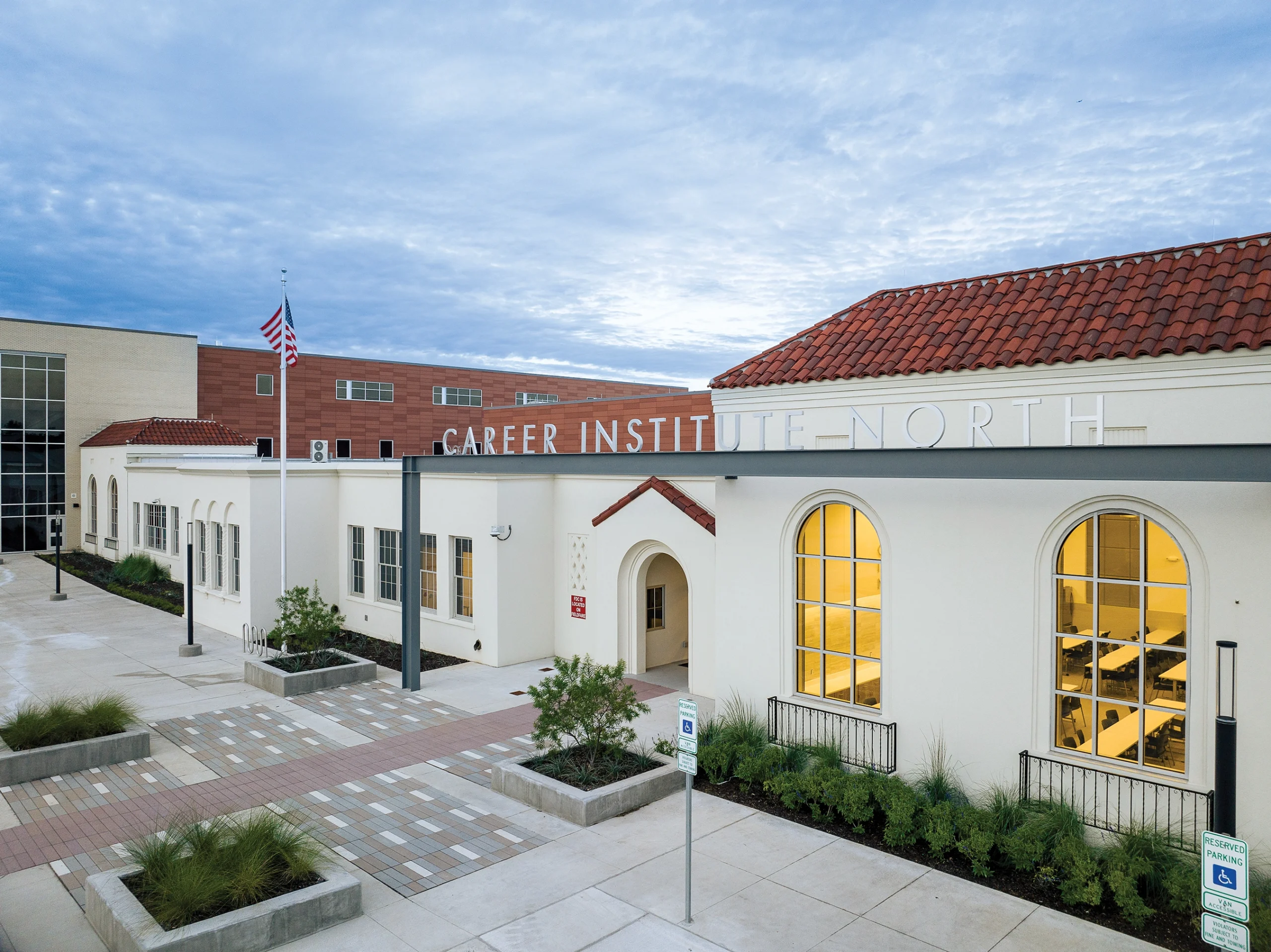
Authentic, Contextual Real-World Learning in Action
After an EF3 tornado ripped through Northwest Dallas, TX, a beloved neighborhood elementary school lay in ruins. The Dallas Independent School District (ISD) saw this as an opportunity to preserve a beloved staple of northwest Dallas, and transform what was left of the original site into Career Institute North—a state-of-the-art career and technical education (CTE) facility focused on training students for high-skill, high-wage, and high-demand occupations. Dallas ISD partnered with WRA Architects to design a facility that preserved the historic 1920s Mediterranean-style building and character, while creating innovative spaces for students to succeed. Career Institute North offers over 15 different programs; from aviation, automotive technology, EMT, firefighting, and culinary arts to robotics, healthcare, software development, construction, architecture, and much more—each student will earn certifications and obtain dual credit when appropriate prior to graduation. The aviation program allows students to earn their pilot’s certification before finishing high school. This program aims to close the gap by providing opportunities in the aviation industry to students whose background has been historically underrepresented in aviation. Career Institute North provides students an opportunity to engage in real-world authentic learning experiences that prepare them to succeed after graduation.
Creating Community with Future Success in Mind
Students thrive when they have access to real-world learning experiences that prepare them for their careers. Dr. Vroonland Vanguard High School, within the Mesquite Independent School District, is an innovative non-traditional high school facility that offers students an experience with a more comprehensive career focus.
Envisioned by WRA Architects to look more like a high-tech environment than a traditional high school, Vanguard houses four schools under one roof: technology, engineering, construction science and health science, offering 16 different programs. In a traditional high school, many students find community through their involvement in athletics or fine arts. At Vanguard, this career-focused high school creates connections in unique ways.
Whether students choose to use the weight room or gym on campus and logging their use for credit, or by engaging in outdoor activities within the 44-acre campus that features walking trails, courtyards, outdoor learning spaces and creek on the site where students can fish. There is even a yearly family camping event on the campus that counts for PE credits.
Industry partnerships also play a big role at Vanguard. Over 50 companies are affiliated with the schools, providing internship opportunities for students while in school and often hiring students upon graduation. This unique high school offers students an opportunity to focus on the career of their choice while enjoying a full and enriching high school experience.
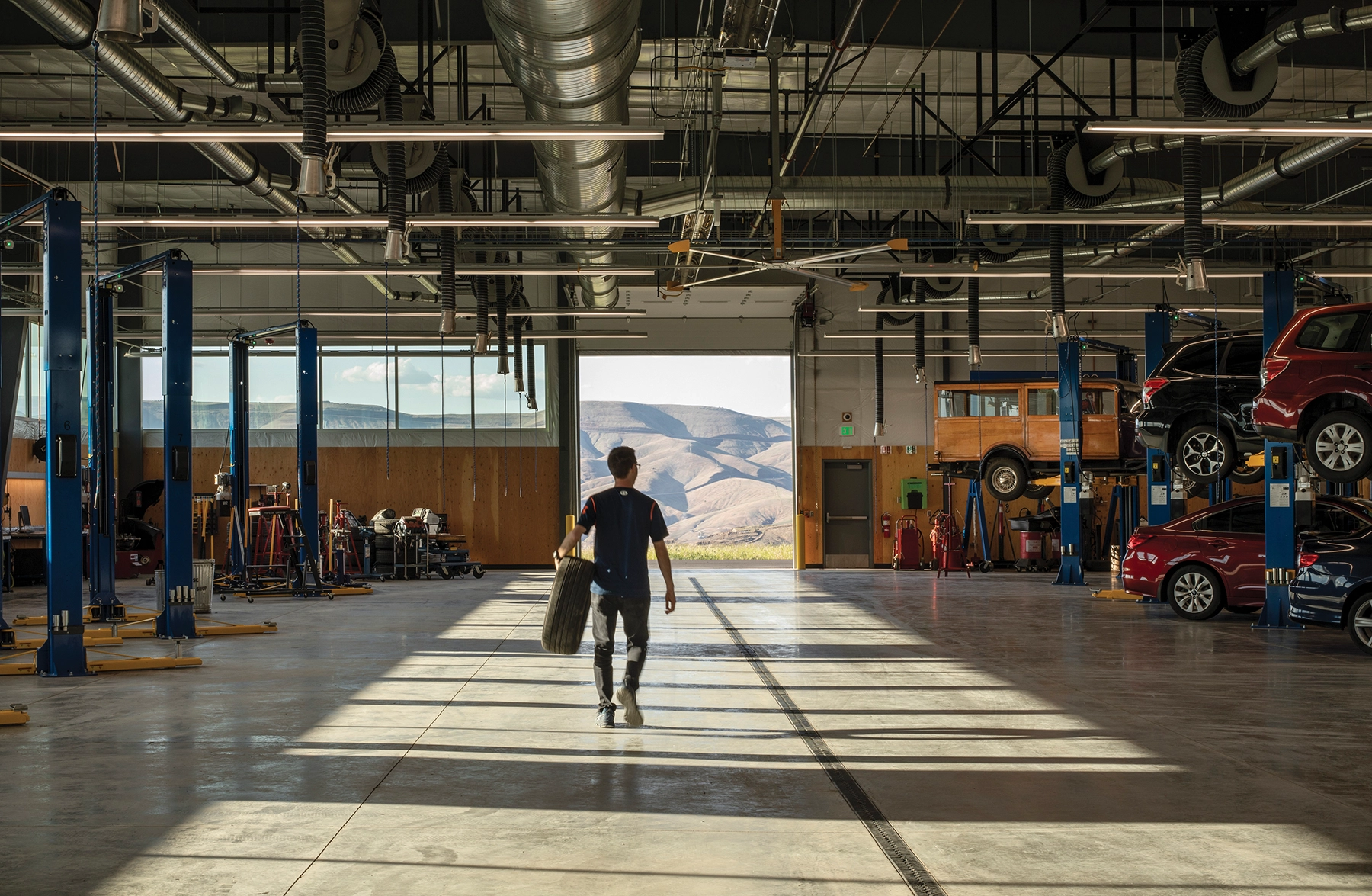
Putting Possibilities on Display
The Schweitzer Career Tech Education Center, situated adjacent to a local high school in Lewiston, Idaho, was designed to inspire learners and celebrate alternative pathways. This project by Integrus Architecture embodies a commitment to community engagement by fostering collaboration with local trade businesses, directly impacting the surrounding area. By forging partnerships between Lewis- Clark State College, the school district, and the City of Lewiston, Schweitzer provides a dynamic ecosystem where students can thrive. Serving a diverse student population, including 45% low-income students, the center boasts an impressive 98% CTE placement rate, highlighting its effectiveness in preparing students for success in the workforce. The building orientation, scale, and entry highlight views of the rural surroundings and maximize the College’s presence on this off-campus site. Construction assemblies and building systems were left exposed, allowing the building to become a living, learning tools for students, while views into the shops and learning spaces highlight career possibilities and student experiences.Building Culinary Community
The Jungers Culinary Institute, designed by Integrus Architecture, is located at Central Oregon Community College in Bend, Oregon. This bright, inviting environment is a dynamic hub for culinary education and career development. Offering a multitude of career pathways and diverse opportunities within the culinary arts, the institute provides students with a comprehensive education that extends beyond traditional classroom learning. With a focus on hands-on experience and practical skill development, students gain valuable insights and expertise that translate directly into employable skills. The institute’s commitment to excellence is reflected in its high job placement rates, ensuring that graduates are well-equipped to succeed in the competitive culinary industry. Through innovative programs, partnerships with leading regional restaurants, and immersive learning experiences, the Jungers Culinary Institute prepares students for fulfilling careers and lifelong success in the culinary arts.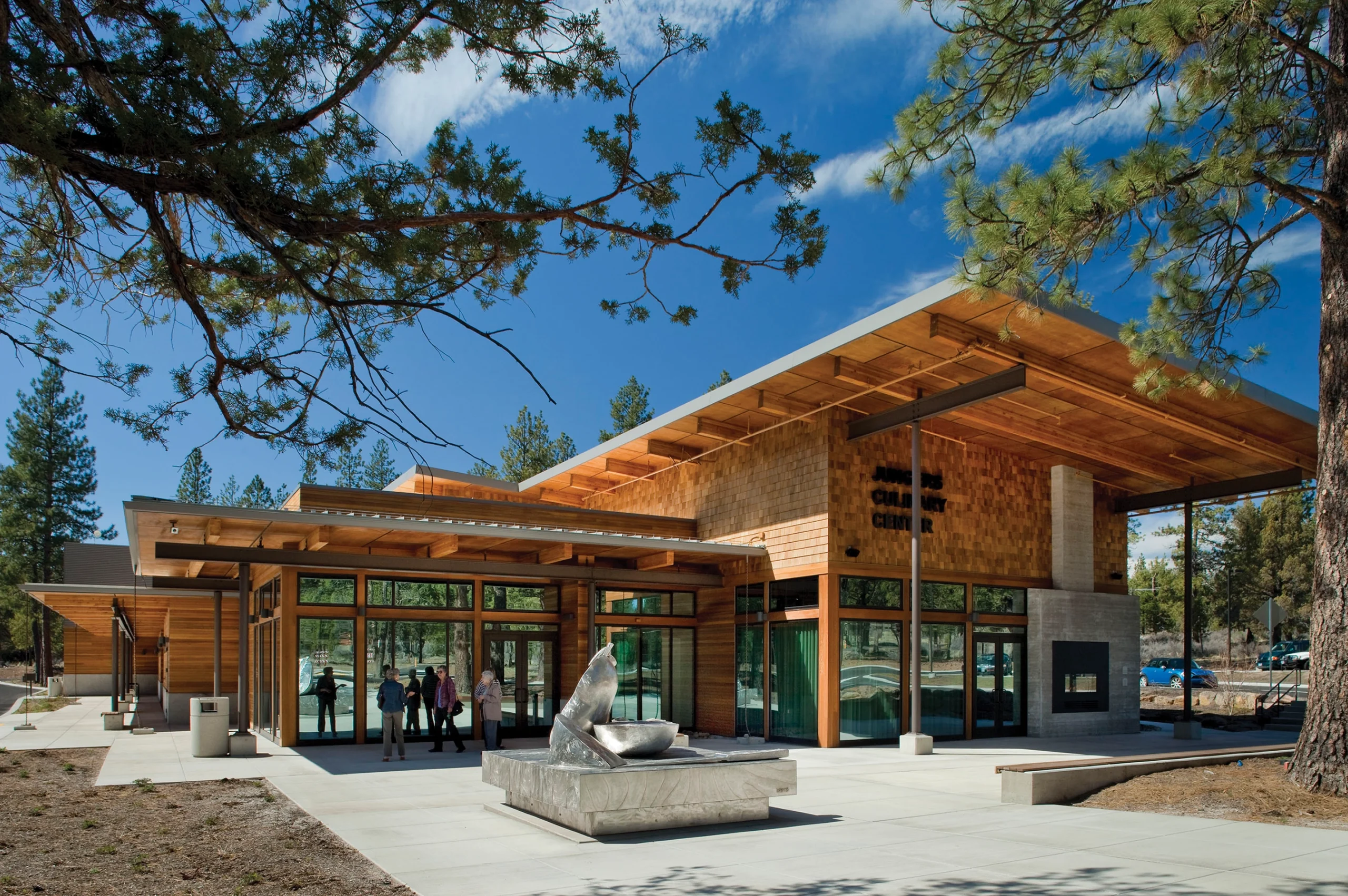
Conclusion
CTE is a beacon of innovation and opportunity in contemporary education, providing students with authentic, hands-on learning experiences that are essential for success in the real world. The design of engaging and thoughtful CTE environments elevates the learning experience, and attracts students to these spaces. By seamlessly integrating academic knowledge with practical skills, CTE prepares students for diverse career pathways and empowers them with the tools they need to thrive in an ever-evolving workforce. With high graduation rates, impressive job placement statistics, and a track record of academic achievement, there is unparalleled value in shaping the future of education and empowering students to reach their full potentials through CTE design.

References
- Advance CTE. “Career Technical Education & Learner Achievement.” Learning that works for America: CTE. Available at: www.careertech.org
- Indiana Department of Education. Available at: www.in.gov/doe
- National Center for Education Statistics. Career and Technical Education (CTE) Postsecondary/College Statistics. Available at: nces.ed.gov
- Independent Advisory Panel of the National Assessment of Career and Technical Education. Putting “Career” in “College and Career Ready.” The report of the Independent Advisory Panel of the National Assessment of Career and Technical Education. Washington DC, 2014.