


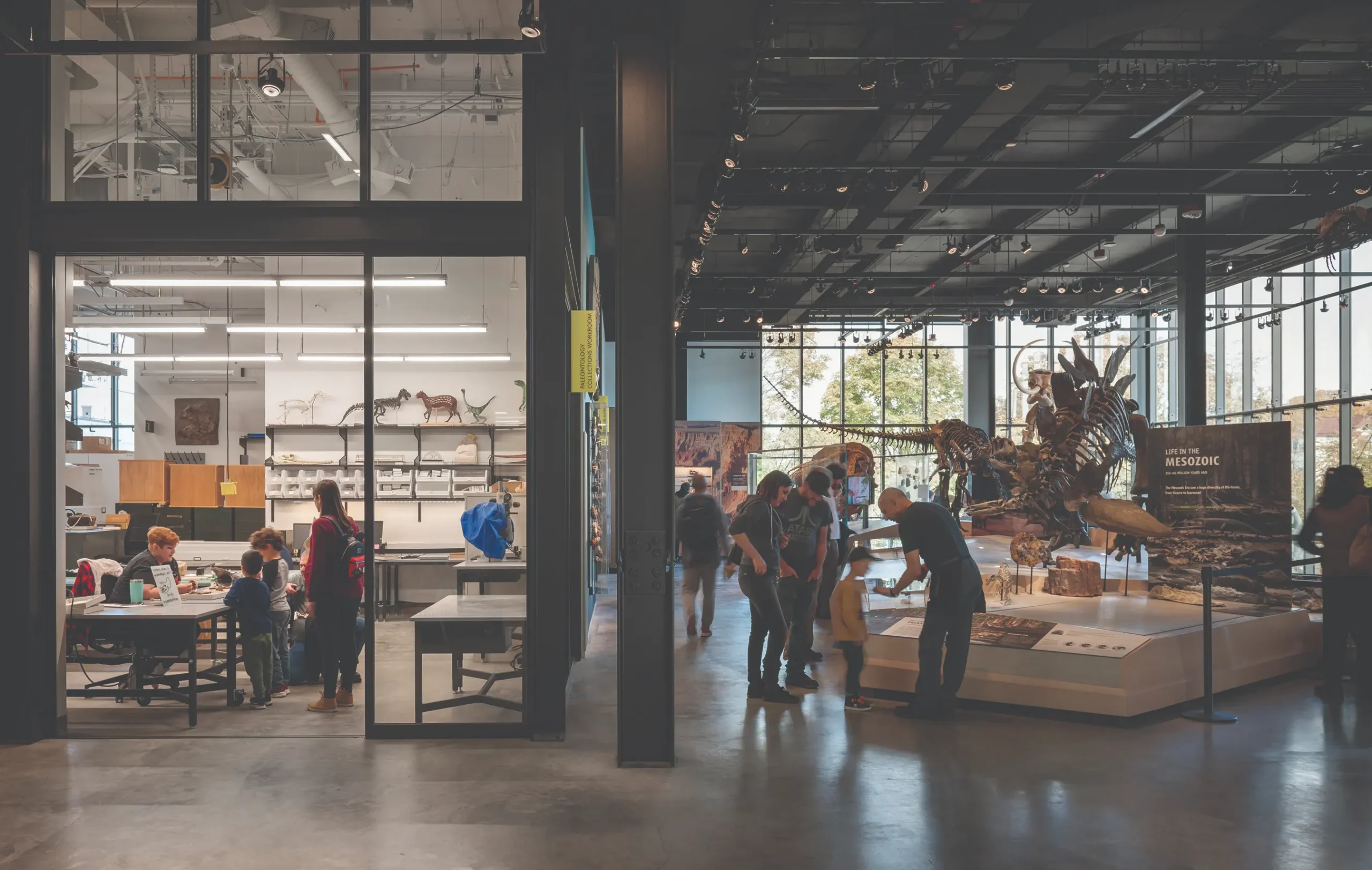
Everyone can picture a school field trip to a museum: Do you remember a specific exhibit or item? Do you remember wandering off from the group and finding something unexpected? Did you ever dream of becoming an astronaut, archaeologist, or scientist after visiting? Museums have a unique way of building memorable experiences that spark curiosity about the world; as school design continues evolving towards more deeply experiential design, there is much to learn from how museum exhibit designers approach their craft.
These immersive environments manage to do quite a lot within a given space: they share new pieces of knowledge, provide connections between the past and the present, establish artifacts and knowledge within social, cultural, and historic context, and often engage our whole bodies in the learning process. Applying this kind of experiential learning within the classroom and campus can more deeply enrich the whole continuum of learning from pre-K to college and beyond. Rather than being simply a niche trend, experiential learning that applies the techniques and concepts of museum exhibit design is a vital part of the evolution of teaching and learning, because it activates student agency, initiative, and engagement.
Immersive Design Basics
There are throughlines from museum exhibit design to developing curriculum: both start from identifying users and key learning goals and anchor around a big idea delivered through key messages that shape content development and delivery.1 Where these begin to diverge is the way museums focus on activating every sense, engaging all types of bodies and cognition through the physical environment of each exhibit, driving an intentionally universal approach to experiential design. There are two other key elements that shape impactful exhibit design: a spatial structure that accommodates – and is often shaped around – the visitor’s own self-direction and personal interest, and a core purpose to cultivate learning “at the intersection of surprise and curiosity.”2
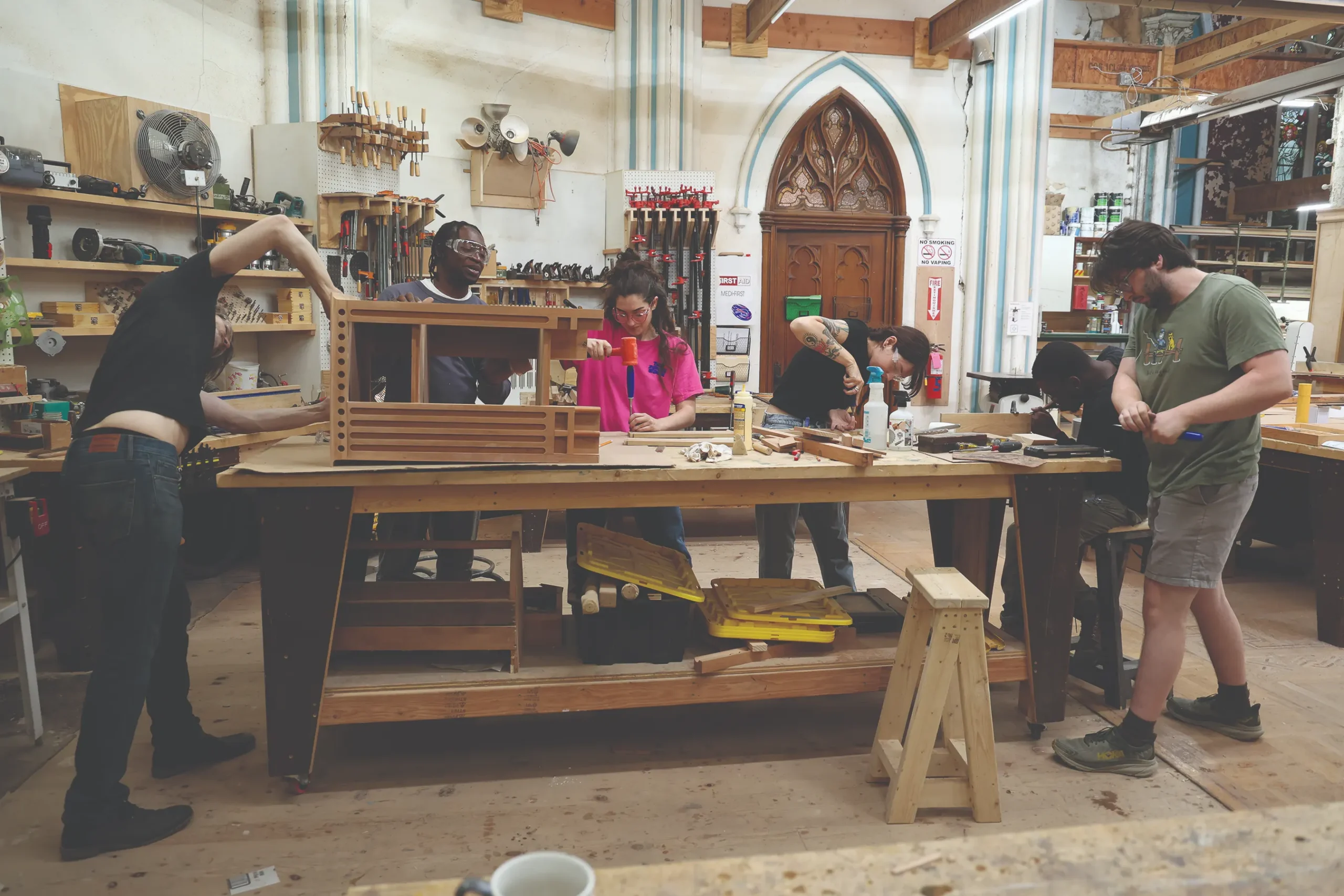
Cultivating a sense of awe through exhibit design engages deep emotions, an impact proven through research to enhance wellbeing, increase critical thinking, and build emotional resilience.3 How does immersive design achieve this? Holly Harmon of the Denver Art Museum has identified six principles for designing awe:
- “Think Big: Awe is often triggered by vastness, whether physical or conceptual.
- Make Connections: Awe is amplified when visitors connect with themselves, others, and the world.
- Cultivate Presence: Object placement and pacing allows for deep engagement, and interactive elements can only be understood over time, allowing for deep engagement.
- Invite Wonder: A sense of mystery fuels awe. Leave room for curiosity, rather than over-explaining.
- Engage the Senses: Physical engagement heightens emotional impact.
- Encourage Reflection: Awe fosters introspection. Use interactives to chart personal and collective responses, motivating visitors to seek new experiences.”4
Exponential Learning Outcomes
Contemporary research affirms the value of embodied and experiential learning, an approach structured around cultivating curiosity, building personal agency, sparking memory, and activating hands on learning, a technique that can increase retention rates to 75 percent, a 25 percent increase from learning from sight and sound alone.5 Multisensory learning can engage multiple regions and systems of the brain simultaneously, an outcome that may enhance knowledge retention, support the transfer of learned concepts to new situations, and accelerate knowledge acquisition.6
Multisensory learning can engage multiple regions and systems of the brain simultaneously, an outcome that may enhance knowledge retention, support the transfer of learned concepts to new situations, and accelerate knowledge acquisition.
Active and experiential learning has its modern roots in theMontessori method, first employed in 1906 to “honor the human spirit and the development of the whole child – physical, social, emotional, cognitive.”7 This approach has been expanded over the last 120 years through further applied research in the 1940s: John Dewey developed his idea of ‘learning by doing’, Lawrence Holt and Kurt Hahn founded Outward Bound on the premise that “young people grow when they take on real challenges – together,”8 and Carl Rogers originated the concept of experiential learning that David Kolb later expanded into his four-stage Experiential Learning Theory (ELT): concrete experience, reflective observation, abstract conceptualization, and active experimentation.9 Each of these educators identified measurable expansion of student engagement, and personal and academic growth through applied and immersive learning. Today, experiential learning has been proven to reduce rates of attrition, increase student interest and motivation to learn, and improve educational attainment across all levels.10
Experiential Design for Young Learners
One of the earliest districts to unite museums and schools for a new kind of experiential learning was the Grand Rapids Public School District in Michigan: in 2015 the district, the local public museum, and other institutions partnered to co-locate 6th through 8th graders within the Grand Rapids Public Museum, where students classroom learning intersects with community and museum-based experiential projects. This success was parlayed into the 2018 adaptive reuse of the city’s original 1940 museum building, a project that retains museum’s archive collection, and integrates these historic resources into small cohort communities of learners.
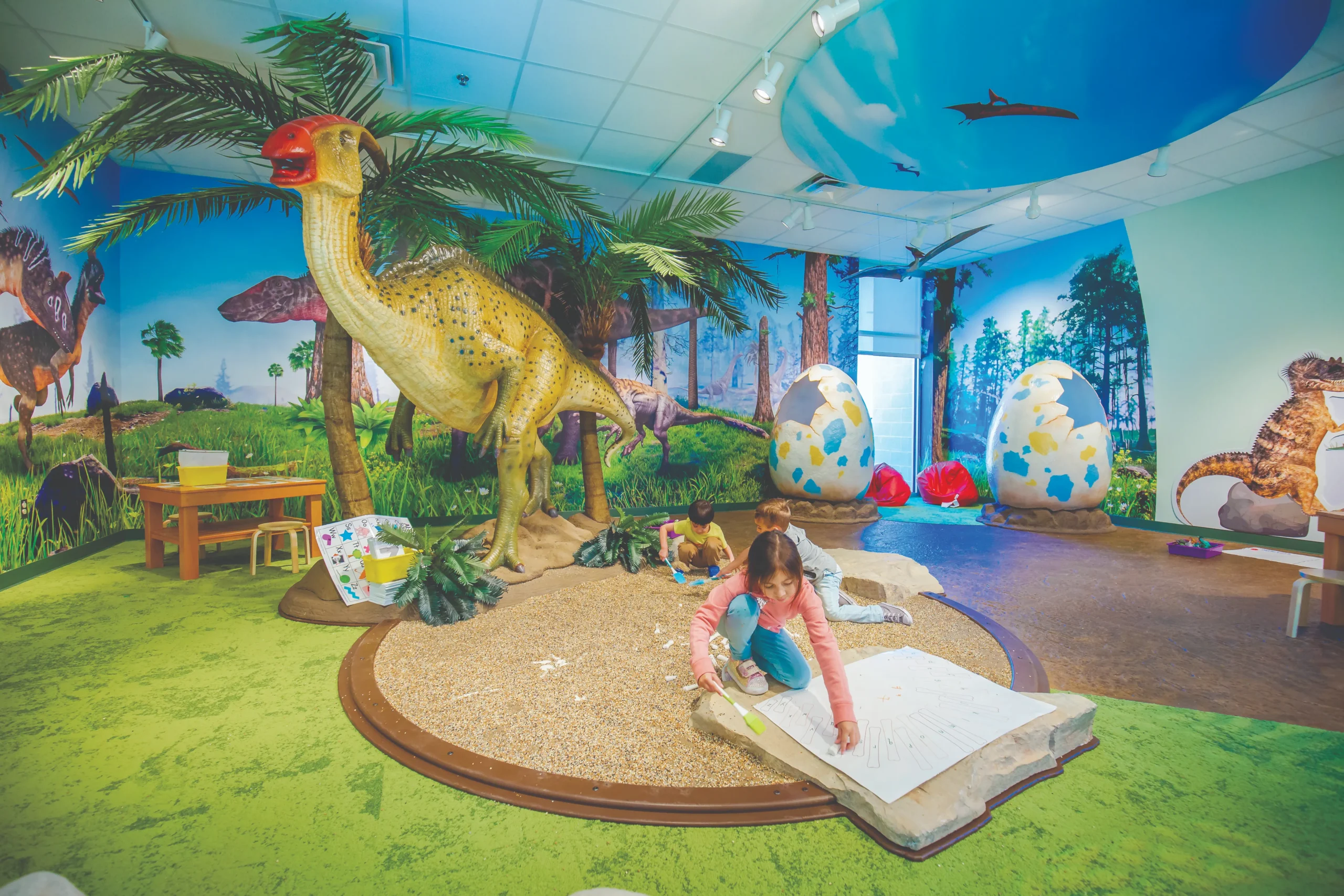
A pioneering project that directly adapts the immersive experience of museum exhibits into classroom design is the Jandrucko Academy for Early Learners in Arlington, Texas, by Huckabee (now the MOREgroup). This school has sixteen environments grouped into pods of four, designed around the themes of Exploration, Investigation, Interaction, and Navigation. Instead of ordinary classrooms, these spaces feel like true exhibits, with panoramic murals, walk-through installations, and multi-sensory interactives in spaces spanning from Ocean and Polar to Construction and Space.11 Teachers observe that students pick up concepts and vocabulary more immediately, demonstrate improved recall, and exhibit a depth of social and emotional growth not seen in students at the same level in traditional classrooms.12
That project has inspired others such as the Sheila C. Liles Early Learning Academy in Baytown, Texas, and the district-wide commitment of the Pickens County School District in South Carolina, who has restructured for experiential learning across early childhood and high school to improve academic development and career readiness.13 In a dynamic partnership, Seneca Valley School District in Pennsylvania collaborated directly with CannonDesign and the Children’s Museum of Pittsburgh to create a new kind of facility where hands-on experiences are foregrounded to support learning in every space in the building.14

Immersive Environments in Higher Education
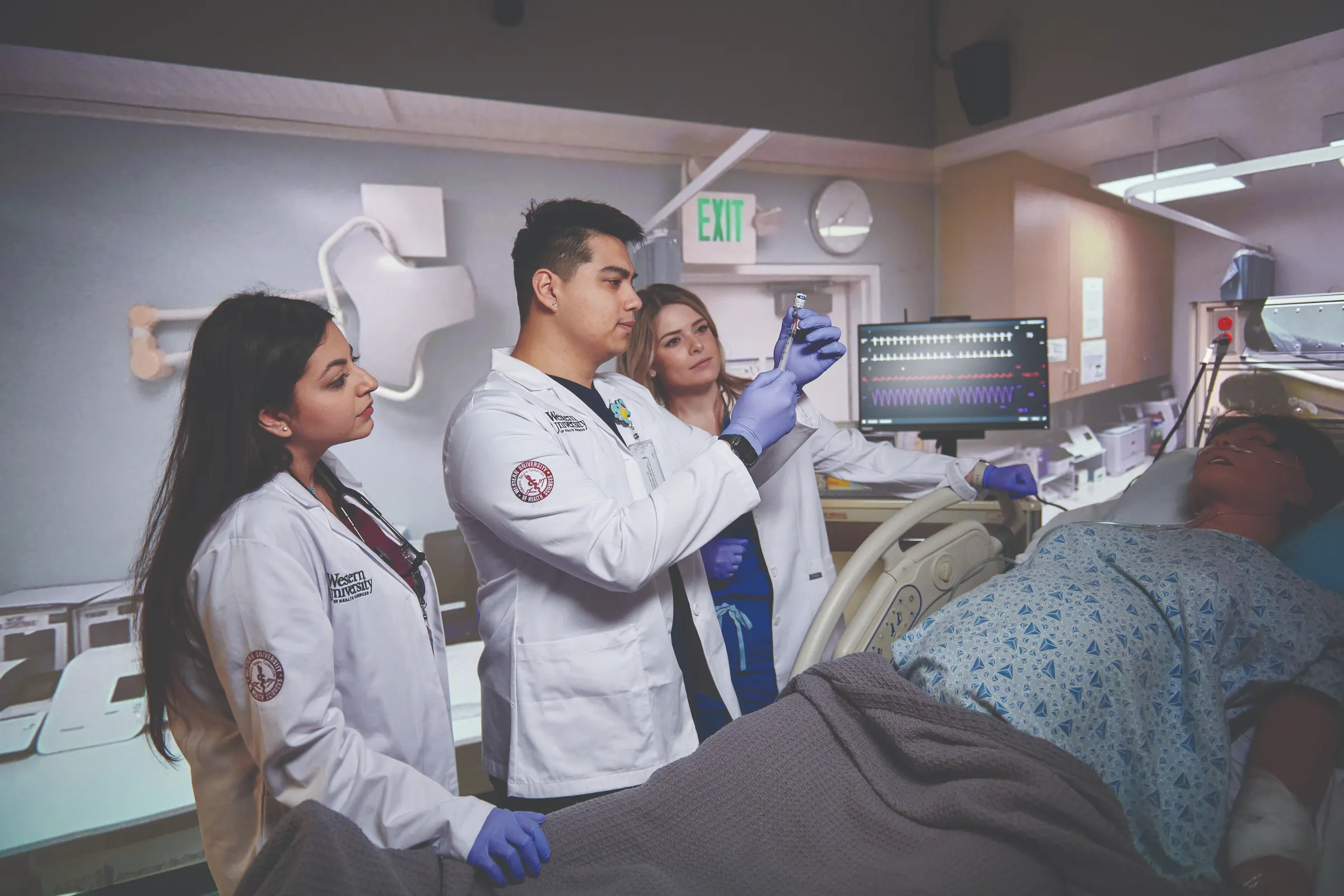
While the nature of higher education orients to larger class size and more specialized learning, there is an early precedent for experiential learning at this level: mock trial courtrooms, first employed in the 18th century, which allow emerging lawyers to practice in front of judge and jury. Today, experiential learning on college and university campuses supports other disciplines ranging from health education, criminal justice, social sciences, and workforce training. Across these studies, students experience enhanced training supported by technology, with virtual simulation rooms that provide multi-sensory, responsive experiences for students to develop practical skills in safe environments.
Offering flexibility from the built-in-place immersive environments in elementary school, simulation environments include panoramic video, audio and other sensory inputs, and programming that adapts to student actions in real-time. Studies show that students in these environments have 40 percent higher recall than desktop environments, are four times more engaged than traditional lecture-based instruction, and engage five levels of learning: understanding, application, analysis, evaluation, and creation.15, 16
The Next Frontier of Experiential Learning
With the increase in immersive experiential learning environments, student expectations are changing for what they seek out across their continuum of learning from the start of their journey through their first careers and into their second and third. Preparing students for a lifetime of learning rests on cultivating curiosity, engagement, and fulfilment across all ages, and experiential learning that combines applied skill development with discovery fuels these objectives. The next frontier of experiential learning is one where institutions and designers invest in implementing museum-level immersive experiences for all ages, fostering a lifelong commitment to learning, growth, and reinvention.
With rapidly changing technology, economies, and industries, a growing pipeline for learning is adult learners – for upskilling, re-training, or re-skilling – and research shows that adult learners do more than benefit from experiential learning: they use it as a tool to connect their life experience to the new skills and topics in front of them. At this stage of learning, students need to move more quickly from skills acquisition to applied competence, requirements that are measurably easier to achieve within environments that use the same equipment, layout, and features of the workplaces adult learners will step into.
Learning from museum exhibit design when designing schools is more than just a moment of inspiration: it offers a pathway to designs that supports learning outcomes and cultivates a lifelong capacity to acquire and implement new knowledge. LBD
References
- “A Guide to Exhibit Development” Smithsonian Exhibits p6-7 Guide-to-Exhibit-Development.pdf
- “The Laboratory of Wonder” NeoPangea The Laboratory of Wonder | NeoPangea
- “Why Awe is the Secret Weapon for Museum Engagement” by Jim Richardson January 28, 2025 Why Awe is the Secret Weapon for Museum Engagement – MuseumNext
- ibid
- “Benefits of Multisensory Learning” Ladan Shams and Aaron R. Seitz in CE Press doi:10.1016/j.tics.2008.07.006
- Ibid
- “Fast Facts: What Is Montessori?” American Montessori Society What Is Montessori? | American Montessori Society
- History of Outward Bound by Outward Bound USA Outward Bound History – Outward Bound
- “Integrating Kolb’s Experiential Learning Theory Into Nursing Education” by Jing Cheng, Yingting Wu, Li Huang, Yuehong Wu, Yuxiang Guan Integrating Kolb’s experiential learning theory into nursing education: a four-stage intervention with case analysis, mind maps, reflective journals, and peer simulations for advanced health assessment – PMC
- “The Role of Experiential Learning on Students’ Motivation and Classroom Engagement” by Yangtao Kong https://pmc.ncbi.nlm.nih.gov/articles/PMC8569223/
- Our Spaces by Dr. Jandrucko Early Learnings Academy Our Spaces – Dr. Sarah Jandrucko Early Learners Academy
- “A Look Inside the Sarah K. Jandrucko Academy for Early Learners by Mansfield ISD Our Spaces – Dr. Sarah Jandrucko Early Learners Academy
- 02023-2028 Strategic Plan by School District of Pickens County 2023-2028 Strategic Plan | School District of Pickens County
- “The Story of Ehrman Crest” by Seneca Valley School District The Story of Ehrman Crest
- Vizmove Prism Virtual Simulation Room by WorldViz VizMove PRISM | WorldViz
- “Meaningful Training with Virtual Reality” by Dr. Andrew Beall Meaningful Training with Virtual Reality