

Nurturing Development through Community-Centric Design

The transformative power of early childhood education

By Ed Buglewicz, AIA, and Molly Haas, AIA

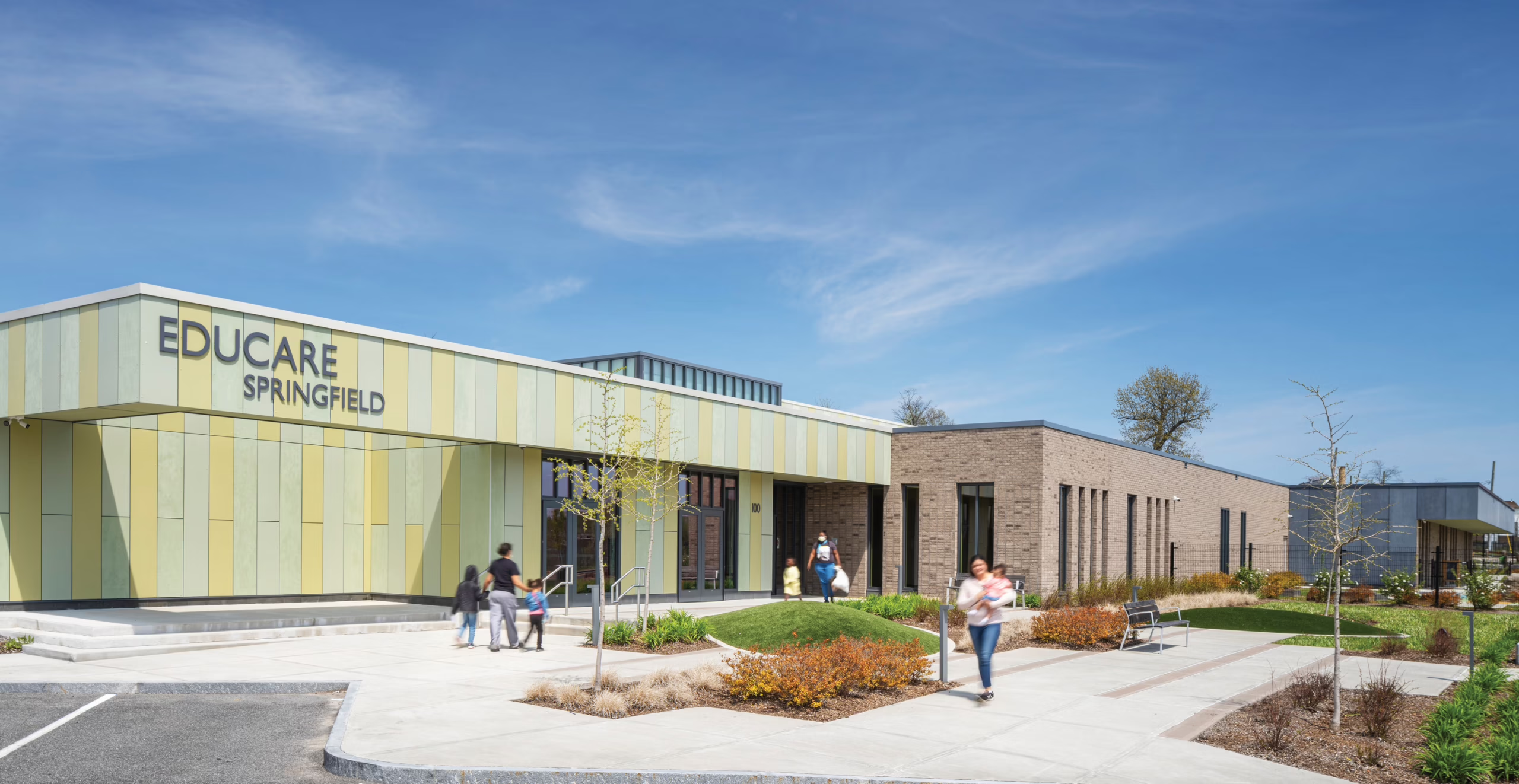
RDG Educare Springfield Exterior
Photo: Thomas Grady

In the realm of child development, the significance of early childhood education has emerged as pivotal. Science and research have firmly established that this phase is not merely a preparatory stage but a foundational period that significantly shapes a child’s potential for lifelong learning, health, and overall development. Quality early education provides children with the building blocks essential for their growth and well-being, setting the stage for their future success.

Historically, care for children under five years has been casually labeled as “daycare” or “babysitting,” which grossly underrepresents the comprehensive educational and developmental aspects inherent in this crucial phase. This misconception overlooks the complexity and the transformative impact of early childhood education. In their early years, children develop a sense of place and belonging from the world around them; as such, early education design should focus on creating safe, nurturing spaces that encourage children to explore and interact with their environment. Furthermore, learning environments that are carefully crafted to support children’s social and emotional development help establish a sense of belonging and security.

As the field evolves, early childhood centers are increasingly recognized not just as childcare facilities but as integral institutions for early learning and community development. Here, we look at why these facilities are essential and how designing to integrate education and community engagement enhances the learning experience for children and fosters stronger community connections and support, contributing to the holistic development of both individuals and communities.

The Digital Age Dilemma: Rebuilding Community Connections

The pandemic’s aftermath has left a significant imprint on our social fabric. Notably, it highlighted the lack of safe, reliable, affordable childcare options. Even before COVID-19, many facilities were plagued by long waitlists, ballooning costs and safety concerns; since 2020, these challenges have been further compounded by childcare centers that were shut down and never re-opened, leaving communities across the country with a growing gap in quality early childhood education programs. Likewise, while initially providing flexibility, the shift to virtual interactions has paradoxically led to a heightened sense of isolation. This weakening of personal connections and community bonds only underscores the need for physical spaces that encourage real-world interactions and foster a sense of belonging.

Early childhood education centers with community-centric designs are uniquely positioned to serve as catalysts for rekindling these vital communal ties. When integrated into a community, these centers can serve as a space for connection and encourage people to take a vested interest in the center’s success, whether or not they have small children who attend. Ultimately, they catalyze the kind of connections that are foundational for a community’s growth and flourishing.

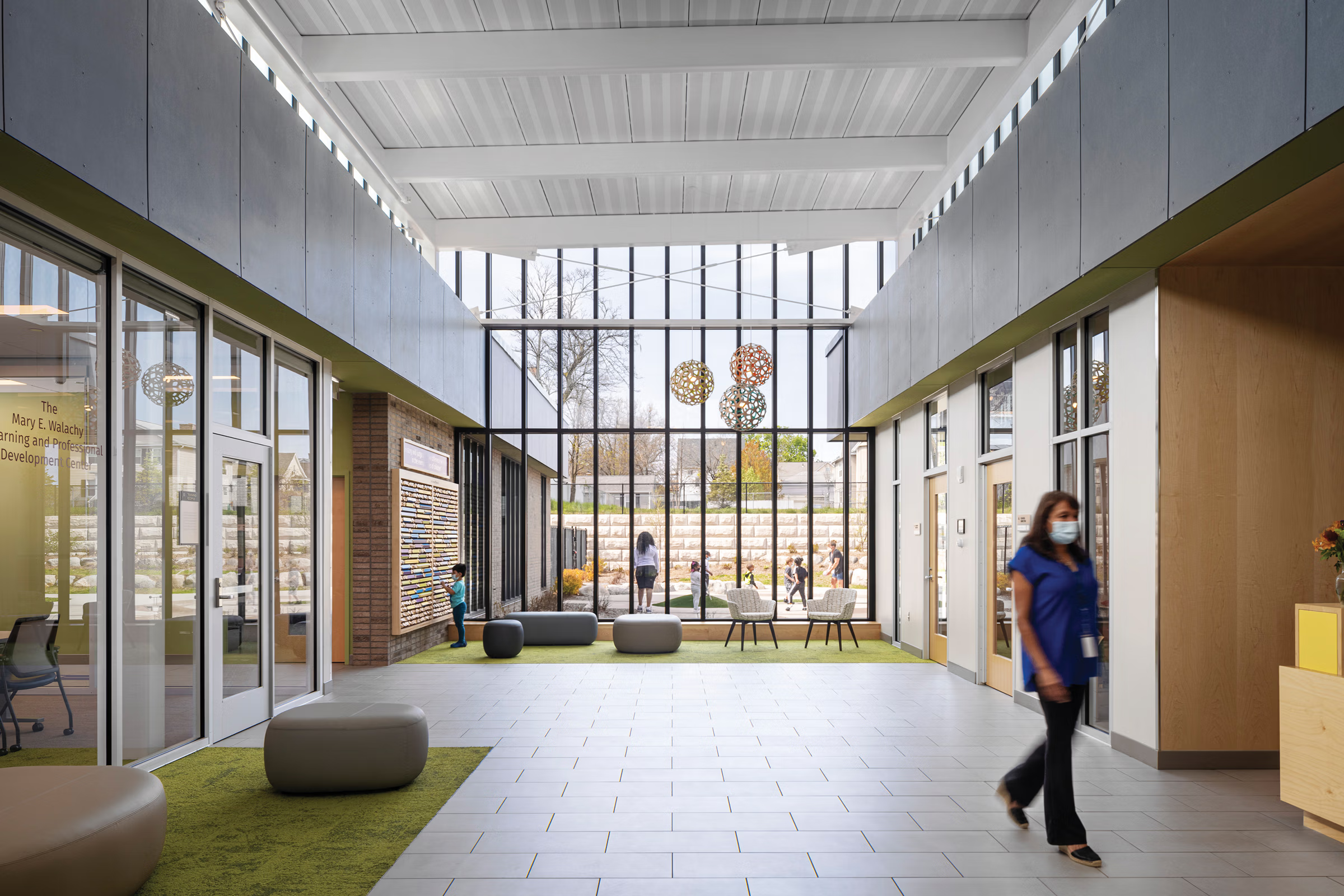
The gathering space at Educare Springfield, adjacent to the training rooms and parent resource room, provides ample natural light and views into the playground spaces, creating a welcoming environment for children, families and staff. Photo: Thomas Grady

Designing Community-Integrated Early Childhood Centers

The evolving landscape of early childhood education calls for innovative and adaptive approaches. The focus should be on designing spaces that cater to children’s developmental needs and actively foster community engagement and support. This vision extends beyond creating mere places of learning—designers should aim to establish vibrant community hubs that nurture the growth and well-being of every community member.

When designing these facilities, it’s essential to start by understanding the diverse needs of the various stakeholders in early childhood education: the children, their families and the educators.

This multifaceted approach benefits the direct users of these centers and serves as a fulcrum for broader community development and unity. We can see examples of successful early education programs that are intricately linked to their wider community in three of RDG’s early childhood education projects:

Educare Springfield (Springfield, Mass.) is an early childhood education center providing year-round care for 141 children, ages six weeks to 5 years old. Opened in 2019, the school is a member of the Educare Learning Network, an influential group of 25 high-quality schools across the U.S. that has been working to help improve outcomes for children and families through national research and local school-sponsored community outreach. An essential aspect of Educare schools is its two-generational approach, which focuses on the well-being of both learners and their parents. Informed by research that shows the negative impact stress and trauma have on a child’s development, Educare’s program aims to reduce primary caregivers’ stress, which helps limit stress transferred to their children. Educare Springfield creates a stable and nurturing environment vital for the healthy development of young minds by providing social services, adult learning opportunities, and regular touchpoints with parents.

A large training room that can be subdivided into smaller spaces provides opportunities for adult education and offers parents and caregivers a space to engage with parenting courses and other educational opportunities. Often, these training spaces are used for classes that help parents better themselves (e.g., GED preparation) and better their children’s lives.

Educare Springfield also includes a generous parent resource room with computers, printers and online access that many families in this community may not have reliable access to in their homes. This space allows parents experiencing the often-trying stage of early childhood parenting to socialize, build a community and foster relationships. Large windows offer ample natural light and views to the protected playground spaces, furthering the connection to their children and offering a peek into playtime.
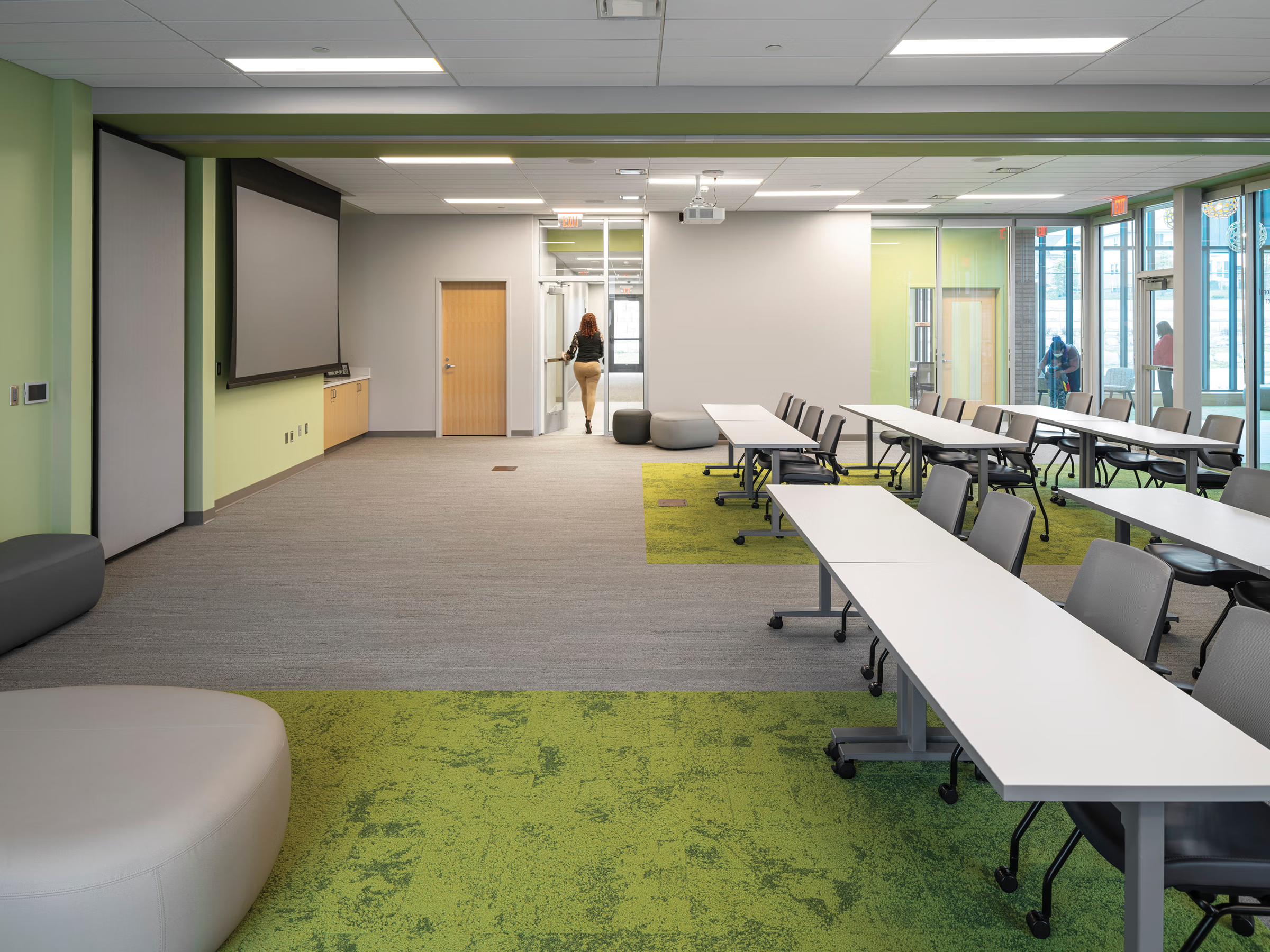
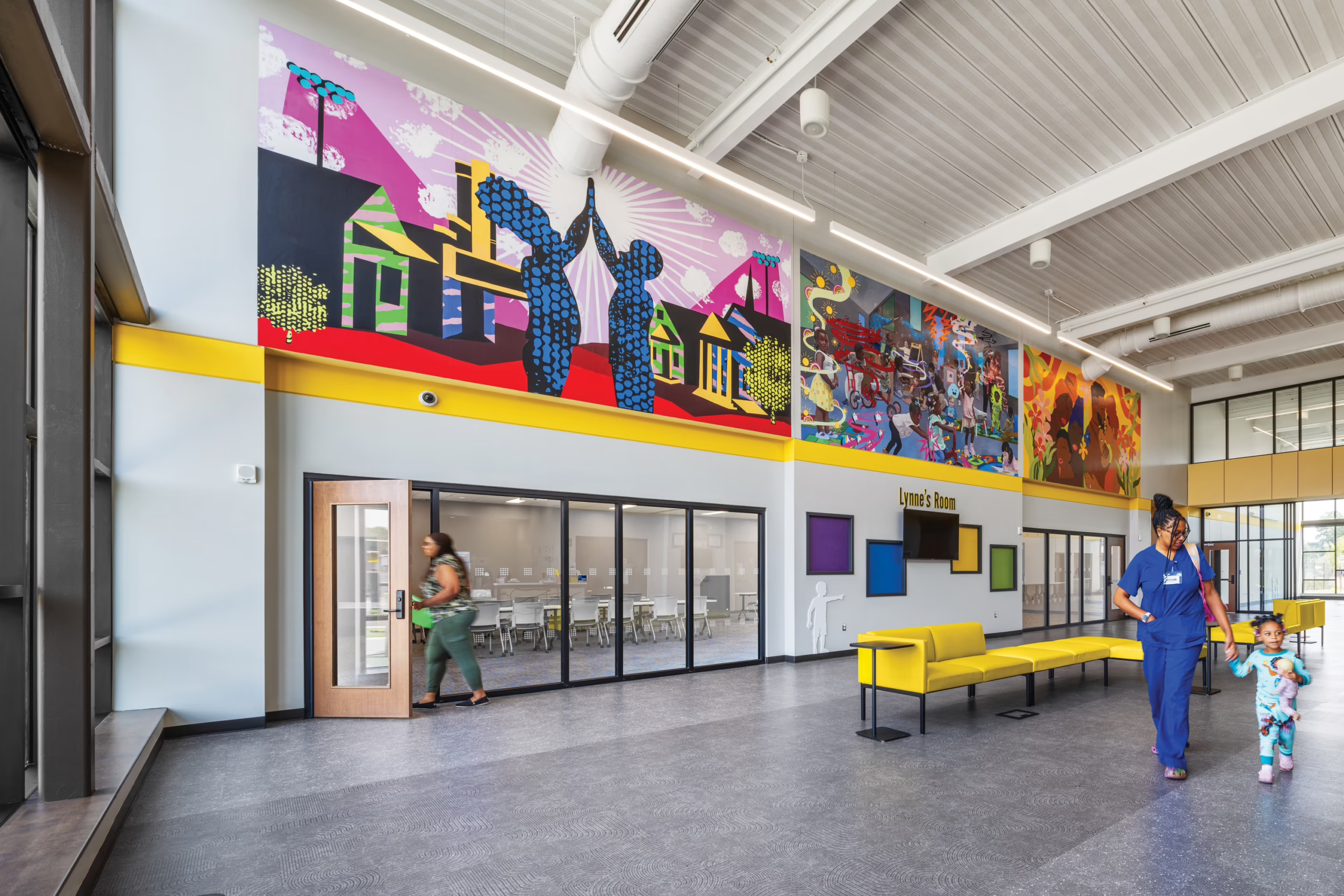
The training room at Educare Springfield facilitates its two-generational approach by providing space for the education and support of children and parents. Photo: Thomas Grady

The training room at Educare Springfield facilitates its two-generational approach by providing space for the education and support of children and parents. Photo: Thomas Grady


Situated in one of Springfield’s most underserved areas, the school demonstrates what’s possible when children, families and staff have equal access to a high-quality early education center. The overall design for Educare Springfield delivers a welcoming, safe and secure space for learning for children, parents, and educators that encourages a strong connection to the greater community.
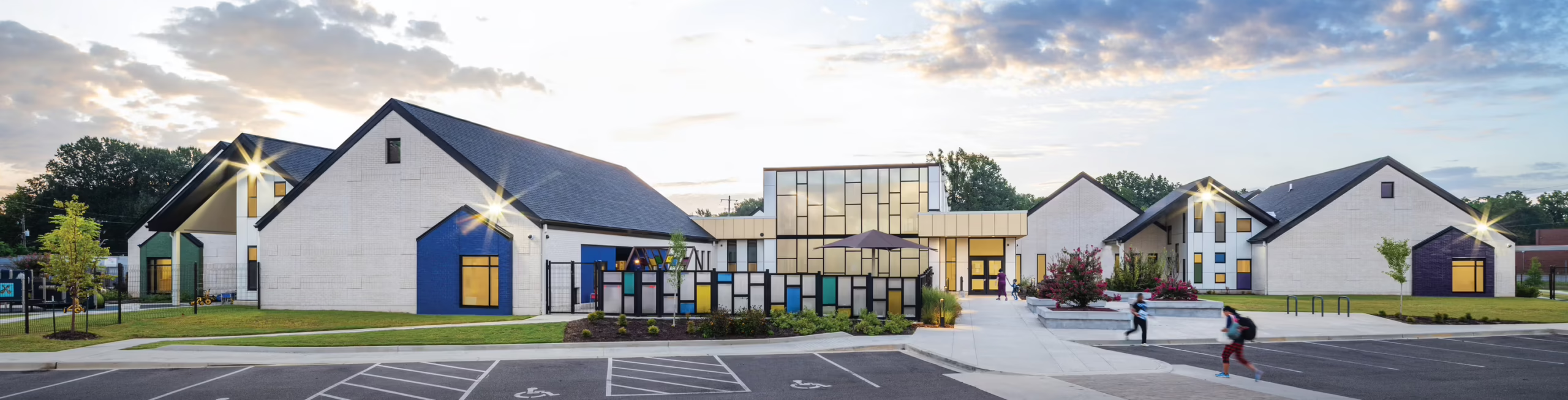
Porter-Leath Academy, in partnership with the University of Memphis, provides extensive education and research programs. Photo: Thomas Grady

Porter-Leath Early Childhood Academy (Orange Mound, Tenn.) is the result of a partnership between Porter-Leath and the University of Memphis. Located less than three miles from the University of Memphis, it serves as a teaching lab for students in the College of Education, shares a campus with the RedZone Community Center and is adjacent to Melrose High School, offering ample opportunities for community engagement. The Academy at Orange Mound provides comprehensive education and support for 288 children across 18 classrooms.

THE DEDICATION TO CURRENT AND FUTURE EDUCATORS’ TRAINING CONTRIBUTES TO THIS PROGRAM’S SUCCESS IN THE CITY, IMPROVING THE QUALITY OF EARLY CHILDHOOD EDUCATION IN TENNESSEE.

RDG’s design for the Academy encourages play and exploration and weaves local culture, history and geography into safe and inviting spaces. Influenced by the surrounding context, the design centers on the concept of neighborhoods—each pod of paired classrooms representing a house within the neighborhood. Intentional child-friendly architecture creates a space that feels like an extension of home and community with unique features, such as the addition of a front porch facade in each classroom, which opens into a natural playscape designed to promote play-based learning.

The east and west ends of the Academy’s central gathering space at the main entry are fully glazed, allowing views in and through the center; local artwork serves as a focal point of the gathering space, further reinforcing the facility’s community connections. Large training rooms adjacent to the gathering area are a key feature that supports the Teacher Excellence Program provided by Porter- Leath, which educates other early childhood providers throughout Memphis. All three Porter-Leath Academies offer training spaces that contribute to this program’s success in the city, improving the quality of early childhood education in Tennessee.

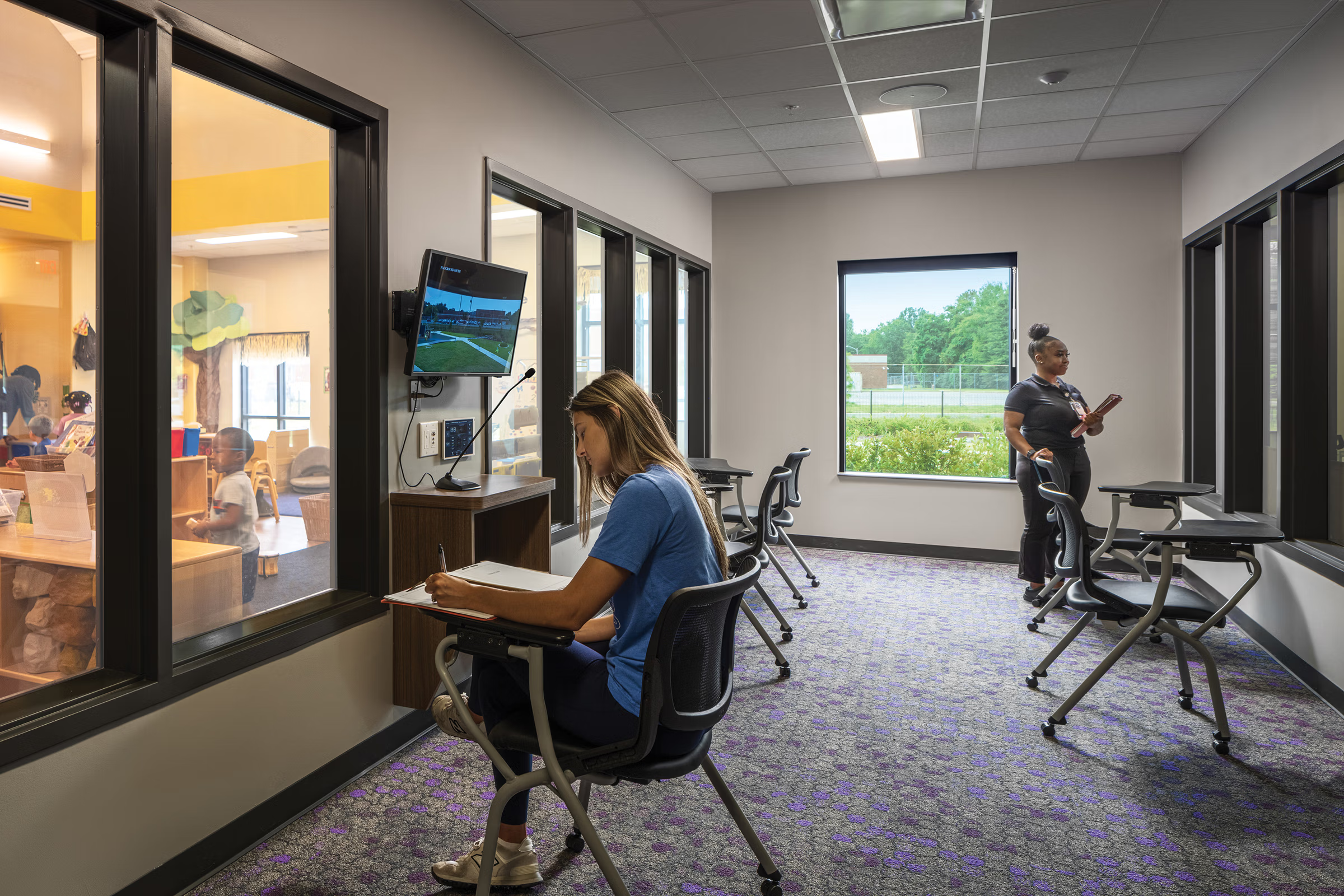
The center has two dedicated observation rooms with windows into classrooms on both sides and two conference rooms that offer visual observation into a classroom on one side. These observation spaces offer an ideal supplement to teacher training, providing future teachers with opportunities for observation alongside their hands-on learning (e.g., professors can provide live coaching to teachers as they work in the classroom) and opportunities to engage in pedagogical research. The dedication to current and future educators’ training contributes to this program’s success in the city, improving the quality of early childhood education in Tennessee.

Multiple observation rooms at the Porter-Leath Early Childhood Academy offer teacher training and pedagogical research opportunities. Photo: Thomas Grady
The divisible training space at the Porter-Leath Early Childhood Academy provides flexibility for all education endeavors, including the Teacher Excellence Program. Photo: Thomas Grady

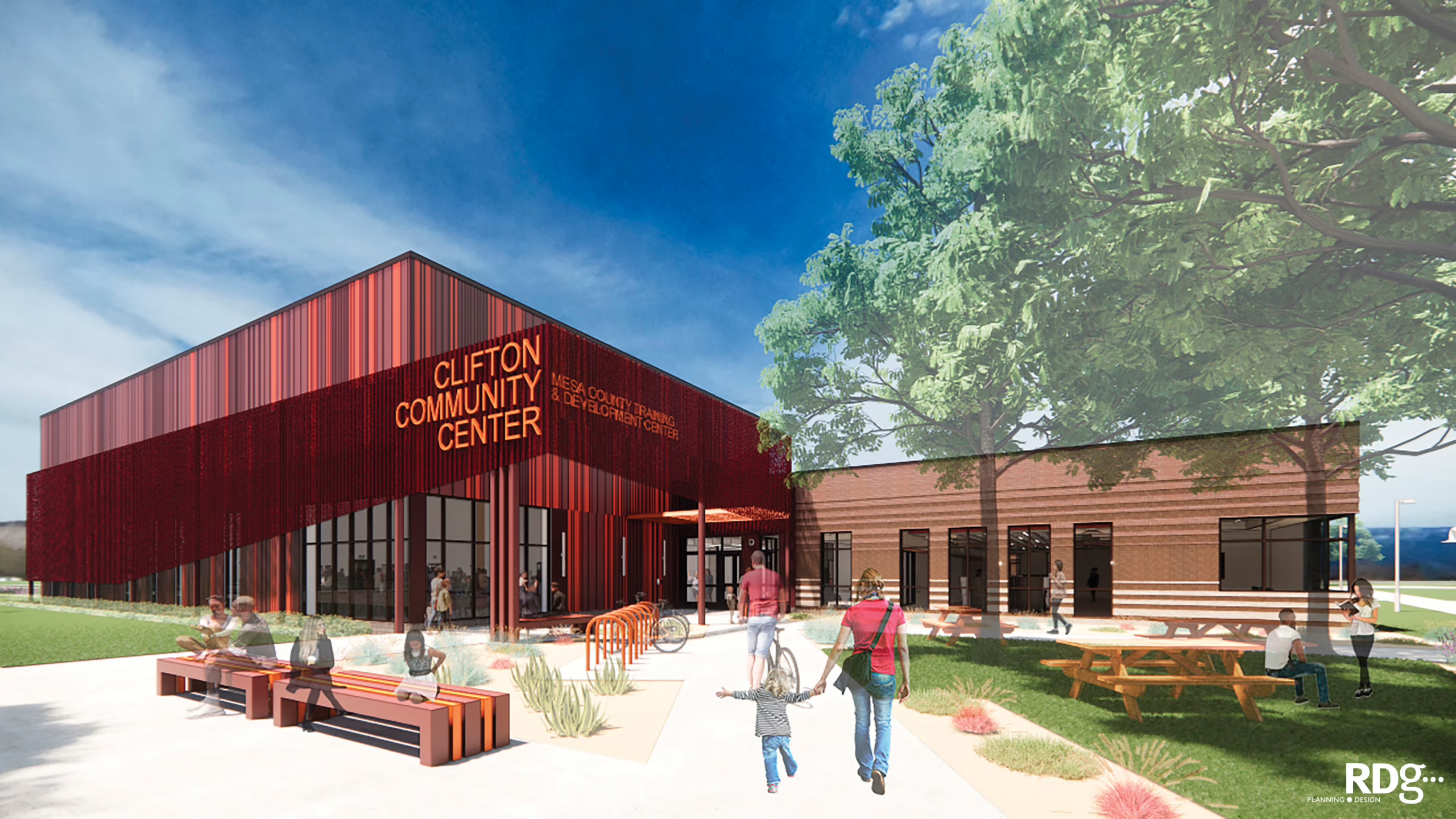
Mesa County Early Childhood Education Center (Clifton, Colo.) epitomizes a community-centric approach to design. The early education facility integrates with the Early Education Training and Development Center and the Clifton Community Hall, standing as a beacon of community engagement and fostering a supportive environment for the comprehensive development of young children. This multifunctional space, part of a larger community campus, including a public library and public-accessible playgrounds, is designed to foster community engagement. The center is also adjacent to a local elementary school to the west and a public park to the northwest.

When designing the center, RDG worked intensively with the client group, community members and even county commissioners to develop a concept reflective of ideals that would strengthen the Clifton community. The goal was to create a community hub for a historically underserved area in Mesa County. The design theme of ‘weaving’ symbolizes the interconnectedness of community elements, its people, and surrounding geography, with material and color selections reflecting individuality and partnership and representing the interconnectedness of all community members and exterior features of textured gradient brickwork that harmonizes with the Mesa County landscape.

The center includes 12 early learning classrooms and offers care for 202 children aged six weeks to 5 years old. The Mesa County Training and Development Center includes offices and meeting spaces for the public health department staff responsible for overseeing early childhood education. Likewise, the Clifton Community Center provides a social and event destination. It includes a high school-sized gymnasium, catering kitchen, concessions area and multipurpose room that can be used for after-school care. These interwoven programs encourage community involvement and versatile use, making the center a hub for education and community activities and serving children, families and early childhood education providers throughout Clifton.

By fostering relationships with the surrounding community, these centers enhance their capacity to provide learning experiences that are both meaningful and relevant to the children and families they serve. This engagement is crucial in supporting children’s sense of belonging and security, aiding their social and emotional development.

The Clifton Community Campus encompasses a public library, community center, training and development center and early childhood education center to create a community hub in Mesa County.

The Growing Value of Early Childhood Centers

The tapestry of early childhood education is dynamic and ever evolving. Looking ahead, communities must recognize the invaluable role these centers play, not only in educating our youngest members but also in fostering a sense of unity and belonging for all. By continuing to innovate and integrate, early education designers can create thriving, cohesive communities, demonstrating early childhood education as a cornerstone of communal development and prosperity.

About the Author

Ed Buglewicz, AIA, leads RDG Planning & Design’s Education Market. Drawing on more than 20 years of experience, he has designed and programmed award-winning early childhood facilities for public, private and non-profit organizations nationwide. His collaborative approach engages with clients and early learning staff to create environmentally responsible spaces that positively impact children, families, and educators. Based out of RDG’s Omaha, Nebraska office Ed can be reached at ebuglewicz@rdgusa.com.

Molly Haas, AIA, has dedicated her architectural career to designing spaces devoted to small children and their caregivers. Molly has worked with a wide range of organizations and clients to create beautiful, functional spaces that support the growth and development of young children. Molly believes architecture is a powerful tool for societal change, and as such, she strives to positively impact the lives of children and their communities through her work. She can be reached at mhaas@rdgusa.com.