


Education is all about unlocking potential. In most cases, this refers to student potential, but administrators may not know that there are numerous untapped opportunities within the school buildings themselves. In particular, cafeterias have a lot to offer to schools willing to dig a little deeper, and design trends across K-12 and higher education are starting to take advantage of the flexibility offered by these spaces.
Traditionally, a school cafeteria serves one purpose: feeding students. This conveniently allows for the room to be set up and left alone, but outside of mealtime, these cafeterias are large, empty and underutilized spaces. Many schools have moved away from this single-use model to at least some degree, utilizing the space for other purposes in the afternoons and evenings. However, without the proper design to support this adaptability, trying to reorganize a cafeteria to serve a new objective can be an exhaustive process.With the continued rise in flexible eating spaces in schools, cafeteria furniture and design should be well-equipped for more than just food.
The Rise in Flexibility
Much of the drive for multi-use cafeterias comes from various economic factors. Some schools have the luxury of a dedicated room for every possible need, but the more common scenario is limited space options. The addition of new physical space for an auditorium, community area, after-school care space or another kind of room in an existing school is costly and hard to justify when a perfectly good cafeteria is sitting empty during the times these spaces would be in use. Investing in some more multi-purpose furniture and moving it as needed is a much smaller hassle and cost than a large-scale renovation.Not only does this help serve the needs of the school in an existing space, it also opens up the possibility for larger community involvement.“A cafeteria is one of the only spaces in the school that can turn a profit and help financially support other important education programs,” says full-service furniture and design firm, Palmer Hamilton, CEO John Gardner. “Prioritizing flexible and attractive design in the space can drive up revenue from students choosing to purchase lunch from the school, as well as giving administration the option to rent out the space for meetings and events. These projects tend to see full return on investment within two years.”
Building in Flexibility in K-12…
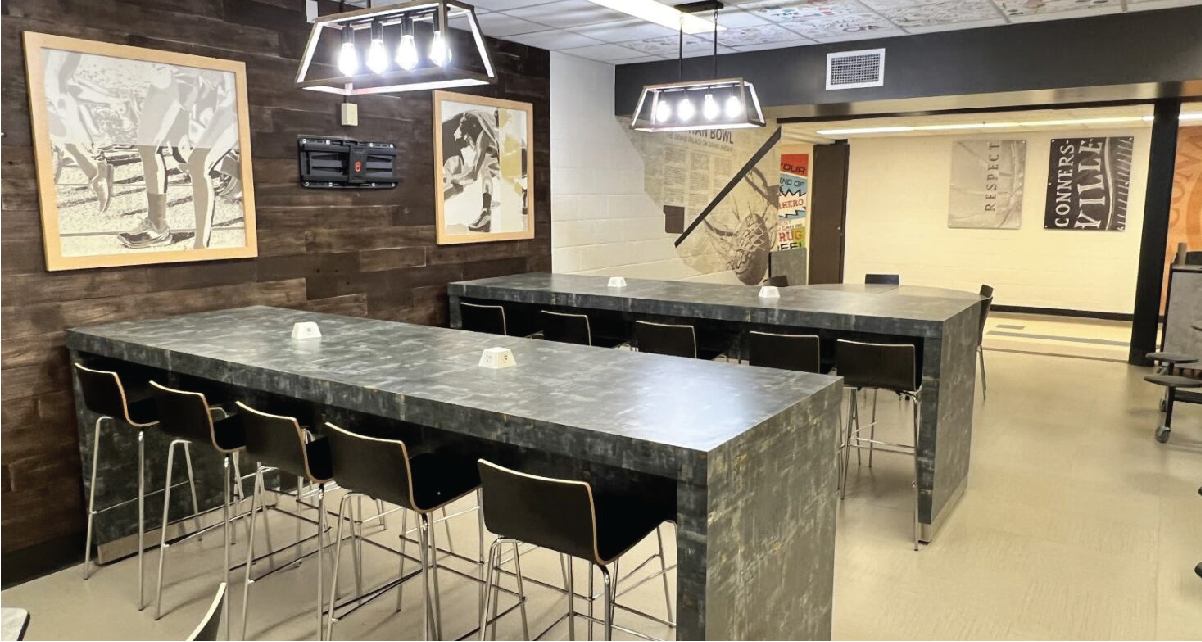
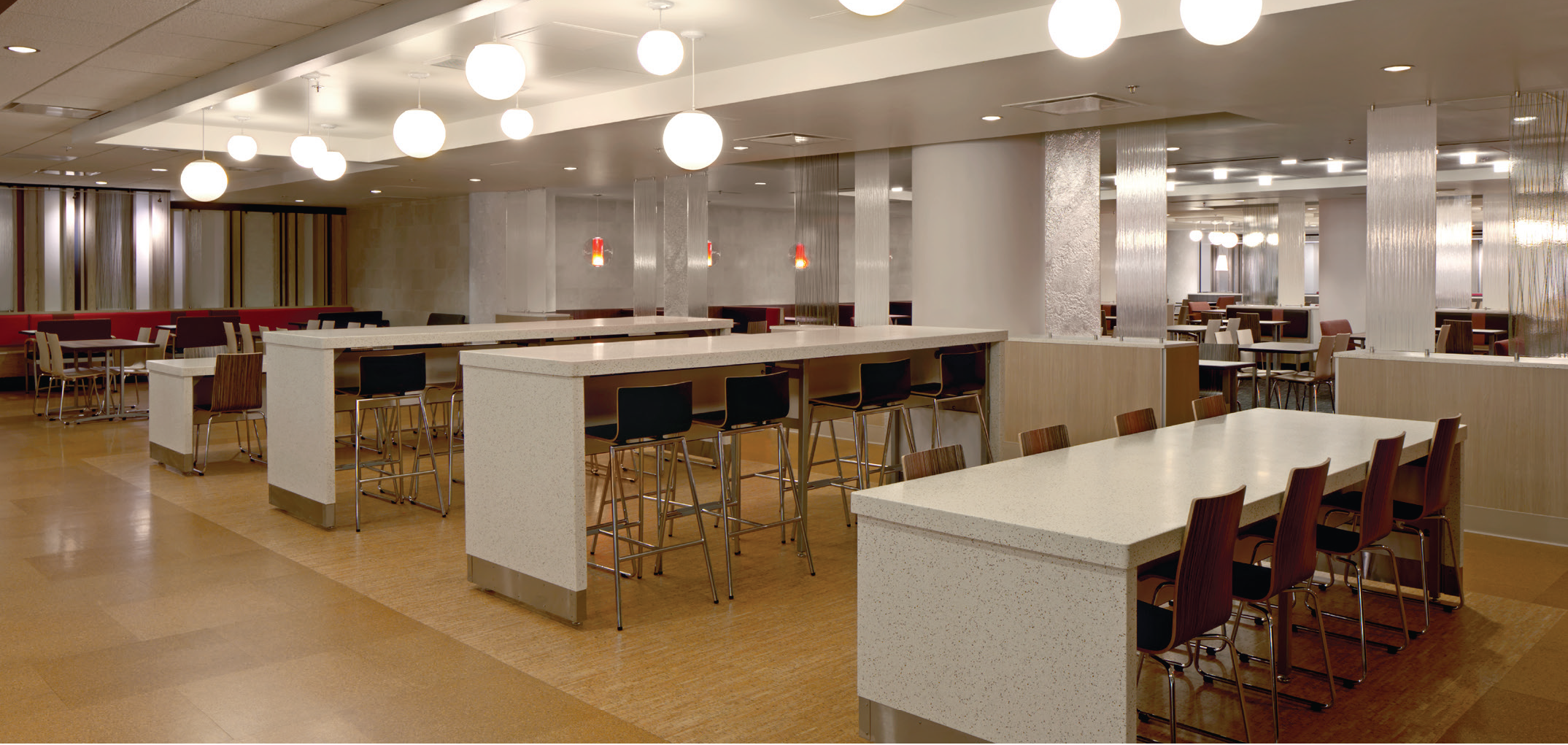
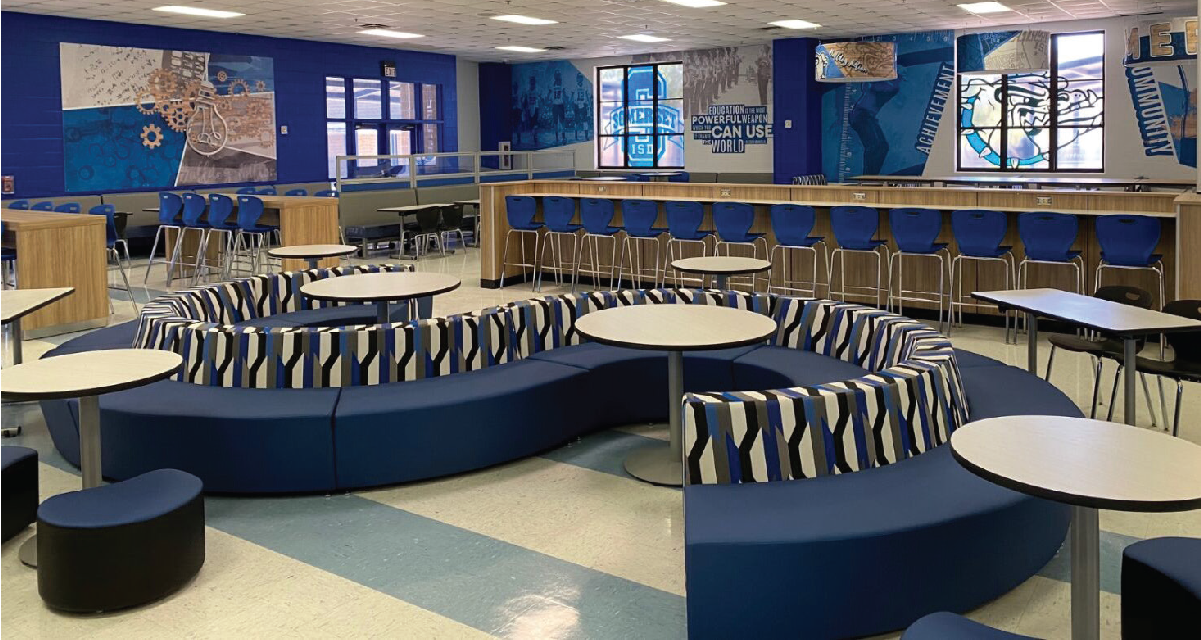
Technically, any cafeteria design can be a flexible cafeteria design. However, the effort needed to conceptualize a new layout and move furniture around every time a new use is required will vary greatly depending on how well that furniture is designed. Finding a furniture company to partner with that offers products for the education market is easy, but finding one that understands the nuances of designing flexible spaces in schools can be a challenge.For K-12 schools, a well-designed cafeteria starts with the primary arrangement. Most of the students interacting with the cafeteria during a meal will follow the same path. They walk in, grab their food, pay in some way, eat at a table, then put away any trash and dishes. Some may skip some steps, like those who bring in their own lunch, but the order of those steps remains the same. The space designer needs to understand how students go through this process, so furniture in the cafeteria can be set up to make the flow feel natural by regulating direction and accommodating the traffic at any given mealtime.Flexibility comes in when that same ease of use translates into other common uses. In K-12, these usually include hosting school assemblies, after-school care, school board meetings or other community events, but schools have found countless creative uses for their eating spaces. The possibilities should only be limited by the extent of the community’s imagination, not the capabilities of the furniture. This is a large part of why many schools looking to build these multi-purpose cafeterias have moved away from the traditional benched or rounded tables in favor of more modern, food court style pieces such as booths, high tables and stools. Not only is this more visually appealing, but it also makes the layout much more adaptable outside of the lunch hour.
…And After Graduation
Unlike K-12, higher ed institutions tend to have a more set use for each of their spaces. The sheer size of most college campuses makes them much more likely to have a room better fitted for most of the aforementioned secondary uses than a dining hall. Because of this, furniture is almost always set in one arrangement for food service and largely left alone. However, that does not mean that flexibility is not important.
The way college students interact with furniture and campus in general is entirely different than any other setting. For many students, the majority of their time is spent within those buildings, so while the main purpose of the cafeterias is still to feed people, they need to be set up in a way that welcomes and accommodates the other aspects of university life.
Students often use cafeterias as a place to hang out with friends, work on a group project, study alone or partake in any number of other activities. While the furniture is largely stationary, students should be able to interact with it in whatever way they need. Instead of the flexibility to be rearranged for multiple uses like in K-12, this furniture should have the flexibility for multiple uses in one setup. It should be solid and spacious enough for eating and studying, while being comfortable and mobile enough to accommodate friend groups of different sizes. Finding furniture that can adapt to these and other uses is becoming a major factor in acquisition decision making for higher education institutions, and as colleges are making that change, they are recognizing that both the frequency and duration of participation in these spaces is increasing.
Even with all these patterns in mind, there will be aspects of each project that make it unique. To ensure that the final product will best serve the customer’s needs, furniture manufacturers need to prioritize collaboration. Input from key stakeholders, including students, staff and administration, is critical to the design process. No previous experience is good enough to take the place of the people who actually use the space, as they are the key to unlocking the full potential of school cafeterias.