



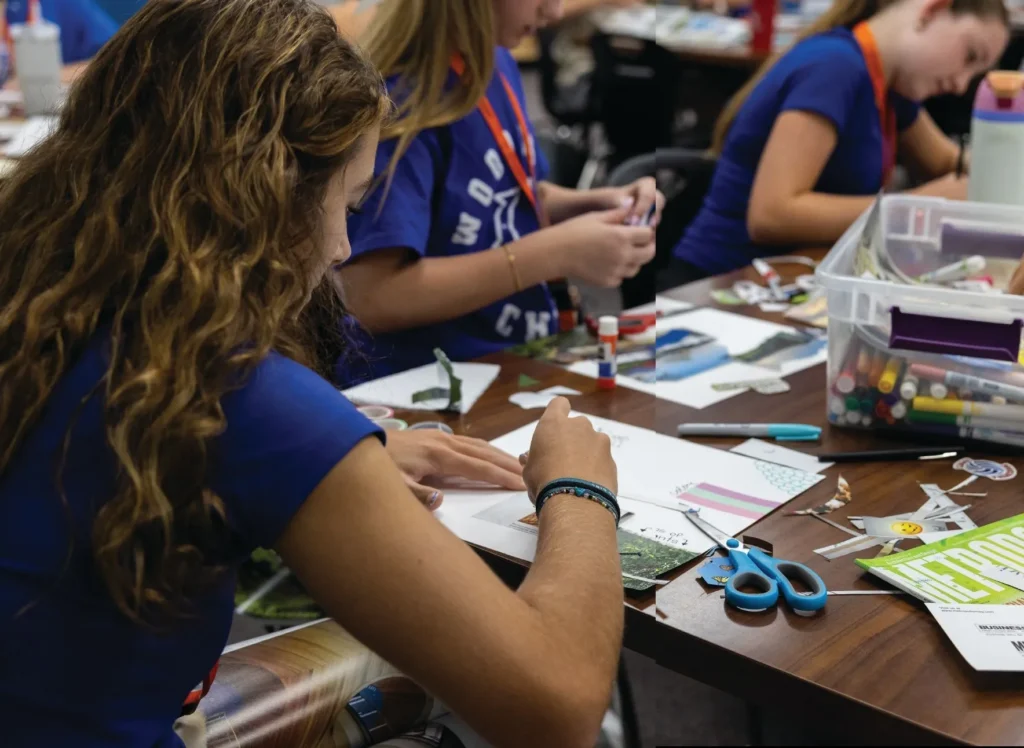
Starting in 2024, the Advocacy Subcommittee explored elevating student voice throughout the design process—going beyond one-off student engagement sessions, surveys or open houses—and identified the inconsistency with how student engagement is approached as an opportunity for growth—recognizing the remaining hurdles including securing permissions, integrating meaningful activities without disrupting curriculum, and ensuring equitable student representation.
Key Questions explored by the task force included:
- What if architects challenged themselves and the school districts they work for to really shift how educational projects are approached?
- What if the design process were to begin and end with students as the experts, students as the ones we ask the questions of first, students as the most important group we engage with?
- What if we trusted students’ experiences, trusted and championed their involvement as a critical component in shaping educational spaces that truly meet the needs of their users?
- This article highlights how five firms across the country have integrated student input into educational design— with positive, innovative, and inclusive outcomes.
First, the Hurdles:
Permissions. With strong leadership, most caretakers and educators are open to ideas that enrich student growth. Architects must show value: outline a clear timeline, learning outcomes, and include photographic documentation to support engagement efforts. Plan early to capture the process meaningfully and obtain permissions ahead of time.
Time away from class. Design engagement promotes critical skills: iteration, creativity, collaboration, problem-solving, and technical-artistic thinking. When design activities complement classroom objectives, it becomes a rich educational opportunity win for both students and the design process.
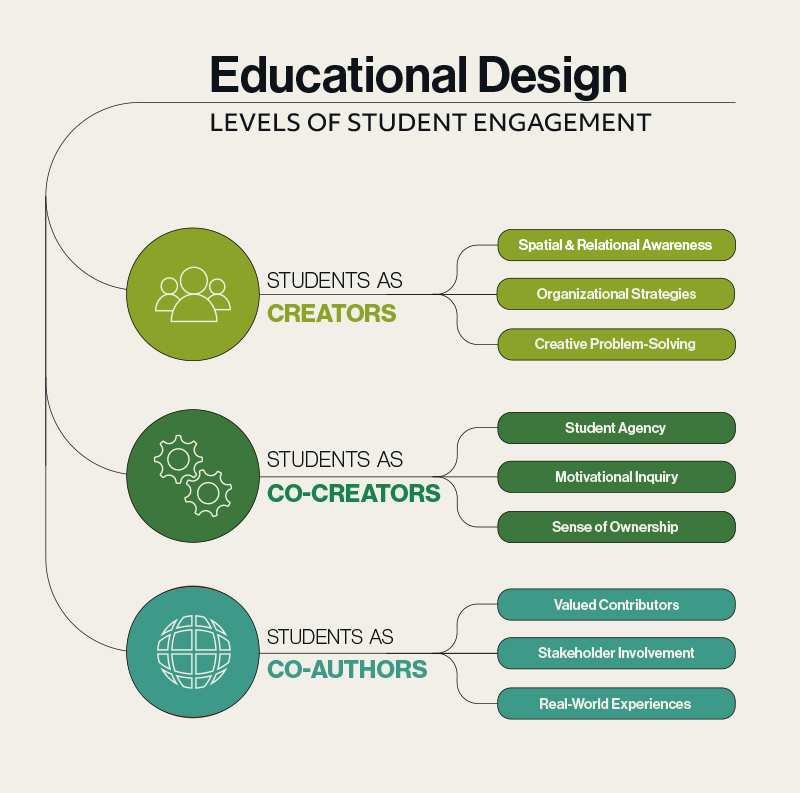
Levels of Student Engagement. Diagram: Greg Louviere
Equity in voices. Equity matters. Engagement shouldn’t be based on applications, hand-picked committees, or require extra parental involvement. A representative sample—from whole grades, clubs, or diverse student groups—is vital. Authentic engagement includes all voices, not just the loudest or most privileged, and should be reflective of all students who will ultimately use the designed spaces.
Re-Framing Education Through Design
Student involvement in the design process connects creativity and inquiry to real-world problem solving. The Student Engagement in Educational Design (SCEED) framework emphasizes student agency, creativity, and impact. When students collaborate with design teams, they take ownership of the environments that support them—and improve their learning outcomes.
Sir Ken Robinson, in Creative Schools: The Grassroots Revolution That’s Transforming Education, advocates for student agency and creativity over passive learning. He describes students not as consumers of education, but as creators. When architects involve them in shaping their spaces, we empower transformation.
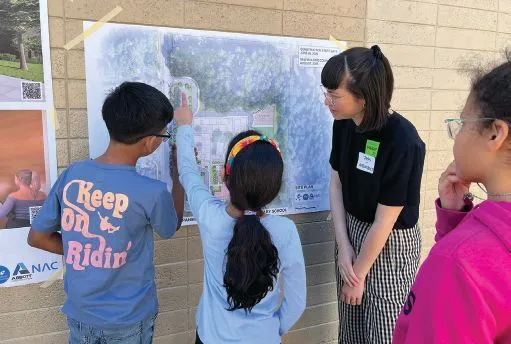
Crystal Springs Elementary Expansion Building: NAC designer Jess Tse engages with students at recess as they review the new site plan of their school in the Northshore School District. Photo: Cheryl Jacobs
Students as Creators. By ideating, modeling, and iterating, students learn spatial awareness, problem-solving, and visual literacy. They explore, contribute, and invent meaningfully developing skills that stretch far beyond the classroom.
Students as Co-Creators. Students can shape their educational experience and learning environments to reflect their needs. Co-creation builds ownership, motivation, and agency—impacting how and where learning occurs.
Students as Co-Authors. Students bring lived experiences to design conversations. As co-authors, they share planning input, influence design priorities, and work alongside educators and architects to bridge the gap between policy and reality. This affirms students not only as learners but as agents of influence and shared authorship in shaping education.
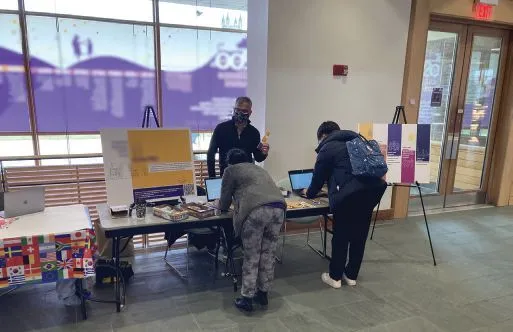
A Living Process of Engagement: An inviting engagement table set up that provides a visible and approachable platform for ongoing dialogue, identity, and shared ownership. Photo: Arjun Mande
Case Study: Visioning for Woodland Junior High
During the schematic design phase of Woodland Junior High, an upcoming school in the Fayetteville (AR) Public School District, modus studio prioritized student voices through a dynamic visioning session with 30 seventh and eighth graders. The Superintendent, a strong advocate for student involvement, personally attended the session held in the school library.
The room buzzed with excitement as students explored tables filled with stickers, markers, magazines, and colorful tape. Designers introduced concepts like LEED and WELL certification and biophilic design, then asked the key question: “How could the school better serve you?”
Students eagerly created vision boards, expressing their ideal learning environments through collages, sketches, and written ideas. Designers sat among the students, encouraging dialogue and creativity while making sure every voice was heard. The session emphasized that architecture is a collaborative process—ideas would grow and evolve together.
This session was the first of three engagements. Designers returned twice more to show how student input shaped the design as it moved from Schematic Design to Construction Documents. Feedback was shared that the engagement process, just like architecture, was collaborative, meaning the students’ ideas would evolve collectively rather than individually, and some ideas, though good, may not be applicable to this site, scope, or building type.
Following the sessions, student and teacher contributions were compiled into a professionally photographed engagement book. This was presented to the school board and district leadership to highlight student priorities. Key insights were also shared at a public school board meeting and leadership workshop, reinforcing transparency and community involvement.
By giving students a genuine seat at the design table, their firsthand perspectives reveal exactly how learning environments can better support their needs, foster belonging, and inspire daily growth.
Case Study: Acton Academy North Broward Campus
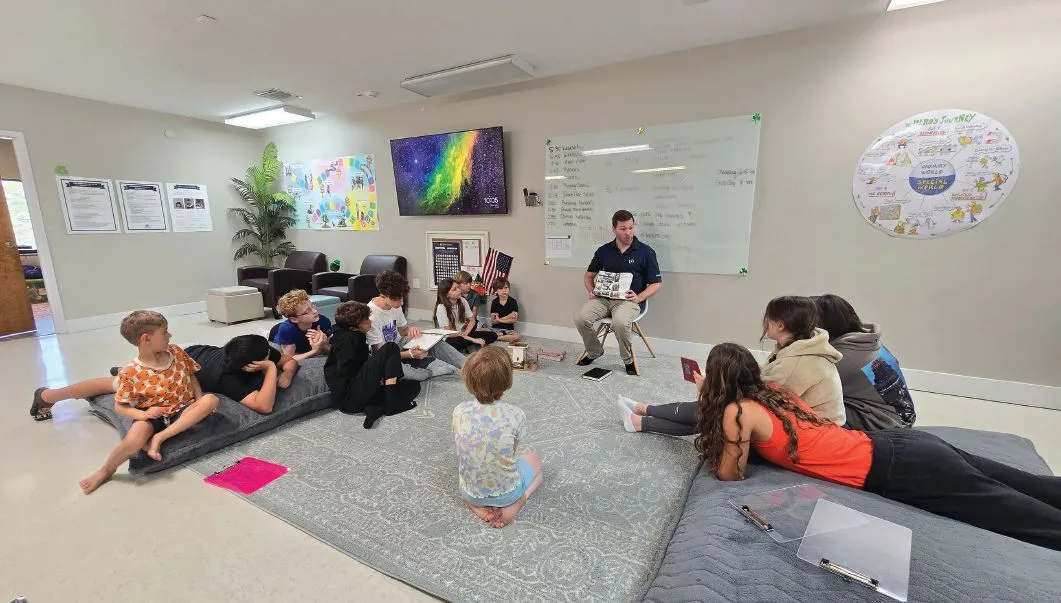
It’s rare in a professional journey to first engage with students as a volunteer and later as the school architect. For CAE members and architect Arty Molinari, working with a nonprofit private education institution in Coral Springs, Florida, has been an incredibly rewarding experience. Invited through an engineer colleague, Arty joined the school’s “Meet a Local Hero” program—a title he found intimidating at first. “I don’t see myself as a hero,” he says, “but as an architect, I carry a deep responsibility to protect the health, safety, and welfare of the public and ensure every space I design positively impacts its users.” Sharing that mission with students was both humbling and energizing.
During his first visit to North Broward School, Arty was greeted by a semicircle of curious students aged five to thirteen. As he shared stories, challenges, and his passion for design, the students responded with thoughtful, unfiltered questions—highlighting the joy of engaging with young minds.
As a returning volunteer, Arty helped guide a “dream school” project. Students developed conceptual ideas through physical models and hand drawings, later presenting their projects to their parents. The experience reinforced how seriously the school values student voice as part of its curriculum and culture.
Now, as the school plans a potential move requiring site selection, analysis, master planning, and design—students are continuing to participate, mirroring real-world design processes and offering valuable insights into what matters most to them.
The school’s commitment to student engagement is evident. By empowering students to take part in shaping their environment, they’re fostering ownership, connection, and a sense of community. Arty’s experience illustrates the power of involving students not just in learning about design, but in becoming active participants in it.
Designing with Students, Not Just for Them: A Living Process of Engagement
Designing student spaces goes beyond fulfilling a program. It’s about listening. It’s about recognizing students as co-authors of the environments where they live, learn, and grow. When we engage students early and meaningfully, the result is not just better spaces—we build trust, inclusion, and a culture of collaboration that outlasts any one project.
Every student engages differently. Some enthusiastically join workshops or planning committees, while others prefer a quick poll, a sticky note, or a quiet conversation during recess. To reach everyone, the tools we use must be as varied as the students themselves.
Engaging students means inviting them to help shape the engagement itself. Instead of just answering our questions, students can respond to open prompts, contribute creative ideas, and take ownership of the process. This inclusive approach enhances outcomes— but just as importantly, it transforms the process. It pushes us to design with greater empathy, flexibility, and respect for complexity.
Building Trust into the Process
True engagement begins at the earliest stages and remains embedded throughout. Initial dialogue becomes the foundation for everything that follows.
Start with Listening
- Where do you live?
- What motivates you?
- What frustrates you?
- What do you hope for in your daily experience at school?
Show Up
- Pizza Dinner tabling events
- School bingo, multi-cultural, special event nights
- Recess engagement
- Lunchtime questionnaire
- Ask how they prefer to engage, where, and when
Engage Asynchronously
- Virtual conversations
- QR-code surveys
- Online and email engagement
After Construction
- Did this meet your expectations?
- Do you see your ideas come to life?
- Where can we improve?
Engagement in Action
Clear communication matters. When students know what’s open for input and what’s already set, engagement becomes more meaningful. Goody Clancy tailors engagement to each project and student group. For a campus interfaith chapel, they led an inclusive listening process to understand diverse students’ needs. Input from users and non-users shaped an iterative design where engagement wasn’t an isolated task, it was a continuous thread running through the life of the project.
For a residence hall project involving hundreds of students, instead of relying on a committee, a short, accessible paper survey was conducted during a community meal. In two simple questions, every student had a chance to be heard. Their input was distilled and shared transparently with school leadership, forming the basis for a design direction that reflected the whole community—not just the loudest voices.
In the design of a new student center housing multiple cultural and identity-based organizations, supporting diverse modes of participation was essential. Each group had its own rhythm and preferences. Some engaged through scheduled meetings, others through collaborative activities like mural design or furniture selection. Student liaisons also played a key role—acting as bridges between the design team and their peers. These weren’t just data-gathering roles. They were about building trust, sparking creativity, and helping students feel seen in the process.
Engagement as an Anchor for Identity and Ownership
Every step of the way, design teams ask: Who is this space for? Who else does it affect? Who gets to decide? These aren’t just logistical questions, they’re ethical ones. They define the responsibility of design.
Engagement should be a living dialogue. Designers gather input, respond to it, and return with revisions. We define success not just in aesthetics or function, but in how well a space supports the goals, values, and spirit of its student community. That means staying open—to critique, to discomfort, to change. This approach is wholly student-centered. If we put them in the front seat and give them the keys to guide not only the design outcomes but the design process, we have truly achieved student-centered engagement that will lead to a design that reflects the passion and needs of all students.
Call to Action
We call upon educators, architects, school leaders, and policymakers to embrace design not only as a tool for shaping learning spaces but as a catalyst for student growth, agency, identity, and creativity. When students are invited to act as the co-authors of their learning environments, they are no longer passive recipients of education, they are agents of transformation. Let us embed design into curriculum and school planning. Let us invite students into the process of shaping their futures. Let us design with them—not merely for them. Together, we can build learning environments that reflect the brilliance, resilience, and creativity of every student.