


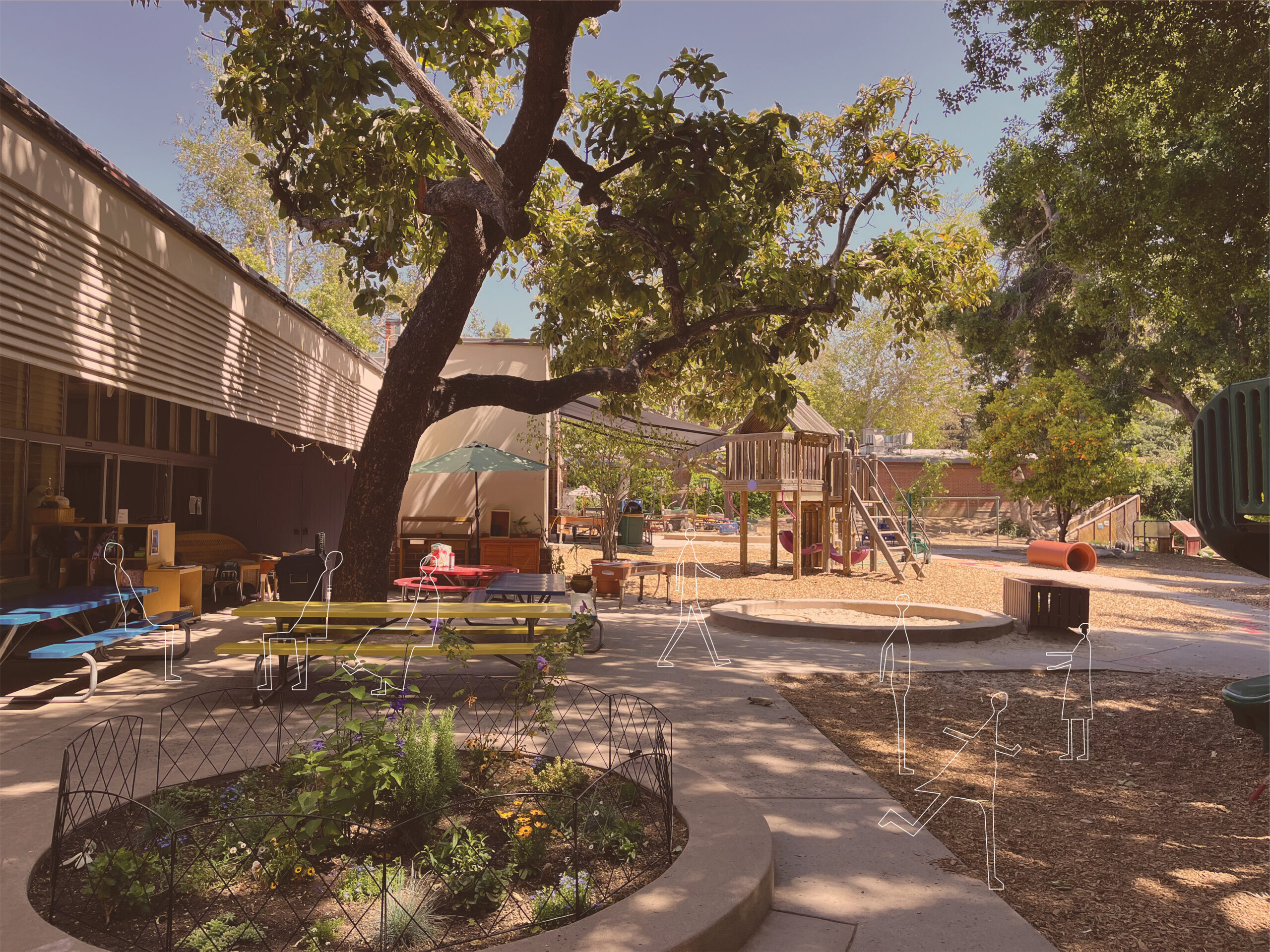
What happens when students have a voice in designing and creating their learning environment? Typically, the design and arrangement of classrooms are pre-determined by adults, architects, and teachers long before students arrive. In this article, we share how classroom culture transforms when students are empowered to make informed decisions and collectively determine how their classrooms are arranged and used, inviting them to play an active role in creating their own learning spaces.
The Research: UCLA and Perkins Eastman Collaboration
UCLA Lab School, located on the northern part of the University of California, Los Angeles campus, is a progressive elementary school that immerses itself in nature. Architecturally, the school building is in harmony with its surroundings to foster health and well-being, a core concept of biorealism, a philosophy developed by mid-century modernist Richard Neutra.1 Pedagogically, the school is a leader in innovative education that is dynamic and grounded in children’s experiences and exploration.
In the 1950s, architects Richard Neutra and Robert Alexander collaborated to design several buildings for UCLA Lab School. Guided by biorealistic design principles, the school prioritizes natural ventilation, daylight, and engagement with surrounding natural landscape as a seamless extension of classrooms, embracing the environment as the “third teacher.” Nestled among redwood trees, classrooms have large sliding glass doors that provide direct access to the outdoors and blur the boundaries between indoor and outdoor learning.
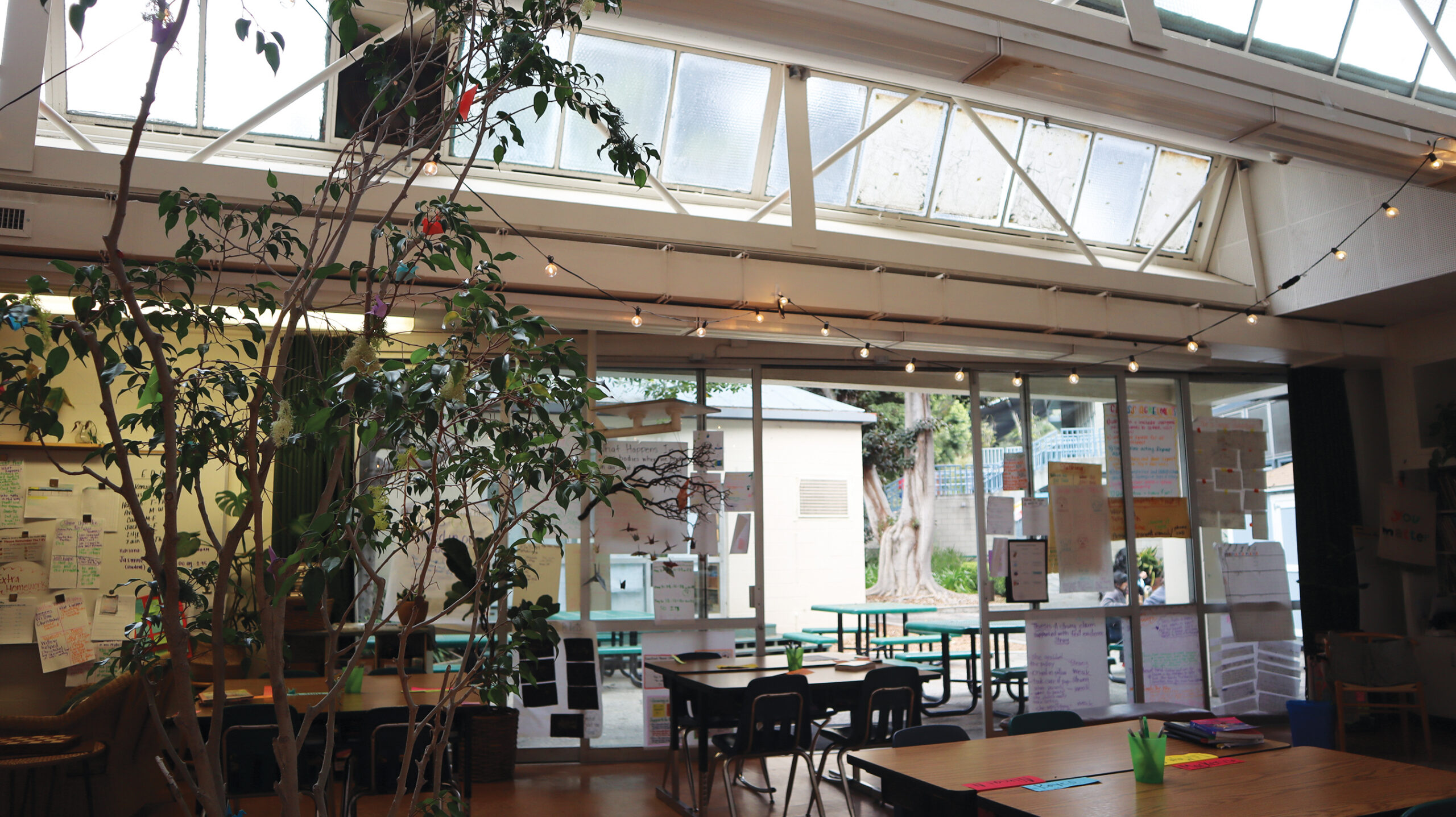
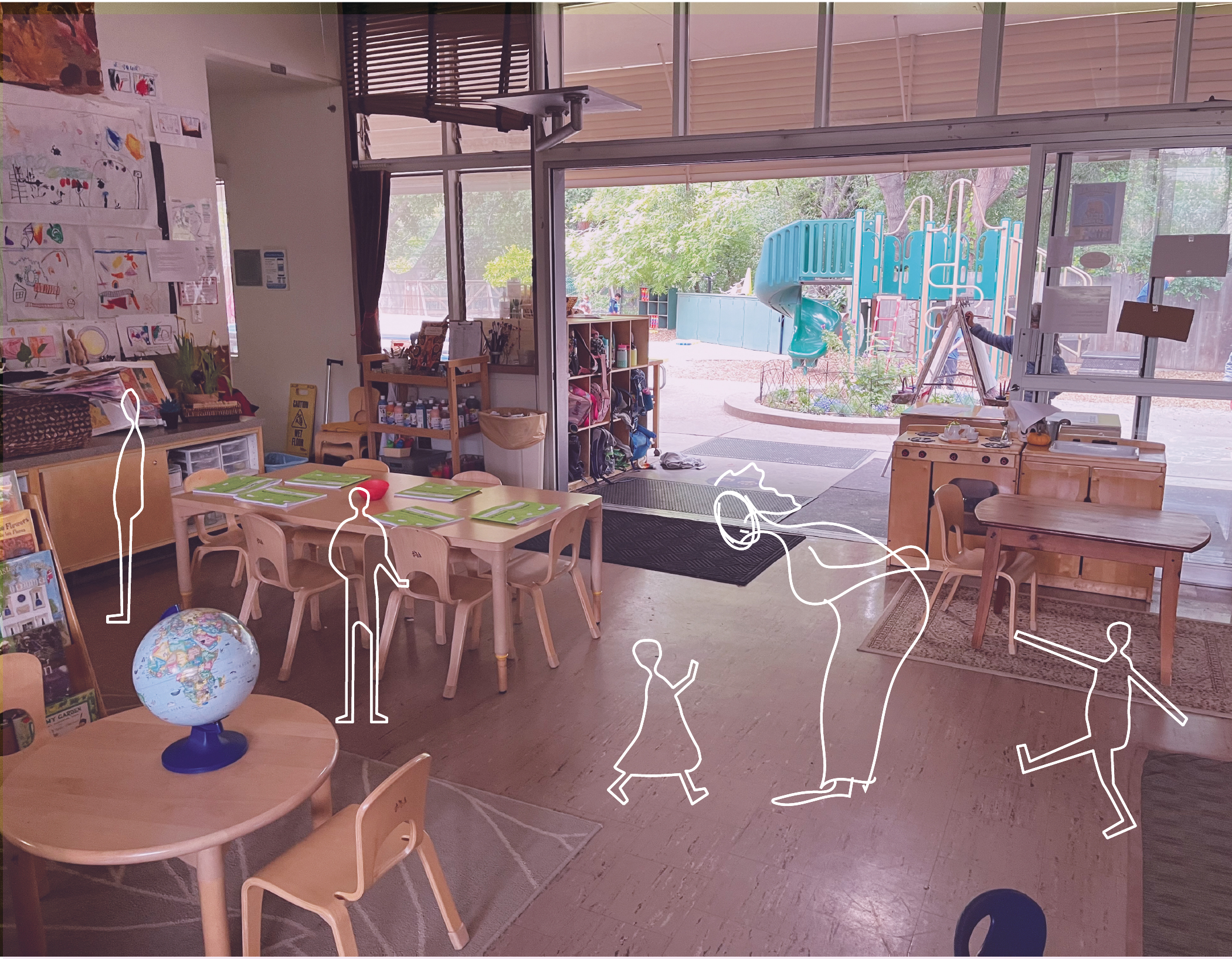
Over the past five years, UCLA’s CONNECT researchers and global design firm Perkins Eastman collaborated to study how design and occupant behavior at UCLA Lab School support comfortable indoor environmental quality in inquiry-driven classrooms. At the time of the study, most classrooms were naturally ventilated, while a subset had newly installed air-conditioning systems. Comparisons across classrooms showed that mechanically ventilated rooms had higher carbon dioxide (CO2) levels, likely due to reduced fresh air exchange compared to naturally ventilated classrooms, where occupants frequently opened windows and doors. When benchmarked against other high-performing schools with mechanical ventilation systems, UCLA Lab School classrooms still demonstrated lower CO2 levels overall, highlighting the role of biorealistic design in supporting effective ventilation and maintaining fresh air in learning environments.
Teachers and students also regularly practiced what we later termed “fresh air breaks,” during which classrooms were temporarily unoccupied. Since the outdoor spaces are often positioned as the third teacher, these “fresh air breaks” are not only behavioral, but pedagogical moves that teachers practice every day. Lab School students explore, investigate, and play outdoors, and will leave the windows and doors open when they leave the classroom. What was interesting about these pedagogical moves was that when teachers utilized their outdoor spaces for learning, CO2 levels recovered, restoring healthier indoor air quality, which is known to create learning environments that better support cognitive function2.
Student-led Inquiry on CO2 Levels in the Classroom
In fall 2025, using a two-part workshop series, the research team shared our study’s findings with Lab School teachers and staff to encourage them to critically think about healthy indoor environmental quality. The workshops were held at an important time: the campus had recently completed air-conditioning system installation across all the original buildings. This prompted us to critically consider how the school should use this new system in a building that had been intentionally designed to have strong natural indoor-outdoor connections. We entered the 2025–2026 academic year with the question: How can we leverage the new HVAC system while honoring the school’s longstanding commitment to biorealistic design and environmental justice?
To support the school in investigating this timely question, we placed indoor air quality sensors as an informative tool for Lab School community members to track their rooms’ CO2 levels throughout the day. As Lab School upholds a rich inquiry-based teaching and learning philosophy, it was no surprise that these sensors sparked questions, curiosity, and concern among the students.
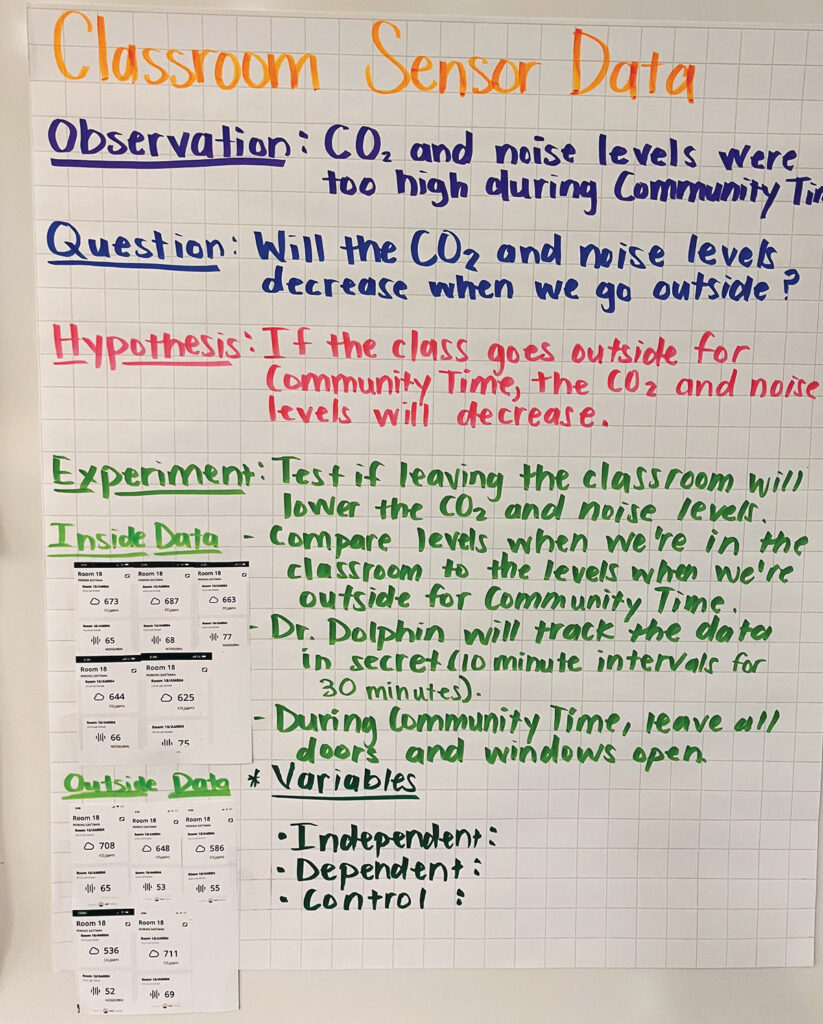
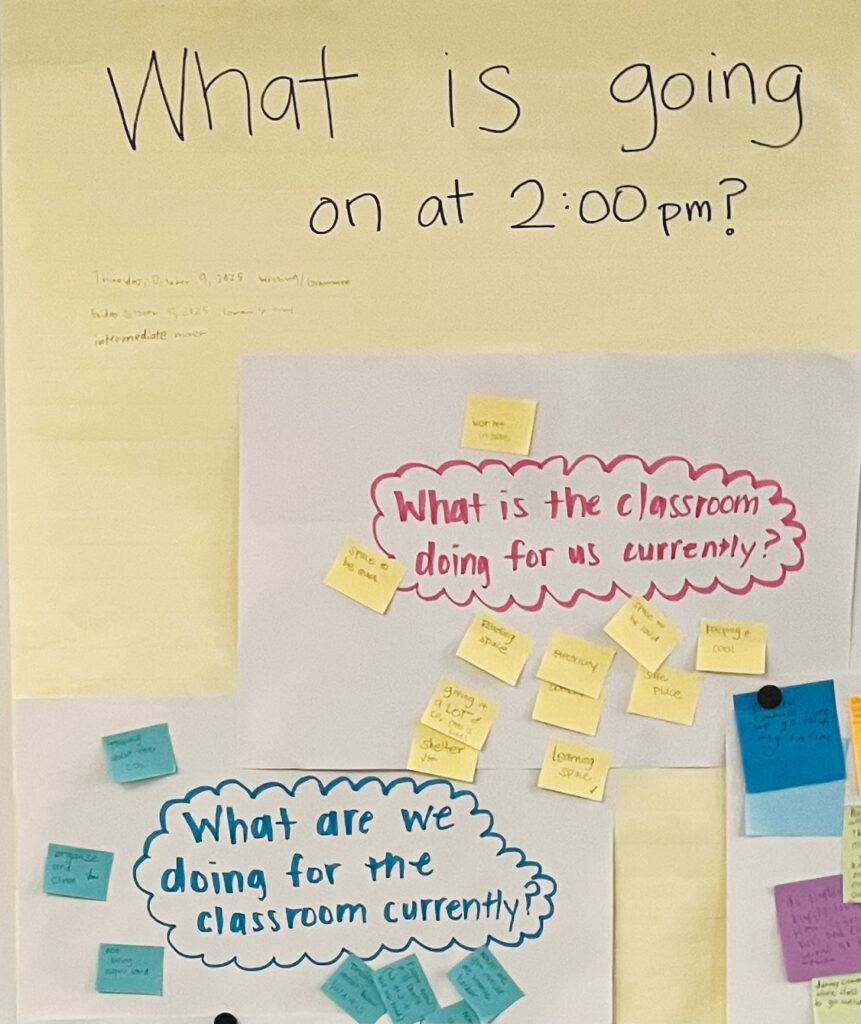
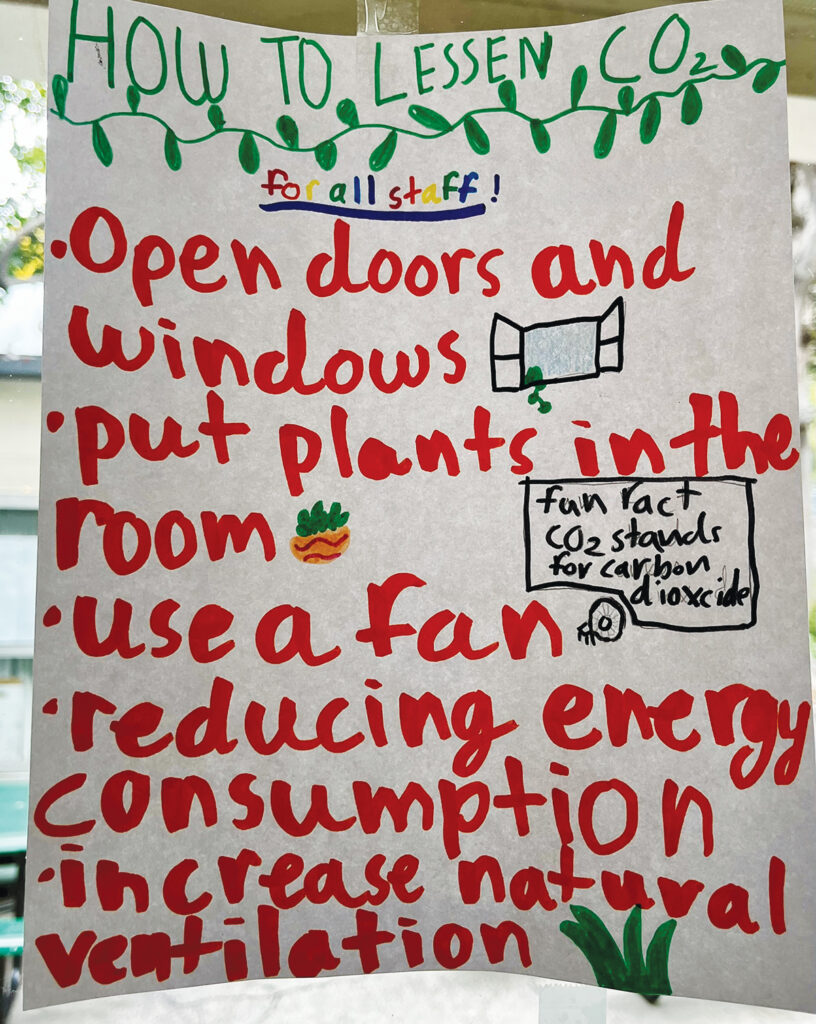
Students investigate then create flyers on how to lower CO2 in their classrooms
In one fifth-grade class, after observing a sensor’s variations in air quality throughout the day, students experimented with strategies to see if they could reduce CO2 levels. They opened windows and doors to ventilate the room and began researching other strategies to improve air quality in their learning space. They produced several creative problem-solving strategies, such as learning outside the classroom. For example, instead of reading at one’s desk, why not read outside on a yoga mat under a tree? When doing group work, why not open all the doors and have students work outside on tables right outside the classroom? The students monitored the sensor as they tried these strategies and found that they all effectively lowered the classroom’s CO2 levels. Excited by what they learned, they wanted to share their investigations and recommendations by creating informational resources for all faculty, staff, and students at Lab School.
Other classrooms took on this inquiry in different ways. For example, in a mixed-age third- and fourth-grade classroom, students designed an experiment to investigate how they could lower CO2 levels after discovering a pattern in the sensor data. In this room, students found that their CO2 levels spiked every day around 2:00 p.m., with Fridays always having the highest reading of the week.
This led the class to take daily “brain breaks” at 2:00 p.m. so that their classroom could have an opportunity to “breathe.” The students leave all windows and doors open and walk outside to the patio space. Some students read books, while others quietly practice yoga stretches. They were able to observe that in just five minutes, the CO2 reading in their classroom would drop almost 40 ppm (from 690 ppm to 651 ppm). The culture of this classroom has now significantly changed because students seriously consider their relationship with their classroom space. They discuss and think about what it means to care for learning spaces, and how their actions can impact it—even something as small as a five-minute fresh air break.
Looking Ahead: Fostering a Culture of Healthy Classrooms
Lab School demonstrates how biorealistic designs can be furthered when classroom cultures invite students to collaboratively create their learning space. What is significant about this work is that meaningful change occurs when learning spaces are not treated as static backdrops shaped by adult-driven decisions. Instead, our study invites educators and designers to uphold the dynamic learning opportunities shaped through daily interactions among space, pedagogy, and occupants.
Student-driven inquiry is at the heart of creating change. It is how we build and create new cultures of interacting with our classroom space. Students bring questions, lead investigations, and problem-solve to cultivate healthier classrooms. The decisions are made by students for students—giving students agency to democratically make decisions for how their shared learning spaces are utilized. Too often, adults control how young people learn, interact, and move (or not move) while learning. However, it is important to make room for these student-driven inquiries if we want the classroom to be a place to discover and learn how to be future environmental stewards. Healthy classrooms are not only designed, but they are co-created through an interdependent relationship with all their occupants.
The study’s full report outlines detailed findings and practical recommendations for schools seeking to apply these insights into their own settings: https://www.perkinseastman.com/research/ biorealism-today-lessons-learned-from-richard-neutras-ucla-lab-school/
References
- Richard Joseph Neutra, Survival Through Design (New York: Oxford University Press, Inc., 1954), https://archive.org/details/survivalthroughd00neut/mode/2up.
- Joseph G. Allen et al., “Associations of Cognitive Function Scores with Carbon Dioxide, Ventilation, and Volatile Organic Compound Exposures in Office Workers: A Controlled Exposure Study of Green and Conventional Office Environments,” Environmental Health Perspectives 124, no. 6 (June 2016): 805–12, https://doi.org/10.1289/ehp.1510037.0